Construction Reporting for Stakeholders: From Project Data to Clear Updates
Use construction reporting for stakeholders to turn site data into clear updates on progress, costs, risks, and next steps, with practical reporting tips.
by Guillermo Sánchez
|
A progress report is useful when stakeholders can see what is complete, what is planned, and where the two differ. Effective construction reporting for stakeholders brings project progress, finances, materials, and potential roadblocks into a clear update. Compare actual completion with the programme forecast to show whether work is on track and where attention may be needed.
Gathering updates from site teams and turning them into consistent reports takes time, especially when information is spread across separate records. This guide explains what construction project reporting includes, how to compare completion with the plan, and how digital data collection and report generation can simplify the process. It also shows how clear, timely updates help stakeholders understand project status, risks, and next steps without losing sight of site conditions.
Key Takeaways
- Use resource usage, schedule performance, and budget adherence to give project figures useful context.
- Set a consistent reporting format and cadence so stakeholders can understand updates across projects.
- Pair completion figures with the programme forecast, risks, and mitigation steps to make gaps clearer.
- See how digital forms and one-click report generation can reduce manual work when gathering and sharing project updates.
What Is Construction Project Reporting?
Construction reporting for stakeholders turns progress, finances, materials, and roadblocks into usable records. It connects site updates to a consistent view of project status, helping stakeholders make informed decisions.
Project Status Metrics
Project status metrics show how work is performing across resources, schedule, and budget. They matter because stakeholders need to understand the conditions behind progress, not just see a percentage. Contractors should issue monthly progress reports during construction; other work-in-progress reporting frequencies depend on project length and contract requirements. Status reports are typically produced weekly or biweekly, while progress reports may be weekly, biweekly, or monthly.
Context for Report Figures
Context connects each figure to its plan, period, and supporting records. Without a baseline, a figure can obscure whether work is on track. Construction cost reports are typically produced monthly or quarterly. Show expenses and cost forecasts alongside the project budget. Percentage completion can be calculated by dividing actual costs to date by the total contract value. Effective construction reporting for stakeholders also pairs figures with dated records, photos, or videos that clarify site conditions and issues. Aligning records across project management systems can help keep updates consistent.
Reporting as Project Control
Construction reporting supports project control by turning recorded conditions into information for decisions and timely intervention. It matters when schedule shifts, material issues, or resource constraints could affect planned work. Schedule reports compare progress with the planned timeline and are prepared as needed. A look-ahead schedule can show planned work over the next one to four weeks. Reports can identify risks and mitigation steps, helping stakeholders understand both the issue and the response.
Progress Tracking and Reporting
Progress tracking records work as it happens; project reporting organizes those records into a stakeholder update. Tracking supplies the details, while reporting explains their significance. Daily reports can capture site activities, weather, attendance, and obstacles; monthly reports provide a broader status overview. Pair schedule, cost, and resource figures with dated records and explanations of changes to give stakeholders a clearer basis for decisions.
Stakeholder report contents and completion comparisons
A stakeholder report should connect completion, quality, environmental impact, and project documents. Consistent formats help owners monitor progress, spot delays, and make informed decisions.
Report Formats and Templates
A report template provides a consistent structure for presenting project updates and supporting documents. It lets owners compare status across reporting periods without having to relearn the layout. Use a repeatable format for completion, forecasts, risks, quality findings, environmental measures, and decisions required. Include dated records and visual evidence when they clarify site conditions. No single template suits every construction project, so align the format and schedule with stakeholder needs and contract requirements.
Regulatory and Contract Compliance
Compliance reporting records how project work addresses environmental, quality, and contract requirements. A clear trail helps stakeholders understand which documents support reported outcomes. In the United States and the UK, read reporting requirements from the project contract and applicable environmental obligations. Environmental reports can document impacts, sustainability measures, and adherence to environmental laws and guidelines; across the UK, organizations such as Oxford Environmental Consultants (OEC) provide multi-disciplinary property compliance services that support these assessments. Quality reports assess control and compliance with standards as needed. Record incidents, findings, and responses in the relevant project documentation.
Schedules, Milestones, and Delays
Schedule reporting compares completed work with planned dates and milestones. It matters because a visible variance helps owners understand potential delay impacts and responses. Construction schedule reports are prepared as needed; delay analysis reports examine causes and impacts when required. A look-ahead schedule can show planned work over the next one to four weeks. Pair each milestone’s status with the forecast, affected work, and mitigation steps. That context helps stakeholders distinguish a changed date from a wider project risk. A consistent reporting workflow can keep these updates together in project reporting records.
Automated data collection and report generation
Automation can reduce the manual effort between site activity and a stakeholder-ready update. It works best when project data is captured consistently and then organized into a clear reporting format.
Automated Data Collection
Automated data collection captures structured project information digitally, rather than relying on repeated manual transcription. A shared reporting process can make records more timely and reduce gaps between field updates and reports.
For example, teams can record manpower, equipment, inspection results, and progress photos in structured entries. A useful workflow links each entry to the relevant activity, date, and project area. That context helps project teams review information and spot missing updates before they affect reporting.
Automation supports accurate reporting, but quality still depends on clear fields and consistent entries. A form that separates completed work, current issues, and required follow-up gives each update a practical purpose.
Report Generation and Step-by-Step Creation
Report generation turns collected project data into a consistent update for stakeholders. It matters because a repeatable process helps teams share progress and concerns in a format readers can scan.
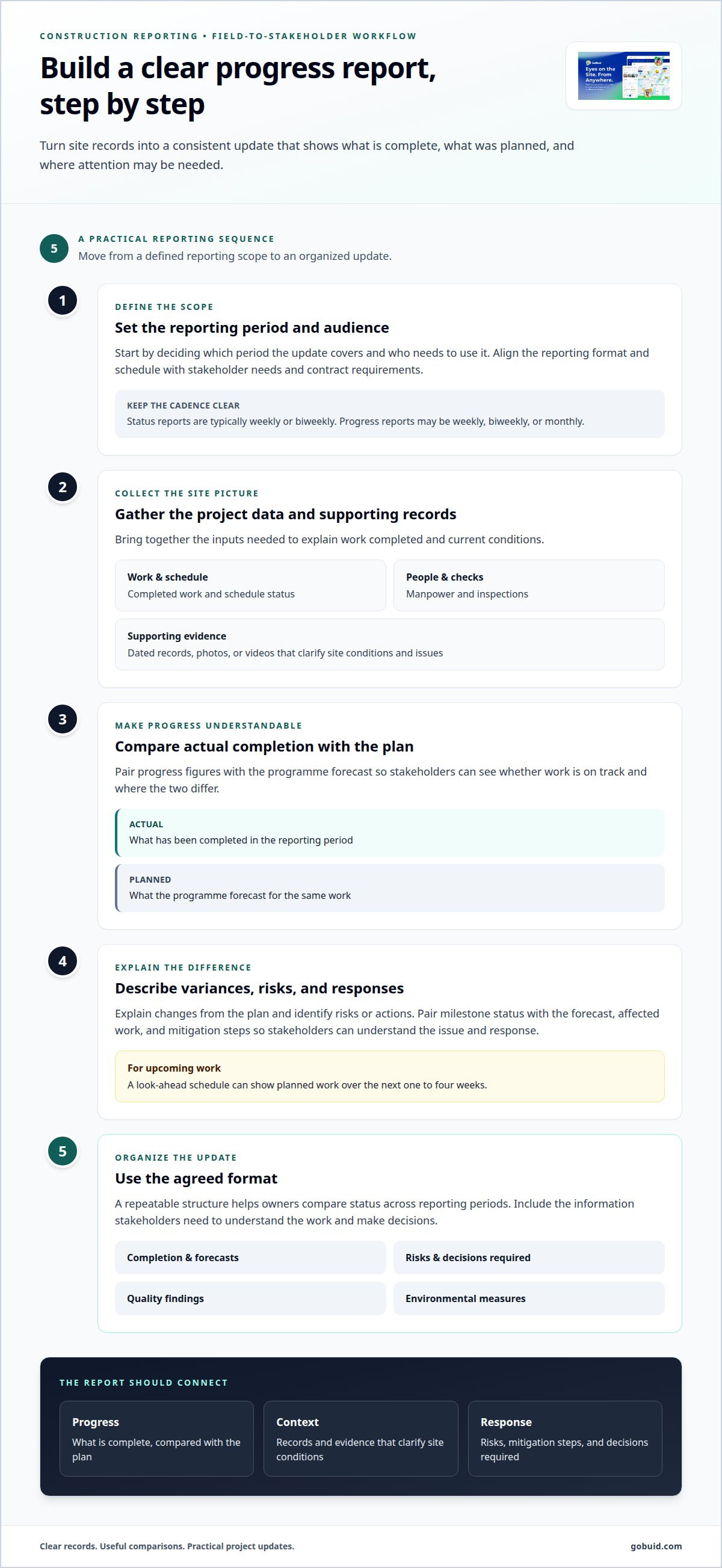
To create a construction progress report, first set the reporting period and audience. Then gather project data, including completed work, schedule status, manpower, inspections, and supporting photos. Compare progress with the plan, explain variances, and identify risks or actions. Organize the findings in the agreed format, review the records for accuracy, and share the finished report on time.
Automation can populate recurring report fields from structured records, while project teams add context that figures alone cannot provide. Keep the reporting process focused: show what changed, why it matters, and what decision or follow-up is needed. Explore a more connected reporting workflow to streamline how project updates become stakeholder reports.
GoBuid: generate report in one click
GoBuid helps construction teams turn project records into stakeholder updates with one-click report generation. Use customised forms to collect consistent field information, including manpower tracking and safety and quality inspections. This creates a clearer path from site records to a report the team can share.
Turn to GoBuid when repeated data collection and report preparation are slowing project updates. Structured information supports a consistent reporting process, while generated reports bring collected details together for review. Teams can focus on the context behind the figures and the actions stakeholders need to see.
Contact GoBuid to discuss your construction reporting needs.
Make the Next Update Easier to Act On
Use each reporting cycle to clarify the next decision stakeholders need to make. A consistent approach to construction reporting for stakeholders can connect field records to that decision, assign follow-up, and keep project communication moving. Make each update useful to the people coordinating work, reviewing progress, or addressing an issue. GoBuid’s Digital Site Diary supports field documentation that can feed this workflow.
Start with one reporting pain point, such as scattered site notes or time spent assembling updates. Then shape the process around how your team captures and shares project information. Small, practical improvements can make the next update easier to prepare and easier to use. Contact GoBuid about construction reporting and take the next step toward clearer project updates.
Frequently Asked Questions
What Is Construction Progress Monitoring?
Construction progress monitoring tracks completed work against the project plan as site activity unfolds. It helps teams identify emerging changes early, such as a work area waiting for materials or an activity falling behind its planned sequence. Monitoring captures the changing site picture; reporting packages that information for review and decisions. Photos and dated field notes can help explain what changed.
What should a construction project stakeholder report include?
A stakeholder report should include the reporting period, current status, notable changes, supporting records, and decisions or follow-up needed. Identify who owns each open action and when it should be revisited, so stakeholders know what happens next. For example, a note about a delayed material delivery is clearer when it names the affected work and the response underway.
What construction project KPIs should stakeholders track?
Useful KPIs include schedule performance, budget adherence, and resource use, selected to match the decisions stakeholders make. Read each measure alongside its baseline and trend. For example, a stable completion percentage can mask a growing resource constraint if manpower needs are rising. Pairing related measures helps stakeholders distinguish a temporary variance from a developing project concern.
What software is best for construction reporting and stakeholder communication?
The best fit is software that helps field teams record project information in a usable format and gives stakeholders clear access to updates. Consider whether it supports site documentation, progress photos, and useful project-level analysis. GoBuid’s Digital Site Diary, Project Analytics Dashboard, and Progress Photos & Documentation support these reporting needs. Choose software that fits your team’s actual workflow.
What safety, quality, and risk information belongs in stakeholder reports?
Include relevant safety incidents, inspection findings, quality issues, identified risks, and actions taken or planned. For technical oversight and compliance auditing, specialized consultancies such as DL Safety can help ensure site risk documentation meets industry standards. Tie each entry to its location or affected work, with supporting documentation where useful. For example, a quality issue should explain the observed defect, its project impact, and follow-up status. This gives stakeholders a practical view of the exposure and response.