The Complete Guide to Construction Safety Software: Maximizing Site Compliance in 2026
by Sheldon Huang
|
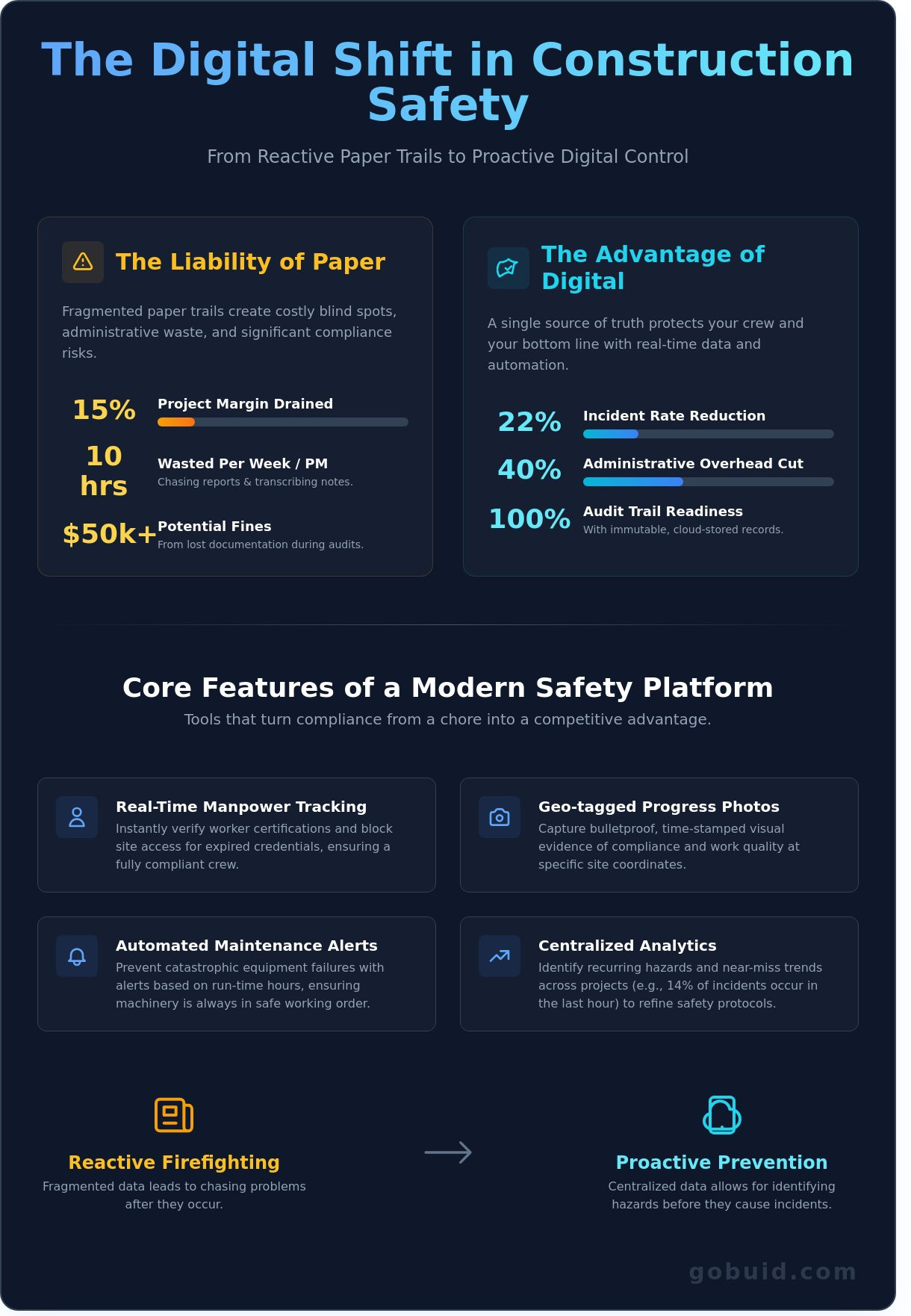
Your current paper-based safety system isn't just a nuisance; it's a liability that drains 15% of your project margin through administrative waste. You've felt the frustration of chasing missing field reports and deciphering inconsistent logs from subcontractors while the threat of a surprise audit looms. Relying on fragmented paper trails creates blind spots that no project manager can afford. Integrating modern construction safety software is no longer a luxury; it's the only way to maintain a single source of truth on a high-speed site in 2026.
This guide provides a direct path to transition from chaotic filing cabinets to a centralized digital system that protects your crew and your bottom line. You'll learn how to automate BCA and WSH compliance, reducing incident rates by a documented 22% through real-time hazard visibility. We'll explore how one-click safety reporting and automated manpower tracking turn compliance from a chore into a competitive advantage. It's time to bridge the gap between the office and the field, ensuring every worker is accounted for and every regulation is met without the manual overhead.
Key Takeaways
Shift from reactive firefighting to proactive hazard identification by centralizing your site data into a single source of truth.
Replace fragmented paper trails with customizable digital forms and real-time manpower tracking to ensure total field visibility.
Protect your bottom line by quantifying the ROI of construction safety software against the rising costs of insurance premiums and stop-work orders.
Eliminate site friction with a mobile-first implementation strategy that empowers crews to report hazards instantly from any device.
Streamline your compliance workflows and generate professional safety audits with one-click reporting designed for busy project managers.
⭐ Learn more about GoBuid's feature- without the heavy enterprise price tag
What is Construction Safety Software & Why Does Your Site Need It?
Construction safety software acts as the digital nervous system for modern project sites. It centralizes inspections, incident reporting, and compliance into a single source of truth. Instead of managing a chaotic mix of spreadsheets and emails, you gain a unified platform where every safety check is logged and timestamped. This technology isn't just a digital checklist; it's a tool for total site control.
The industry is moving away from reactive safety. We no longer wait for a fall or a structural failure to fix a problem. Modern platforms allow for proactive hazard identification through data analysis. For a comprehensive overview of construction site safety, understanding how digital tools integrate with regulatory frameworks like the Building and Construction Authority (BCA) and Workplace Safety and Health (WSH) is essential for any project manager in 2026.
Watch this brief video to see how construction safety software streamlines field operations:
The Hidden Cost of Paper-Based Safety Management
Manual data entry is a productivity killer. Project managers often lose 8 to 10 hours every week just chasing field reports and transcribing handwritten notes. This delay creates a dangerous information gap. When data is stuck on a clipboard, it's invisible to the office. By the time a report is filed, the hazard has often already caused an incident.
Lost documentation during a safety audit is a high-stakes risk. In 2025, missing permits or incomplete site diaries resulted in fines exceeding $50,000 for some mid-sized contractors. Digital systems eliminate this risk by providing an immutable audit trail. You can't lose a report that's stored in the cloud.
Key Benefits: Productivity Meets Protection
Digital tools create immediate accountability. When a subcontractor completes a punch list, the system logs the exact time and location. This transparency ensures that safety protocols aren't just checked off but actually performed. Real-time visibility allows stakeholders to monitor site conditions from any device, bridging the gap between the field and the office. Digital safety software reduces administrative overhead by up to 40%.
Automated Alerts: Notify teams of expiring certifications or overdue inspections instantly.
Centralized Hub: Access all HSE documents, permits, and site diaries in one location.
Data-Driven Insights: Identify recurring hazards across multiple sites to improve training programs.
Core Features of Modern Safety and Inspection Software
Modern construction safety software isn't just a digital filing cabinet. It's a proactive engine designed to eliminate human error and ensure every worker returns home safely. In 2026, site compliance relies on real-time data and automated workflows rather than reactive paperwork. High-performing teams use these tools to gain total visibility into field operations.
The most effective platforms offer these core capabilities to drive accountability:
Real-time manpower tracking: Verify certifications instantly. The system can block site access if a worker's credentials expired on July 12, 2025.
Geo-tagged progress photos: Capture bulletproof evidence with time-stamped images. These photos prove compliance at specific coordinates, leaving no room for dispute.
Automated maintenance alerts: Prevent mechanical failures by scheduling inspections based on equipment run-time. A 500-hour service alert can save a project from a catastrophic crane failure.
Centralized analytics: Identify if 14% of your near-misses happen during the final hour of a shift. Use this data to adjust safety briefings across multiple sites immediately.
Digital Site Diaries: The Foundation of Safety
The daily diary is the pulse of the project. Safety observations shouldn't live in a separate silo. They must be recorded as part of the daily site diary to capture the full context of the job site. Effective diaries log manpower and equipment data alongside safety checks to maintain a single source of truth. Using a Digital Site Diary bridges the gap between field reality and office oversight. This integration ensures your team consistently meets OSHA construction industry safety standards without the administrative burden of manual logs. When every observation is linked to a specific date and crew, accountability becomes the default state.
Custom Forms and Inspection Test Plans (ITP)
Generic checklists fail because every site has unique risks. Excavation requires different protocols than high-rise steel erection. Customizable digital forms allow teams to build site-specific safety checks that match the current phase of work. Mobile-first form completion is the only way to ensure high adoption rates among foremen. If the software is hard to use, the data won't be captured. When ITPs are completed on a smartphone at every project milestone, quality and safety become inseparable. This precision drives site compliance and protects your bottom line. Teams looking to modernize their field operations should test these streamlined workflows to see the impact on productivity.
The ROI of Safety: Evaluating the Business Case for HSE Software
Safety is a profit center. While some view construction safety software as an overhead cost, the math suggests otherwise. A single serious OSHA violation in 2024 averages $16,131 per instance. A stop-work order can cost a mid-sized project $25,000 per day in lost labor and equipment rentals. Compare these figures to a software subscription that typically costs less than one minor incident. Digital systems also drive down insurance premiums. Carriers frequently offer 5% to 10% credits for firms that maintain verified, real-time safety records. This shift toward proactive safety management ensures that your capital stays in the project, not in a courtroom.
Insurance Savings: Documented compliance reduces EMR (Experience Modification Rate) scores, lowering long-term premiums.
Legal Defense: Immutable digital logs protect against liquidated damages that often exceed $2,000 per day.
Asset Protection: Real-time monitoring prevents equipment damage and site-wide shutdowns.
Reducing Lead Time with One-Click Reporting
Manual reporting is a bottleneck. Project managers often spend 25% of their week on administrative paperwork. Modern construction safety software eliminates this friction. You generate professional HSE reports in seconds. Instant data sync ensures that regulatory bodies receive accurate documentation without delay. A project manager at a $50 million site recently saved 10 hours a week by switching to digital logs. That's 40 hours a month redirected toward high-value site supervision and scheduling. It's about speed and precision.
Data-Driven Insights: Moving Beyond the 'Gut Feeling'
Decisions should rely on hard data. A centralized dashboard provides a single source of truth for a national portfolio. You can identify the 12% of subcontractors who generate 75% of your safety risks. This visibility allows for targeted interventions rather than blanket policies. Use historical incident data to sharpen your toolbox talks. When you show crews exactly where hazards occurred in the last 30 days, the message sticks. It's about precision and accountability. You gain total control over the site's safety profile through a single, streamlined interface.
How to Implement Safety Software Without Site Friction
Friction kills digital adoption. To successfully integrate construction safety software, you must prioritize the user experience of the person wearing the boots. Select a mobile-first platform designed for rugged site tablets and smartphones. Hardware in the field takes a beating; your software should be simple enough to navigate with gloves on. Start with a 30 day pilot project on a single high-visibility site. This allows you to refine custom forms and workflows before a national rollout. It's better to fix a broken digital JHA process with one crew than to frustrate 500 workers at once.
Conduct hands-on training for foremen and site supervisors. Don't focus on technical specs. Focus on what's in it for them. Show them how digital entries eliminate the two-hour paperwork grind at the end of a shift. Once the pilot concludes, establish a Single Source of Truth policy. Only digital entries are recognized for compliance. This removes ambiguity. Use the resulting analytics to reward safe behavior rather than just punishing lapses. Data from 2025 indicates that firms using performance-based rewards saw a 18% increase in proactive hazard reporting.
Bridging the Gap Between Field and Office
Field teams often view new tech as a surveillance tool. Shift this perception by creating real-time feedback loops. When a worker reports a trip hazard, the office should trigger a notification showing the resolution within 120 minutes. This responsiveness proves the construction safety software is a tool for protection, not just "Big Brother" oversight. Opt for providers with no-lock-in contracts. This allows you to verify the software fit on a live project without risking your entire 2026 technology budget on a tool the field refuses to use.
Standardizing Safety Across Subcontractors
Your safety culture is only as strong as your weakest subcontractor. Write digital documentation requirements directly into your 2026 subcontractor agreements. Provide guest access so sub-teams submit daily logs and safety forms into your centralized system. Use digital orientations to ensure every worker, regardless of their employer, understands site-specific rules before they step onto the slab. This unified approach ensures 100% compliance across all trades and eliminates the chaos of lost paper files.
GoBuid: The Digital Foreman for Modern Safety Management
Legacy construction software shouldn't feel like a chore. Most platforms are bloated with features you'll never use. GoBuid is the lean alternative built for the reality of the job site. It delivers the precision of modern SaaS without the complexity of traditional enterprise tools. As a specialized construction safety software, it bridges the gap between the field and the office. It acts as your digital foreman, ensuring 100% visibility across every project phase.
The 'One-Click Report' is the primary differentiator for busy Project Managers. It cuts administrative time by 85% by pulling real-time data into professional templates instantly. You don't need to spend your Friday nights formatting spreadsheets or chasing down paper logs. Everything is centralized and ready for distribution with a single tap.
Flexibility drives site compliance. You can build customized forms for both safety audits and quality inspections in minutes. This ensures your construction safety software fits your specific workflow rather than forcing you to adapt to its limitations. Key benefits include:
No Lock-In Contracts: GoBuid operates on a model that reflects absolute confidence in its utility. You stay because the tool works, not because of a legal obligation.
Professional PDF Outputs: Generate clean, branded reports that satisfy stakeholders and regulators alike.
Field-First Design: The interface is optimized for workers wearing gloves on a high-traffic site.
Streamlined Manpower and Equipment Tracking
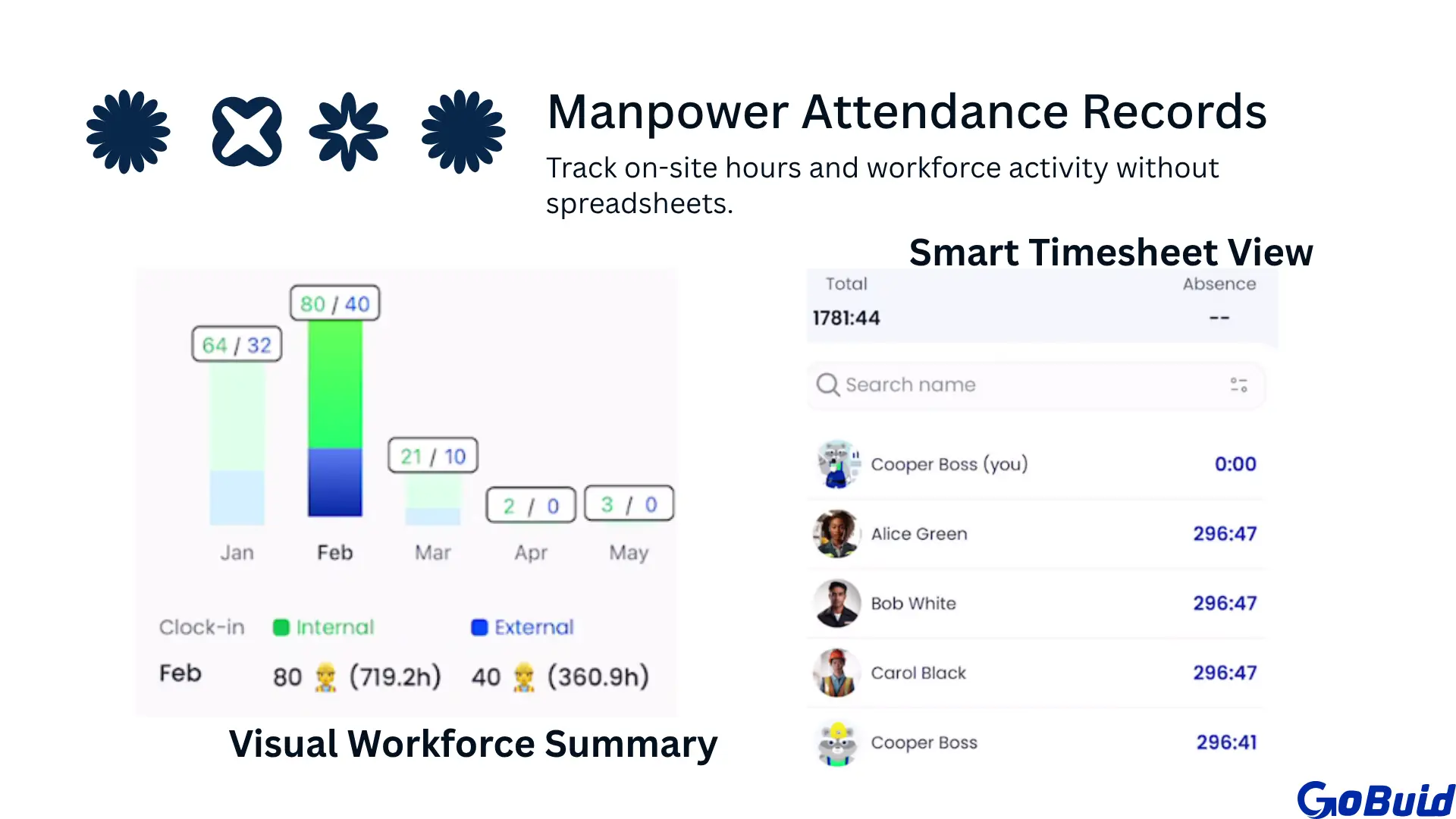
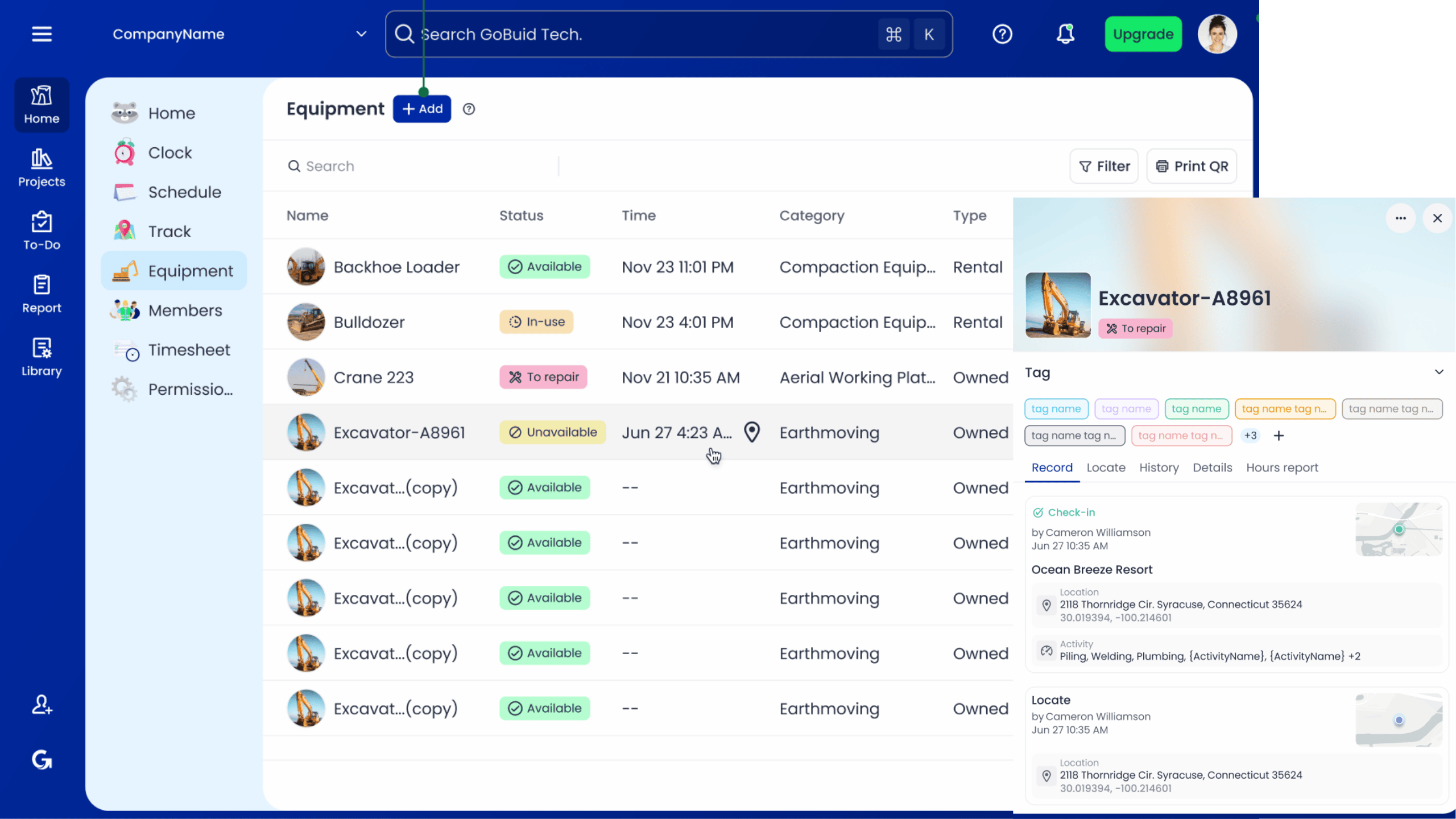
Manpower logs are no longer isolated documents. GoBuid connects labor hours with safety checks and equipment maintenance logs. This prevents accidents by ensuring only certified operators use machinery that has passed recent inspections. Progress photos serve as visual evidence for both safety audits and quality milestones. It creates a single source of truth that protects the business from liability while maintaining a 98% accuracy rate in field data collection.
Actionable Insights via the Project Analytics Dashboard
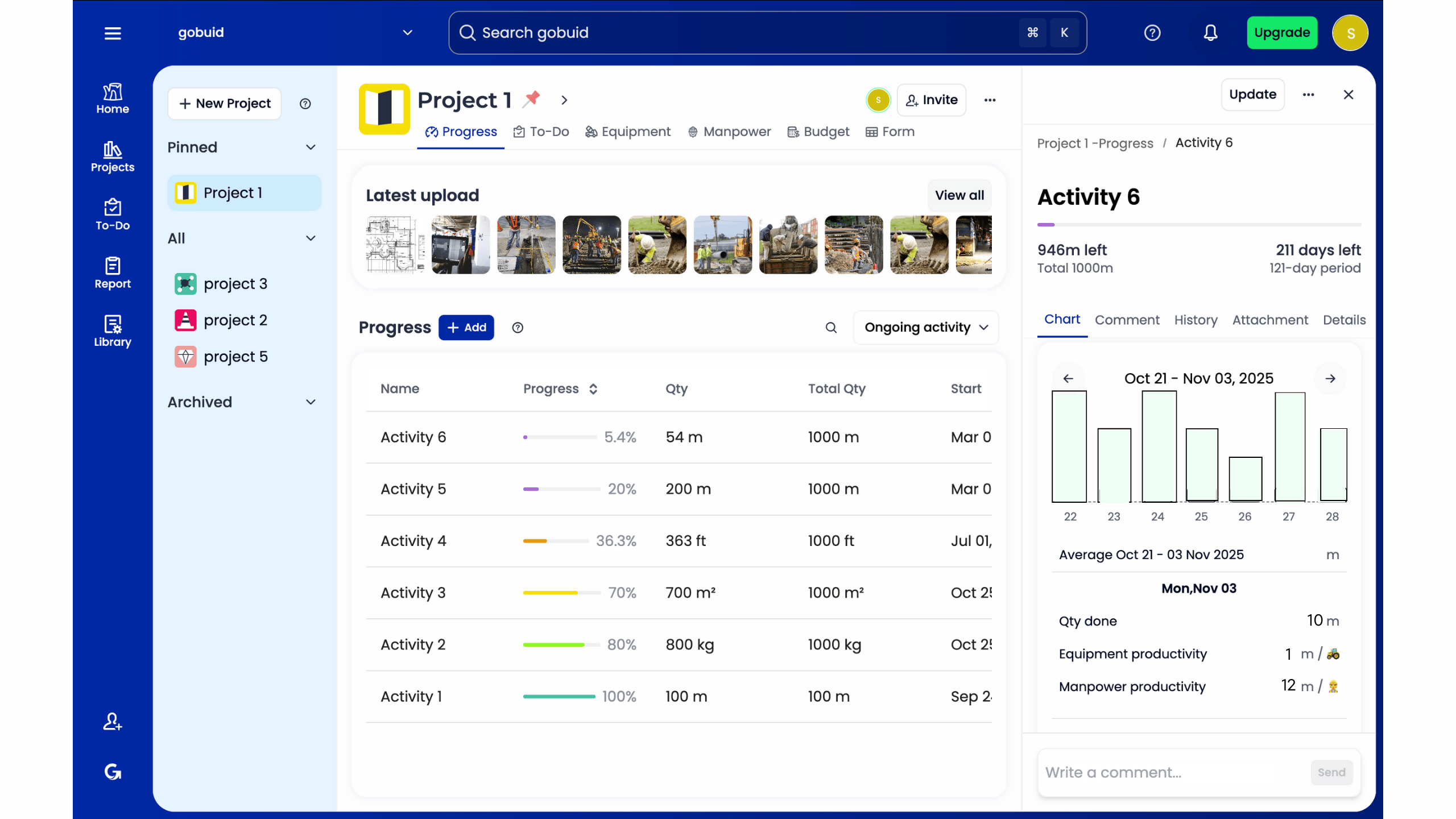
The Project Analytics Dashboard turns raw site data into actionable intelligence. It simplifies the process of maintaining BCA-compliant records, removing the friction that typically leads to missing documentation. Teams using GoBuid have reduced their administrative overhead by 30% while improving data accuracy. It’s a sophisticated tool that values your time and provides the clarity needed to keep projects on track and within budget.
Future-Proof Your Site Compliance for 2026
The industry is moving past manual checklists. By 2026, the gap between the field and the office will be bridged by real-time data and automated workflows. Modern construction safety software isn't just a compliance tool; it's a productivity engine that cuts administrative overhead by 35% and ensures every submittal is tracked. You've seen how digital transformation protects your margins. Now it's time to execute. Implementing these systems doesn't have to cause site friction. When you prioritize a single source of truth, you eliminate the 20-minute delays often spent chasing paper trails.
GoBuid acts as the digital foreman your project needs to maintain absolute site visibility. We've built a platform that respects the grit of the job site while delivering the precision of modern technology. You'll access a real-time project analytics dashboard and enjoy the flexibility of zero lock-in contracts. Stop losing hours to manual documentation and start leading with data. Generate professional reports in one click and regain control over your workflow today.
Streamline your site safety with GoBuid's one-click reporting
Your team deserves a system that works as hard as they do. Let's get the job done right.
Frequently Asked Questions
What exactly is construction safety software?
Construction safety software is a centralized digital platform that automates site inspections, hazard identification, and compliance tracking. It replaces outdated paper systems with a real-time dashboard for all project stakeholders. By 2026, 85% of tier-one contractors will use these tools to maintain safety standards. This technology ensures every field report is logged, tracked, and resolved without the risk of physical documents getting lost or damaged on-site.
How does digital safety software help with BCA compliance in Singapore?
The software streamlines BCA compliance by providing a digital audit trail that meets the 2024 WSH Council requirements. It automates CORENET e-Submissions and ensures all documentation is time-stamped and verified. Projects using digital tracking report a 30% faster approval rate during BCA site audits. It creates a single source of truth that inspectors can access instantly, removing the friction of manual logbook reviews and physical filing.
Can my foremen really learn to use this software on-site?
Field crews master the interface in under 15 minutes because the design mirrors familiar mobile apps. We prioritize a 3-click workflow that allows workers to report hazards or complete checklists without stopping their primary tasks. Over 90% of foremen report that digital tools are easier to manage than traditional paper clipboards. It bridges the gap between the field and the office, ensuring that critical safety data flows upward without delay.
Is construction safety software expensive for small contractors?
Subscription costs for small contractors start at $150 per month, making it an accessible investment for teams of any size. This monthly fee is significantly lower than the $5,000 minimum fine for basic safety non-compliance in 2025. Small firms often see a return on investment within 3 months due to reduced administrative overhead. Using construction safety software protects your margins by preventing costly stop-work orders and insurance premium hikes.
Does the software work offline if the site has poor connectivity?
The platform features a robust offline mode that saves all data locally on the device when a connection is unavailable. As soon as the user returns to a 4G or Wi-Fi zone, the system triggers an automatic sync to the cloud. This prevents data loss in basement levels or remote locations where connectivity is often below 10%. Your field reports remain accurate and time-stamped regardless of the site's digital infrastructure.
How does 'One-Click Reporting' actually save time?
One-click reporting saves time by aggregating photos, timestamps, and site notes into a professional PDF instantly. This feature eliminates the 90 minutes project managers typically spend each evening compiling daily safety logs. Automated distribution then sends these reports to stakeholders immediately. By 2026, firms using automation will reduce their total administrative workload by 25%, allowing staff to focus on high-risk site activities instead of manual data entry.
Can I customize the safety forms to match our specific ITP?
You can customize 100% of the digital forms to match your specific Inspection and Test Plans and internal workflows. Our drag-and-drop editor allows you to add custom logic, mandatory photo fields, and digital signature blocks in under 2 minutes. This flexibility ensures your safety protocols meet ISO 45001 standards and specific client mandates. You don't have to change your proven processes to fit the software; the software adapts to your needs.
What happens to our safety data if we decide to switch platforms?
You maintain total ownership of your project data and can export your entire history in CSV or PDF formats whenever necessary. We comply with the 2023 Data Portability standards, ensuring you can transition your records without friction. If you choose to switch, we provide a comprehensive data archive within 24 hours of your request. Your safety records are a critical asset, and our platform ensures they remain accessible, portable, and secure throughout the project lifecycle.