How to Maintain a Construction Site Diary: The Ultimate Guide (+ Template)
by Sam Chen
|
Pressure builds quickly on a live construction site. Weather shifts, trades overlap, and instructions change without much notice. A well-kept site diary keeps daily events from slipping through the cracks and protects your position when questions arise later.
Whether you are managing a small residential build or a major infrastructure project, this guide shows you exactly how to maintain a construction site diary that is legally defensible and professionally managed.
Key Takeaways
Transition from paper logs to digital field truth to protect your project margins and ensure total BCA compliance.
Identify the critical data points and learn how to maintain a construction site diary that serves as a bulletproof chronological record.
Stop the 48-hour information lag by replacing manual reporting liabilities with real-time site visibility.
Implement a "log-as-you-go" routine to eliminate the end-of-day administrative scramble and ensure daily consistency.
Leverage one-click reporting to bridge the gap between the field and the office, turning site data into professional documentation instantly.
⭐ Learn more about GoBuid's feature - without the heavy enterprise price tag
What is a Construction Site Diary
A construction site diary is a formal, chronological record of every activity, decision, and condition occurring on a project site. It serves as the "black box" for a construction project.
While many still use paper logs, the industry standard in 2026 has shifted to digital field truth. This replaces vague memories with high-resolution data, time-stamped photos, and verified headcounts that keep all stakeholders accountable.
Why the Site Diary is Your Best Legal Defense
If it isn’t in the diary, it didn’t happen. In construction law, "contemporaneous records" (records made at the time of the event) carry more weight than witness testimony provided months later.
Extension of Time (EOT) Claims: Roughly 75% of disputes involve delays. A meticulous diary proves why a delay happened (e.g., specific weather or late information).
Payment & Variation Disputes: Verified labor counts and equipment hours prevent overbilling and provide evidence for verbal instructions.
Health & Safety Audits: Daily logs of toolbox talks and safety checks prove due diligence during OSHA or local authority investigations.
Step-by-Step: How to Maintain a Construction Site Diary
To achieve a #1 ranking record, you must move beyond generic notes. Follow this professional structure for every entry:
1. Administrative Fundamentals

Every entry must start with the "Anchor Data":
Project Name & Contract Number
Site Location
Date & Working Hours
Weather Conditions: Record temperature, rainfall, and wind (AM and PM).
2. Labor and Manpower Tracking
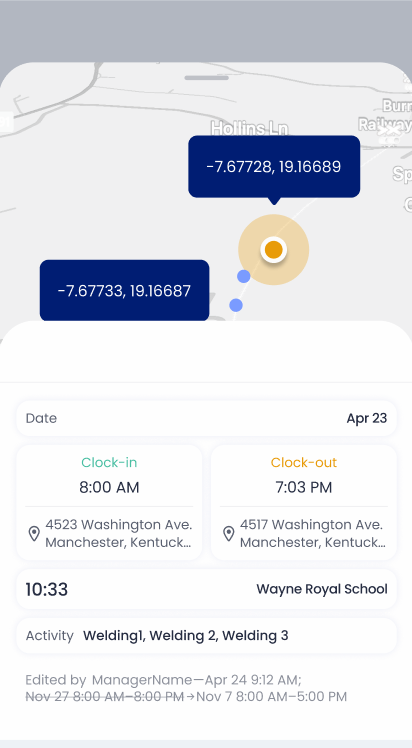
Don't just record a total number. Break it down by:
Subcontractor Name: (e.g., "SteelFix Ltd")
Trade Type: (e.g., 8 carpenters, 4 laborers)
Task Location: (e.g., "Level 3 West Wing")
3. Plant and Equipment Status
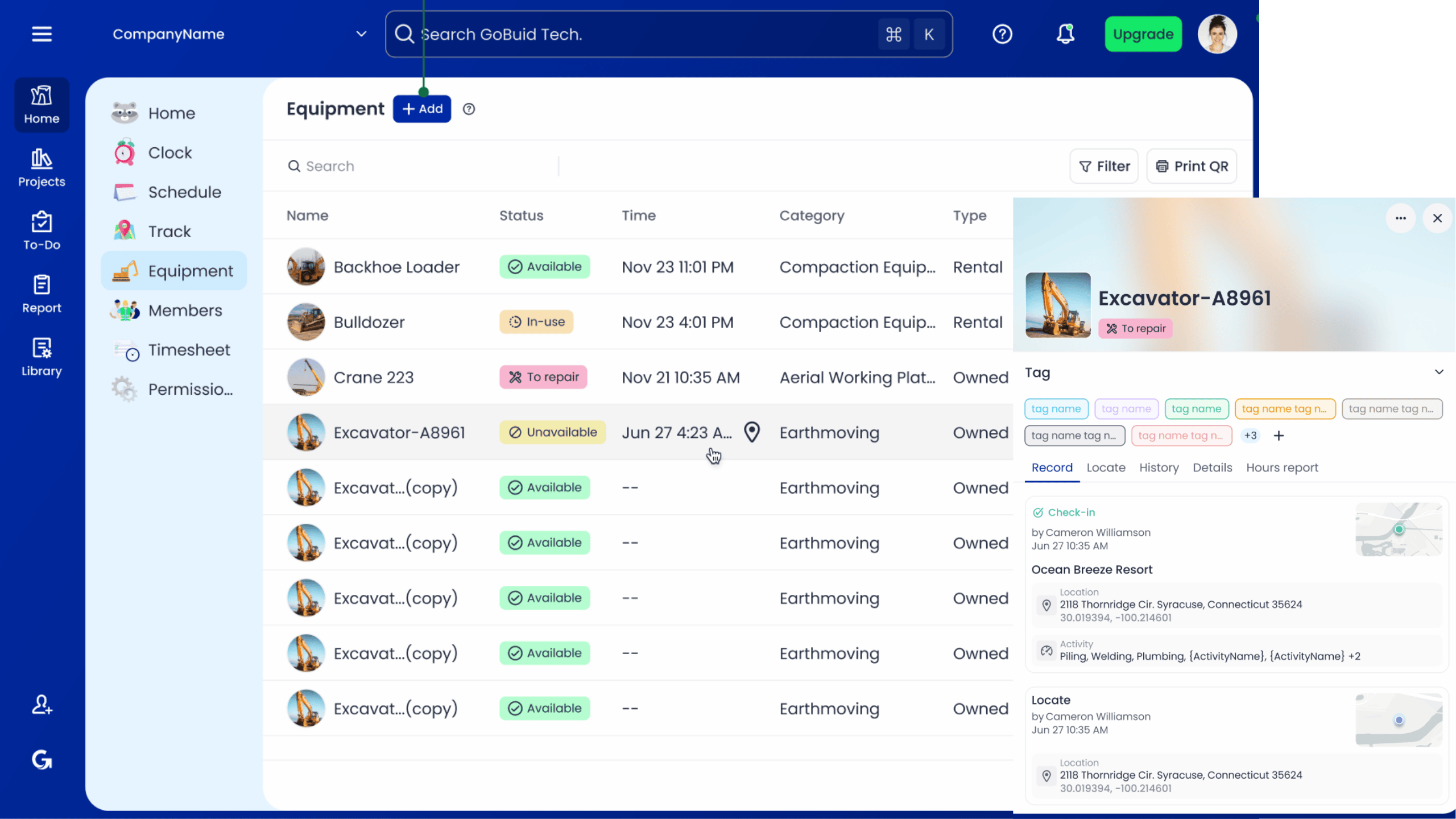
Log all major machinery on site. Note if equipment is Operational, On Standby, or Down for Repair. Downtime records are critical for claiming costs related to project disruptions.
4. Deliveries and Material Inspections
Record the arrival time and condition of materials. If a rebar delivery arrives damaged and is rejected, log the timestamp and take a photo. This protects you from "late delivery" claims from subcontractors.
5. Visual Evidence (The Gold Standard)
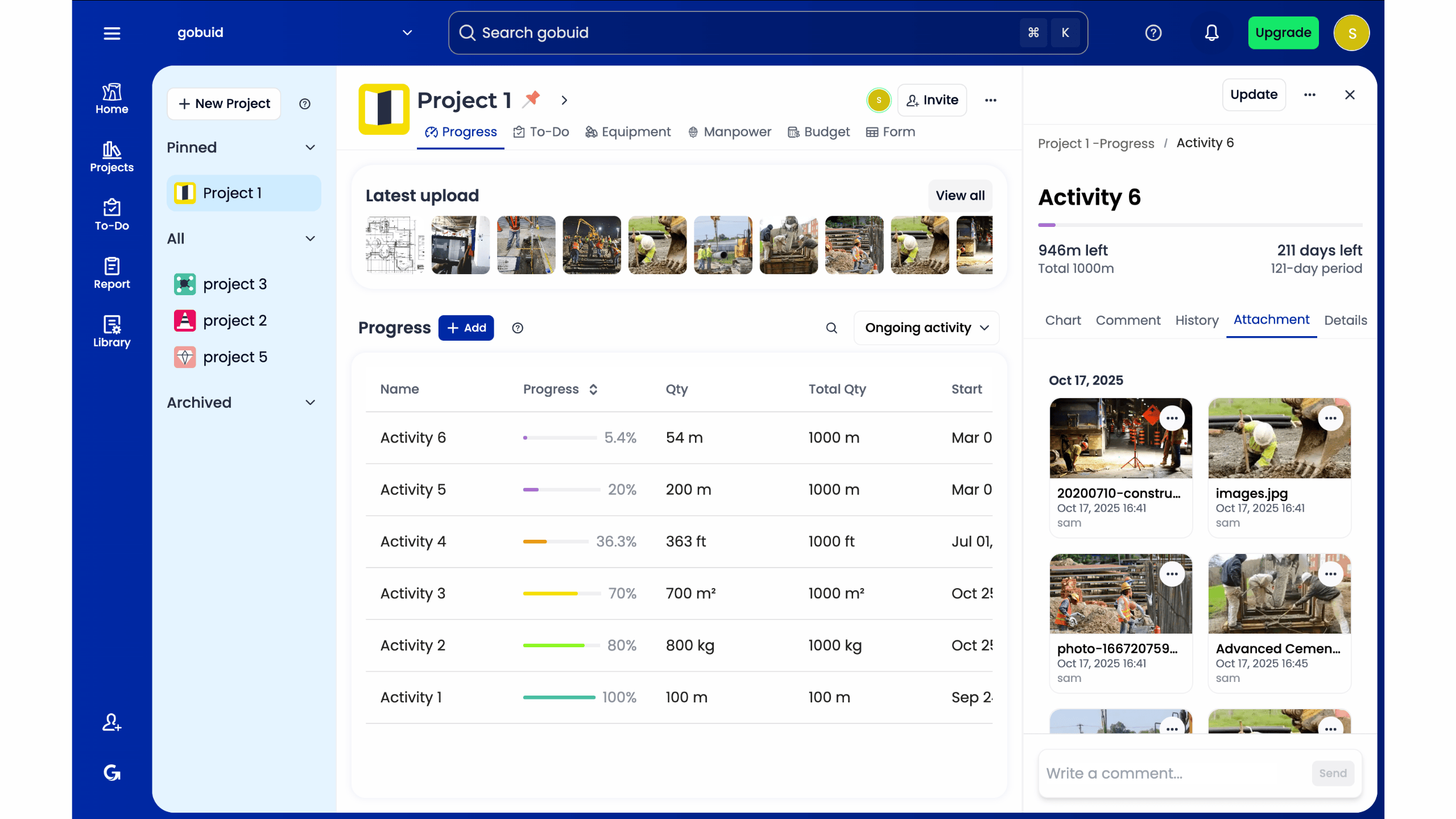
A modern site diary is incomplete without photos.
Rule: Take "before and after" photos of all covered-up works (e.g., rebar before a pour).
Requirement: Ensure photos are geo-tagged and time-stamped.
Essential Site Diary Checklist
Category | What to Log | Why it Matters |
|---|---|---|
Weather | Exact rain start/stop times | Justifies EOT claims |
Instructions | Verbal orders from Architects | Protects against variation disputes |
Delays | Cause, duration, and impacted trades | Essential for loss and expense claims |
Visitors | Client, Inspectors, or Utilities | Confirms inspections took place |
Manual vs. Digital: The Hidden Costs of Paper
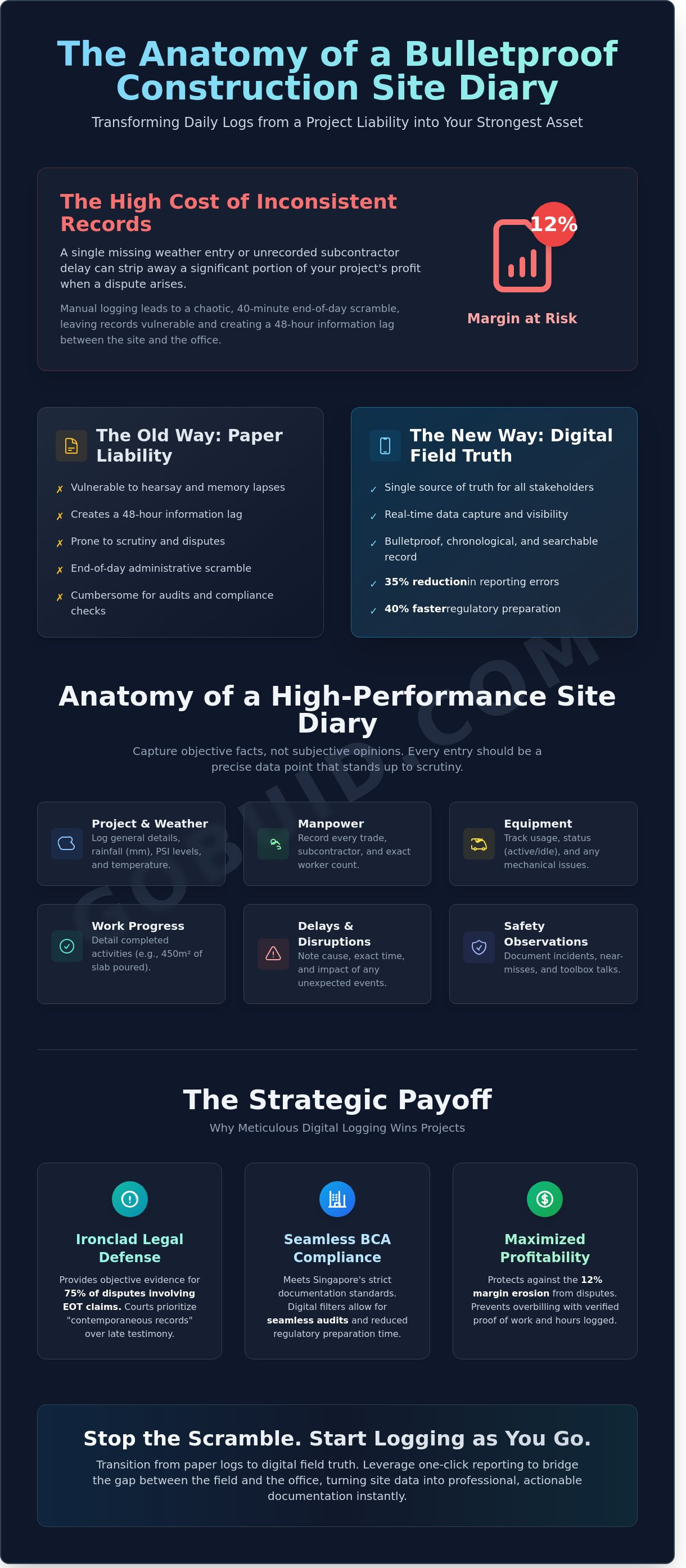
While a notebook is cheap, it is a project liability.
The 48-Hour Lag: Office managers often see site issues two days too late.
Data Integrity: 14% of paper logs are lost or ruined by mud/rain.
Searchability: Finding a specific weather event from six months ago in a notebook takes hours; in a digital system, it takes seconds.
Digital Foremen use tools like GoBuid to "log-as-they-go." Instead of a 45-minute scramble at the end of the day, they capture data in 60-second intervals throughout the shift.
Free Construction Site Diary Template (Excel)
If you aren't ready for a digital system yet, start with a structured template. Using a standardized form ensures your site managers don't miss critical data points.
[Download our Free Site Diary Template here]
The GoBuid Advantage: One-Click Professionalism
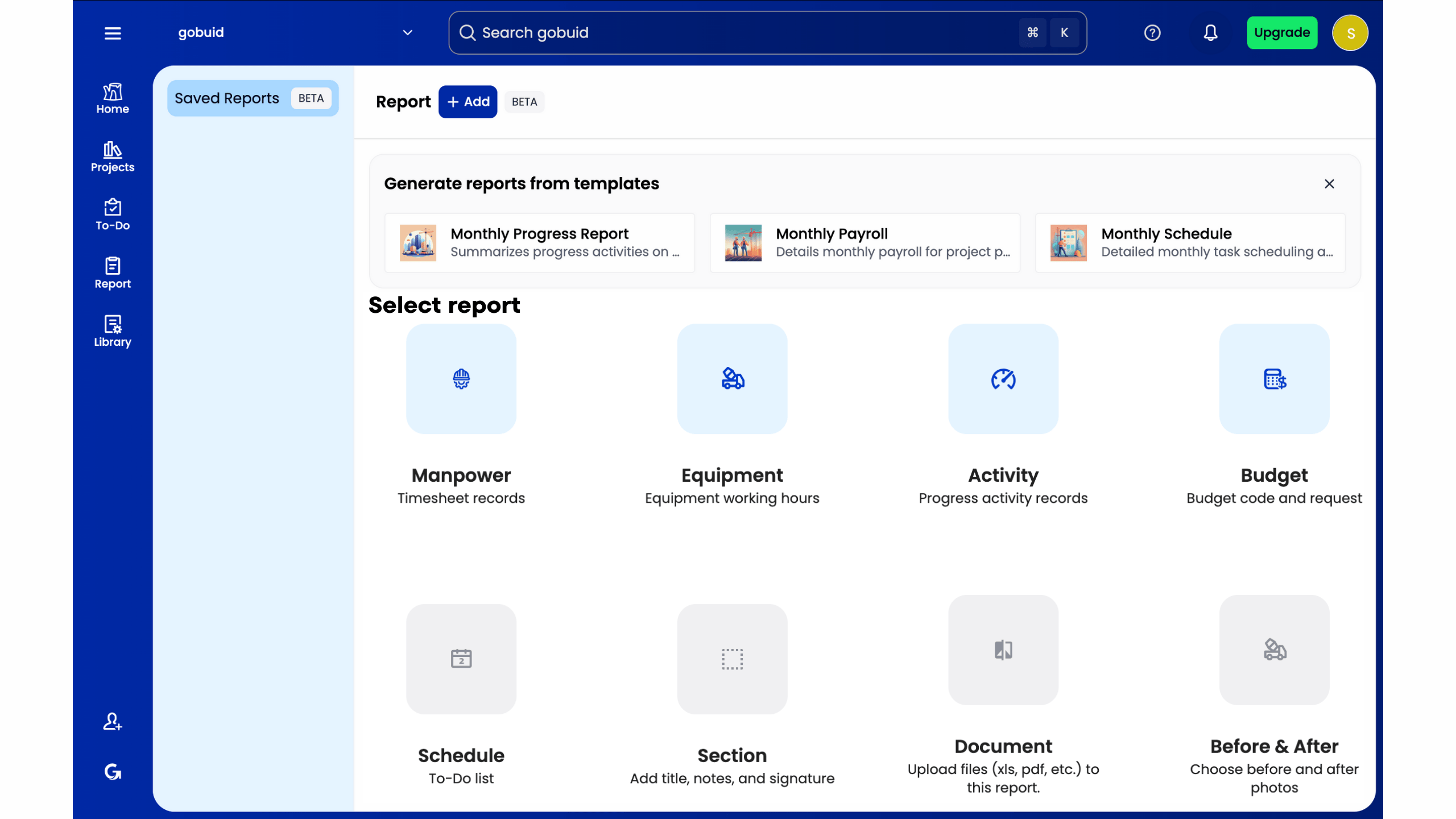
Maintaining a diary shouldn't be a chore. GoBuid acts as your digital foreman, automating the heavy lifting.
One-Click Reporting: Generate professional PDF reports for clients in seconds.
Automated Weather: The system pulls local weather data automatically.
Real-Time Dashboards: See exactly how many workers are on-site at 9:00 AM from your office.
Ready to eliminate site paperwork? [Get a 1-on-1 consultation to implement GoBuid on your project today.]
Frequently Asked Questions
Is a digital site diary legally admissible in United State courts?
Yes, digital site diaries are legally admissible in US courts under the Federal Rules of Evidence (Rule 803: Business Records Exception). You must prove the record was created in the ordinary course of business and remains untampered. Digital platforms provide automated audit trails and encrypted metadata that carry more weight than easily altered paper logs during a $500,000 liquidated damages claim.
What happens if a foreman forgets to log a day in the site diary?
Missing a day creates a gap in your project history and weakens your legal position during disputes. If a foreman forgets, enter the data immediately and mark it as a late entry to maintain honesty. Modern software sends automated 5 PM notifications to field staff, which reduces missed logs by 85% compared to manual paper systems.
How much detail should be included in a daily construction report?
Your report should include labor headcounts, equipment hours, material deliveries, and specific work progress milestones. Knowing how to maintain a construction site diary effectively means documenting 100% of site activities to prevent payment disputes. Include photos of rebar inspections or concrete pours to provide visual proof that complements your written descriptions and daily site data.
Can I use a site diary to track subcontractor performance?
Use your site diary to track subcontractor headcount against their committed schedule of works. This centralized data allows you to identify if a firm is 20% behind on manpower before it affects your critical path. Clear documentation provides the leverage needed for performance reviews or back-charging for delays caused by specific trades on the ground.
How do I document weather delays for a BCA-regulated project?
Record weather conditions twice daily and cross-reference them with NEA 24-hour rainfall data for BCA-regulated projects. Document the specific hours lost and the exact number of workers affected by the stoppage. This data is critical when filing for an Extension of Time (EOT) under the SIA Conditions of Contract or PSSCOC requirements.
What is the difference between a site diary and a site logbook?
A site diary is a comprehensive narrative of daily operations, while a site logbook typically focuses on specific equipment or regulatory checks. For example, a crane logbook tracks lifting operations, but the site diary records the overall impact of those lifts on the project timeline. Digital tools merge these into a single source of truth for better visibility.
Should I include safety incidents in the general site diary?
Record every safety incident in the general site diary to ensure a complete project timeline. While you must still file a formal incident report for MOM compliance, the diary entry provides context for resulting work stoppages. Highlighting a 2-hour safety briefing in your diary explains why productivity dipped on a specific Tuesday without leaving room for interpretation.
How long should I keep construction site diary records after project completion?
Keep your records for at least 6 years according to the Limitation Act 1959 to protect against breach of contract claims. If your project is under a deed, extend this storage period to 12 years. Learning how to maintain a construction site diary digitally makes this long-term storage easy, as cloud-based servers eliminate the need for physical archive space.