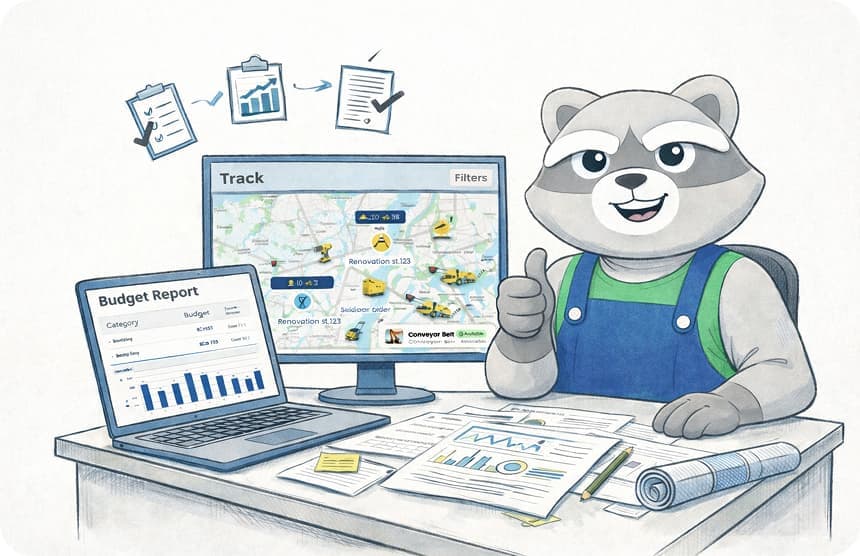
Malaysia Construction Tech 2026: Contractor's Guide
Explore practical Malaysia construction technology for 2026. Learn how contractors simplify site documentation, track workflows, and boost project delivery.
by Amelia Grant
|
Construction technology is most useful when it solves a practical site problem, such as scattered updates, hard-to-find records, or time spent compiling reports. Through platforms like GoBuid, the right tool is not necessarily the most advanced one. It should fit the way your team plans, records, and delivers work.
Digital tools can improve coordination when they support the site’s existing workflows. Start with a clear need, then choose technology that helps teams capture information consistently and act on it.
This guide covers common technology categories and how contractors use them, from site documentation and workforce tracking to BIM and automation. It also sets out a practical way to digitise site workflows and assess relevant project requirements before implementation. The focus is on clearer records, better project visibility, and tools that support field teams without adding unnecessary steps.
Key Takeaways
- Construction technology includes BIM, Industrialised Building System, digital site records, and equipment tracking, each serving a different purpose.
- Start with a recurring site problem, then map the workflow and the records teams need to capture.
- Compare tools by field usability, connectivity needs, reporting outputs, and fit with existing processes.
- Bring diaries, photos, inspections, workforce records, and equipment logs together to support clearer handovers and reporting.
Malaysia Construction Technology: What Is Changing on Construction Sites?
Construction technology covers digital systems and practical methods that support project planning, coordination, documentation, and site work. It is not one software category. On Malaysian projects, it can include tools and methods for planning work, sharing information, recording activity, and managing construction resources. The right fit depends on how a project is delivered and what information teams need to act on.
Key categories include:
- Building Information Modelling (BIM): Digital models that support the coordination and management of building information.
- Industrialised Building System (IBS): A construction approach that uses components produced for assembly, rather than relying solely on traditional on-site processes.
- Digital site records: Diaries, progress photos, inspection forms, and workforce records that capture daily activity.
- Equipment tracking: Digital logs that help teams record equipment details and follow its use across project activities.
These categories address different needs. BIM and IBS shape how building information or components are coordinated. Digital records and equipment logs support day-to-day site management. For industrial and operational environments requiring unified oversight across safety, maintenance, and contractors, platforms like BRIO demonstrate how these multifaceted workflows can be centralized. Before choosing a tool, identify the information your team needs to capture, who will use it, and how it should flow between the site and office. Don’t choose a tool just because it’s new.
How do digital tools support day-to-day site work?
Start with routine tasks: recording progress, completing safety or quality inspections, tracking manpower, and logging equipment. A consistent digital process makes records easier to find and helps site and office teams coordinate updates. For example, pairing a site diary with progress photos gives project teams a clearer record of reported work and its supporting documentation. Digital reporting tools can also bring daily information together, such as site report generation.
Digital site records are a practical starting point. For site security and access control, facility management tools such as MyGatePass help security personnel manage visitor traffic alongside broader site tracking. Analytics and automation can support additional workflows where they fit the project’s needs. Choose tools based on the records and coordination tasks your team needs, not the technology label.
How Can Malaysian Contractors Choose Practical Construction Technology?
Choose a tool to address a specific site problem, not a technology trend. A focused trial helps your team judge whether the workflow fits the work and produces useful records.
Where should a contractor begin with construction technology?
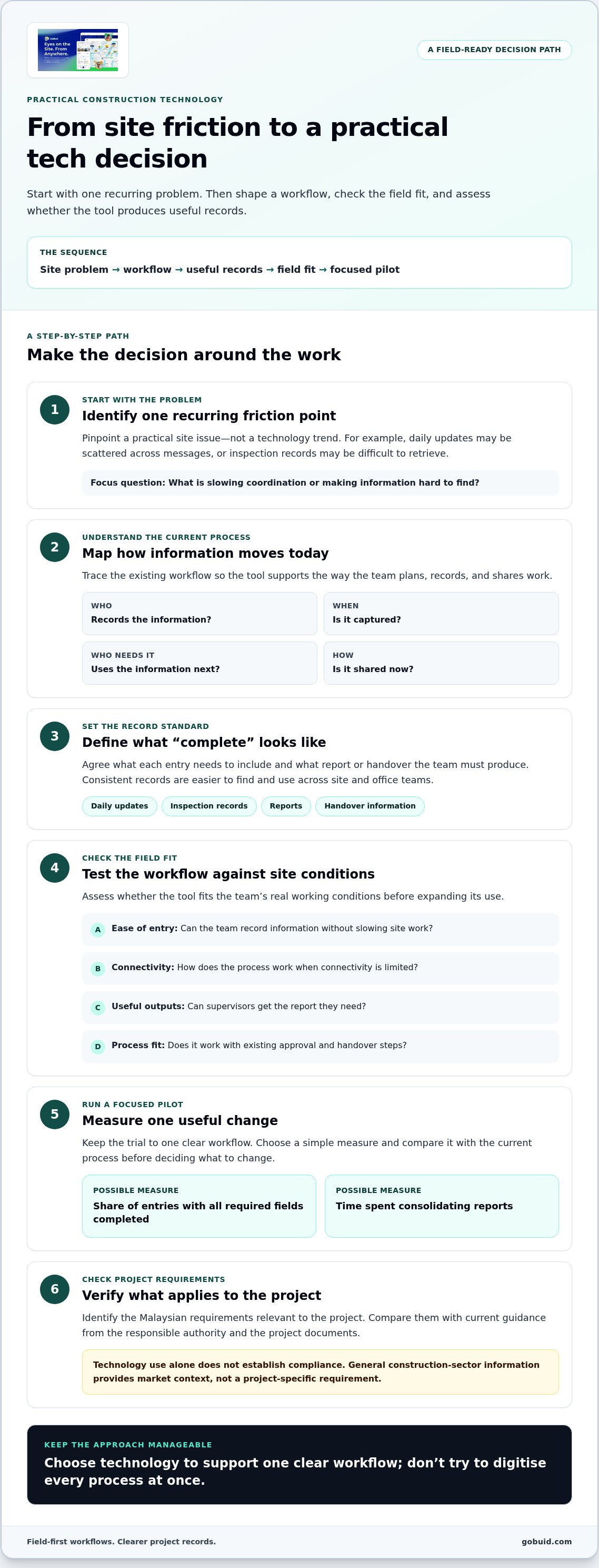
Use this sequence to turn a recurring frustration into a practical decision:
- Identify the friction point. Pinpoint one issue, such as daily updates scattered across messages or inspection records that are difficult to retrieve.
- Map the workflow. Note who records the information, when it’s captured, who needs it, and how it’s shared today.
- Define useful records. Decide what a complete entry must include and what report or handover the team needs to produce.
Next, assess the tool in field conditions. Can the team enter information without slowing down site work? How does the process work when connectivity is limited? Can supervisors get the report they need, and does the workflow fit existing approval and handover processes? For a pilot, choose a simple measure, such as the share of entries with all required fields completed or the time spent consolidating reports. Compare it with the current process before deciding what to change.
“Choose technology to support one clear workflow; don’t try to digitise every process at once.” This keeps adoption manageable and gives teams room to improve the process based on actual use. A digital site diary and reporting platform can be a practical starting point. GoBuid’s construction site-management software brings site documentation and reporting into a digital workflow.
Technology use alone doesn’t establish compliance. Identify the Malaysian requirements that apply to the project, then compare them with current guidance from the responsible authority and the project documents. Official construction-sector releases from the Department of Statistics Malaysia (DOSM) can provide market context, but general sector information is not a project-specific requirement.
From Construction Technology to Connected Site Records
Useful project documentation depends on records that teams can capture consistently and locate when work moves between the site and office. A diary entry can note completed activities; progress photos add visual context; inspection forms record observations; workforce records show manpower information; and equipment logs document equipment use. Together, these records create a clearer project history and reduce reliance on scattered updates.
What can a digital site-management workflow bring together?
GoBuid is a field-management platform for site documentation and project reporting. Teams can use its digital site diary, progress monitoring, and customized forms to record QA/QC, safety, and RFI information. The workflow works best when its forms and records match the team’s actual process and are completed consistently.
- Site diary and progress information: Record daily updates alongside progress photos and other documentation, so teams can refer to a shared project record.
- Inspection and issue records: Use digital forms for QA/QC, safety, or RFI documentation, with fields suited to the information teams need to capture.
- Workforce and equipment details: Keep manpower information and equipment logs with other site records for easier review.
- Reports: GoBuid generates progress and daily site reports with one click. Its site reporting feature brings daily information into a report for review and handover.
Clear records can make handovers easier to follow and give project teams a consistent basis for reporting. They don’t automatically establish compliance or guarantee savings. For Malaysia construction technology to support the work, set clear expectations for what each record captures, who maintains it, and how teams use it. Keep the workflow practical, then improve it as the project’s needs become clearer.
Turn One Clear Need into the Next Site Improvement
Make the next step deliberate. Choose a site process the team can improve, agree on what a useful record should show, and review whether the process still fits as project needs change. This keeps Malaysia construction technology grounded in the work, rather than adding tools for their own sake.
GoBuid helps teams bring site information into a more consistent workflow with digital site records, forms, manpower and equipment management, and one-click reporting. Explore GoBuid’s site-management features to see how the platform can support your team’s day-to-day work.
Small, well-chosen improvements can give the whole team a clearer view of the work ahead. Start where the friction is, then build from there.
Frequently Asked Questions
What is construction technology in Malaysia?
Malaysia construction technology refers to digital systems and construction methods used to support project delivery. Examples include BIM models for coordinating building information, IBS components used in construction, site-management software for field records, and equipment tracking. A contractor may use several categories on one project, but each should have a defined purpose and fit the team’s responsibilities and information flow.
How can construction technology help contractors manage site documentation?
Consistent digital records give teams a traceable project history and reduce reliance on separate notebooks, messages, and spreadsheets. Agree on fields such as date, work area, activity, and the person recording the update. Attach relevant photos or inspection notes where the workflow allows. This makes it easier to follow an outstanding item across shifts and prepare a handover, without treating the record as proof of compliance.
Is BIM the same as construction management software?
No. BIM organizes building information in a model to support design and coordination, while construction management software helps teams manage execution records and workflows, such as site diaries, inspections, manpower, and equipment. They serve different, potentially complementary roles. GoBuid is a site-management platform, not a BIM tool; its role is field documentation and reporting.
How should Malaysian contractors check whether a digital tool supports local compliance needs?
Start with the contract and project specifications, then identify applicable Malaysian requirements in current publications from the responsible authorities. Confirm each requirement’s scope, version, and relevance to the project rather than relying on a software vendor’s general statement. Map required records to the stated requirements and retain evidence as directed. Digital capture can support documentation, but software use alone doesn’t establish compliance.