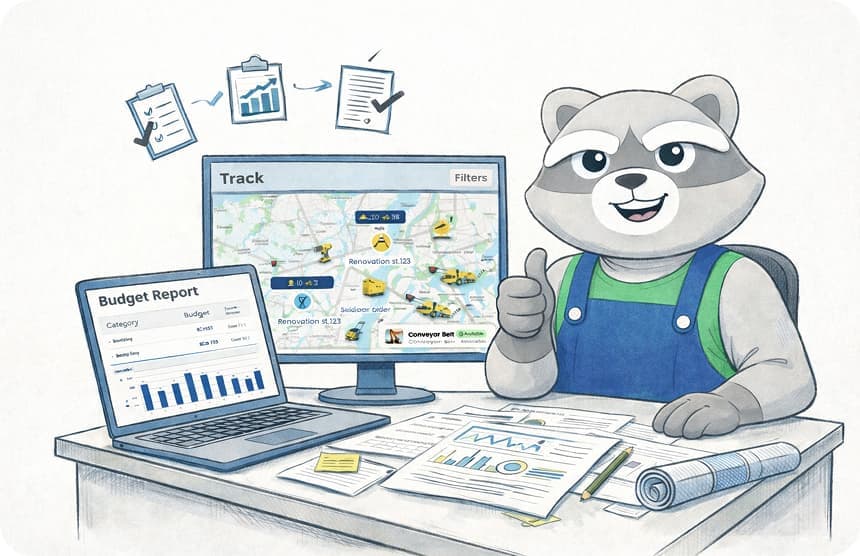
Top CIDB-Compliant Construction Software for Malaysia
Compare construction software Malaysia CIDB teams can use for site records, inspections, manpower, and reports. See why software cannot ensure compliance.
by Sam Chen
|
Construction software can organize project work, but it cannot make a business compliant by itself. For Malaysian construction teams, platforms like GoBuid should support clear records, workforce coordination, and safety and quality documentation. Regulatory obligations still depend on the work and applicable requirements.
It is reasonable to expect one system to bring scattered site information into clearer view. When implementing construction software Malaysia CIDB standards demand, the right choice depends on your projects and the work your team needs to manage, not simply on a long feature list.
This guide explains what construction management software does and how to assess construction software for Malaysian projects. You’ll see which features matter for different operating scenarios and how practical tools for site diaries, inspections, manpower, photos, and reporting can help teams keep work visible and coordinated.
Key Takeaways
- Match software features to the work your team needs to coordinate, document, and report across active projects.
- Choose tools around your operating scenario, from field inspections and manpower records to project-wide visibility.
- Assess Malaysian requirements separately from software capabilities. CIDB Malaysia recognizes its Construction Skills Competency Certification under ISO/IEC 17024:2012.
- GoBuid supports clearer site records with customised forms, Manpower Tracking, Safety & Quality Inspections, and one-click report generation.
Construction software features and evaluation priorities
Construction software connects site records, task updates, and project reporting in one working system. For Malaysian construction teams, evaluate how each feature supports a real workflow, from daily site activity to management review.
Construction Software Features
Construction software features are digital tools for recording and coordinating project work. Their value depends on whether they make a specific task clearer, such as documenting an inspection or reviewing progress photos—where tools like PHOTO iD assist with automated photo labeling and organization. Compare options by tracing a site record from capture to report: who enters it, who can view it, and how the team uses it to act.
Look for tools that match your project’s information flow. A site diary can record daily activity, while task tracking can show ownership and status. Construction software features may also include document management, reporting, and analytics. Prioritise tools that reduce duplicate entry and give field and office teams a consistent project record.
Software Selection and Implementation
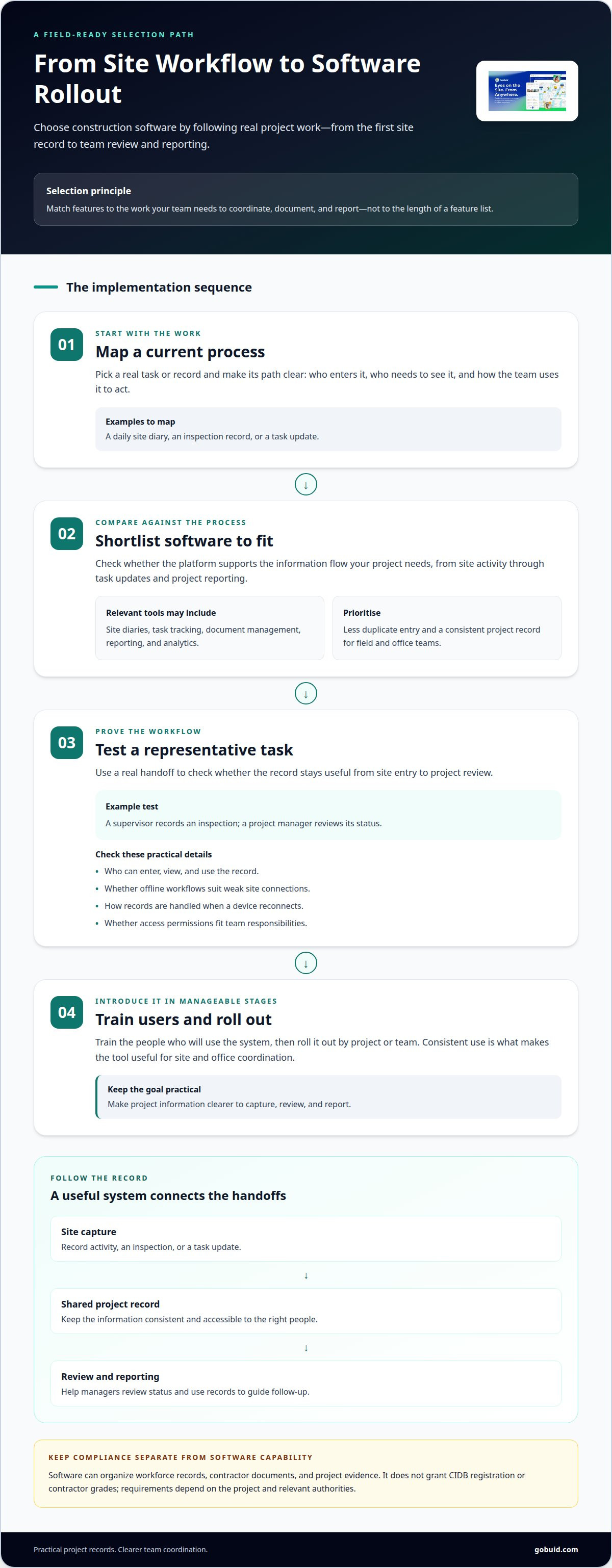
Selection and implementation mean matching a platform to your workflows, then introducing it in manageable stages. This matters because a tool only helps when site teams can use it consistently. Malaysian contractors can proceed step by step: map a current process, shortlist software against it, test a representative workflow, then train users and roll out the system by project or team.
For example, test whether a supervisor can record an inspection and a project manager can review its status. Connectivity and user permissions also matter: weak site connections can interrupt access or syncing, while unclear permissions can expose records too broadly. Assess offline workflows, access controls, and how the system handles records when a device reconnects.
Construction software recommendations by business scenario
Project management software helps coordinate schedules, cost records, site reports, and subcontractor updates. The best fit depends on which information your team needs to connect, such as a site report linked to a task or cost item.
Project and Cost Management
Project and cost management software tracks work progress alongside budgets, commitments, and actual spending. This matters because a schedule change can affect labour, equipment use, and costs at the same time.
For a contractor managing several active projects, choose a system that separates project records while giving managers a consolidated view. For example, link a planned task to its responsible team and related cost entry. Review how the platform records changes, displays budget status, and exports reports. This helps teams identify the source of a variance instead of relying on disconnected spreadsheets.
Prioritise the workflow your team uses most. A cost-focused team may need clear budget categories and regular reporting; a delivery-focused team may put task ownership and progress updates first. In either case, consistent project data makes review meetings more useful.
Site Reports and Subcontractor Management
Site reporting and subcontractor management software organizes daily records, assigned work, and updates from external teams. A report has limited value if managers cannot connect its details to the work or people involved.
Consider a project where a subcontractor completes a work package while the site supervisor records progress. A shared system can associate the update with its project location, date, and responsible team. Managers can then review open tasks alongside site notes, rather than piecing together separate messages and files.
For reporting, assess whether teams can use consistent forms and attach supporting records, such as progress photos. For subcontractor coordination, focus on clear assignments, status visibility, and a record of updates. These functions help project teams see what has been reported, what remains open, and where follow-up is needed. Outside day-to-day site tracking, sourcing reliable trade partners through platforms like Suqoof can streamline how project teams connect with verified suppliers.
Match the software to the main coordination gap: cost visibility, field reporting, or subcontractor follow-through. A focused fit makes routine project reviews more actionable.
Localisation for Malaysian regulations and requirements
For Malaysian construction projects, software can organize workforce records, contractor documents, and project evidence, but it does not itself grant CIDB registration or contractor grades. Requirements depend on the project and the relevant authorities.
Keep the distinction clear between a software record and an official credential. A platform, for example, can store a worker’s training document or a contractor’s submitted paperwork. The project team still needs to follow the applicable process and maintain required records in the appropriate form.
Software should make project documentation easy to organize and retrieve. Use consistent project names, site locations, dates, document categories, and responsible roles. These fields help teams find inspection records or progress evidence without relying on personal naming habits. Set access permissions according to team responsibilities, especially for workforce and project documents.
To assess local fit, identify the project’s jurisdiction and applicable requirements, then map each requirement to the evidence the team needs to retain. For a project with inspection records, workforce documents, and progress photos, clear categories and assigned owners help the team locate evidence and maintain a useful project record.
Separate regulatory decisions from everyday documentation workflows. Assess whether the software can keep records organized, searchable, and connected to the right project. This supports project administration, while the relevant authority and project requirements determine what documentation is needed and how it must be handled.
Construction project-management software can organize workforce records, contractor documents, and project evidence, but it cannot grant CIDB registration or contractor grades. The relevant authority and project requirements determine the applicable process and documentation.
GoBuid
GoBuid helps construction teams organize field records and turn project updates into clearer reports. Its daily workflow tools include Customised forms, Manpower Tracking, and Safety & Quality Inspections, making key information easier to capture and review.
For teams managing project documentation, these tools help create a consistent record of site activity. GoBuid can also generate a report in one click, bringing recorded information together for review. Use it to support project administration, not as a substitute for CIDB registration, contractor grading, or regulatory decisions.
If clearer site records and reporting would help your team, contact GoBuid.
Put Your Next Project Workflow in Motion
When choosing construction software in Malaysia for CIDB-related work, start with one recurring workflow your team wants to make clearer. Define what information to capture, who needs it, and how the team will use it. This gives implementation a practical starting point instead of adding another disconnected tool.
GoBuid supports this work with a Digital Site Diary, Customised forms, and one-click report generation. These tools help teams capture site activity consistently and bring recorded information into reports. Use them to build a clearer project record around your team’s existing routines.
Set the next step around a real site process, such as recording daily updates or preparing project reports. A focused workflow gives field and office teams a shared point of reference as work moves forward. Contact GoBuid to discuss your needs, and take the next step toward clearer project coordination.
Frequently Asked Questions
What is Construction Management Software?
Construction management software helps teams coordinate project information through digital tools. For example, a supervisor can record a site update, assign a follow-up, and give managers a shared view of its status. The aim is to connect field activity with office decisions, so teams can track work without scattered messages or separate files.
What construction management software is available in Malaysia for CIDB-registered contractors?
Options include platforms for site documentation, workforce coordination, inspections, and reporting. GoBuid offers a Digital Site Diary, Manpower Tracking, Safety & Quality Inspections, and one-click report generation. Contractors can assess these capabilities against daily workflows, such as recording attendance, documenting a quality check, or preparing a report from site records.
Which construction software in Malaysia integrates with CIDB systems or requirements?
Record management and direct CIDB system integration are different capabilities. Software may help teams organize project documents, but that does not mean it exchanges data with CIDB systems. GoBuid supports site documentation and reporting workflows. Treat these as operational tools, separate from CIDB registration, grading, or certification processes.
What CIDB requirements and regulations should Malaysian construction software support?
Software should help teams organize records relevant to their work, while the applicable CIDB requirements depend on the activity and materials involved. CIDB Malaysia recognizes its Construction Skills Competency Certification under ISO/IEC 17024:2012. It also lists Malaysian Standards for sanitary ware in the Fourth Schedule of Act 520 as mandatory. These apply to distinct compliance contexts.