Construction IT Jobs: Essential Skills and Career Paths
Explore high-demand construction IT jobs. This guide shows how to leverage your field experience for high-growth roles in BIM, VDC, and tech support.
by Sheldon Huang
|
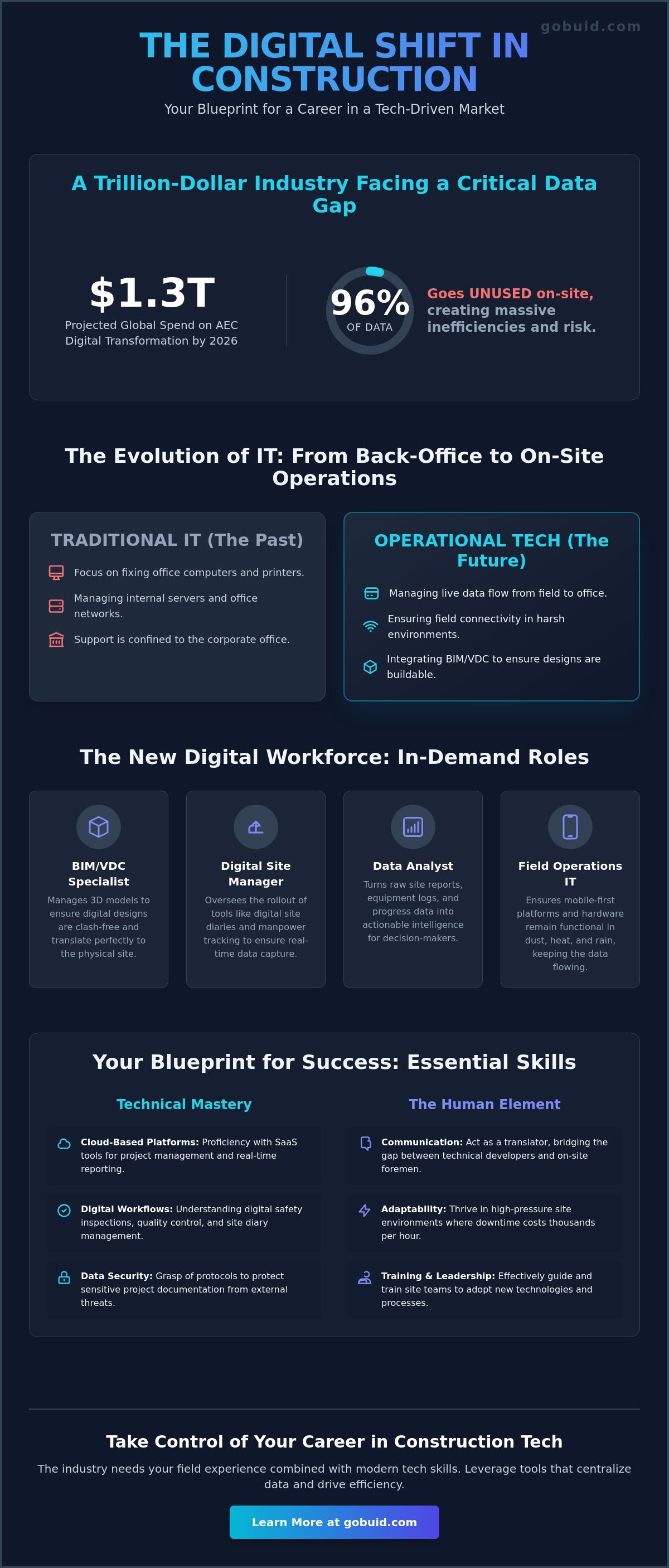
Global spending on digital transformation in the AEC industry is projected to hit $1.3 trillion by 2026, yet 96% of data captured on-site goes unused. This massive gap has created an urgent demand for specialized construction it jobs that bridge the divide between physical labor and digital precision. You've likely felt the pressure of new software rollouts or worried about how automation might change your daily work. It's a common concern, but the industry doesn't just need more coders. It needs professionals who understand how a project actually moves from dirt to delivery.
You'll discover how to leverage your field experience to secure high-growth positions in BIM, VDC, and technical support. We'll identify the industry-standard tools you need to master and provide a clear roadmap for your career transition. From managing digital site diaries to leading project analytics, you'll learn how to take control of your professional trajectory. This guide simplifies the path from the field to the site office, ensuring you remain an essential member of the team in a tech-driven market.
Key Takeaways
- Transition from traditional back-office support to operational technology that manages real-time site data and infrastructure.
- Identify essential roles, including BIM Specialists and Digital Site Managers, that are currently shaping the digital job market.
- Learn how to position your field experience to secure high-value construction it jobs by mastering industry-standard software.
- Discover how tools like digital site diaries and one-click reporting automate manual tasks and increase individual productivity.
- Gain a clear roadmap for future-proofing your career through technical innovation and data-driven project management.
- ⭐ Learn more about GoBuid's feature - without the heavy enterprise price tag
##Table of Contents
##The Rise of Digital Operations: Defining Construction IT Jobs
Modern construction it jobs have moved from the server room to the site office. These roles manage the hardware, software, and data infrastructure required to execute complex builds. We are seeing a fundamental shift from "Back-Office IT," where the focus was fixing computers, to "Operational Tech," which prioritizes managing live site data. This transition ensures that the precision of digital tools meets the physical reality of the job site.
To better understand this concept, watch this helpful video:
Why the Construction Industry is Hiring IT Talent Now
The industry is pushing for digital site documentation to meet modern standards. For instance, the updated Hazard Communication Standard has a strict compliance deadline of May 19, 2026. Firms are integrating SaaS platforms to replace manual paper-based site diaries with digital alternatives. With 72% of construction firms now prioritizing digital transformation, the demand for tech-savvy staff is peaking. Data-driven insights from a Project Analytics Dashboard are no longer optional. They are essential for protecting project ROI and ensuring total transparency across the build.
Traditional IT vs. Construction Technology Roles
Standard network administration focuses on office connectivity and security. In contrast, construction technology roles like Virtual Design and Construction (VDC) focus on Building Information Modeling (BIM) to ensure digital designs are buildable. IT teams in this sector must also maintain field connectivity and ensure mobile hardware reliability in harsh environments. They don't just manage servers. They ensure the connective tissue of the project remains intact across disparate locations, from the corporate office to the remote job site.
##Core Roles and Essential Skills for the Modern Builder
The digital transformation has created a new hierarchy of construction it jobs. It's no longer just about fixing printers or managing office networks. Specialized roles now manage the entire project lifecycle from a digital-first perspective. BIM/VDC Specialists lead the charge by managing 3D models to ensure digital designs translate perfectly to the physical site. Digital Site Managers oversee the rollout of Digital Site Diaries and manpower tracking systems. These roles ensure that data remains a tool for progress, not a hurdle.
Data Analysts are the new decision-makers on site. They turn raw site reports and equipment logs into actionable intelligence. Meanwhile, IT Support for Field Operations ensures that mobile-first platforms remain functional in dust, heat, and rain. Modern construction it jobs demand a blend of technical mastery and field logic. They don't just fix hardware; they manage the flow of critical information. These professionals understand construction IT skills and career paths are built on a foundation of operational awareness.
Technical Skills Every Candidate Needs
Success in this field requires more than basic computer literacy. You must be proficient in cloud-based reporting and project management software. Understanding Safety & Quality Inspections digital workflows is critical for maintaining site compliance. You also need a firm grasp of data security protocols. Protecting sensitive project documentation from external threats is a top priority for modern firms. If you want to streamline your own site documentation, consider how a Digital Site Diary can centralize your data.
The 'Soft' Skills of Construction IT
The most effective IT professionals are translators. They bridge the gap between technical developers and site foremen. You must be adaptable. Site environments are high-pressure, and technology downtime can cost thousands per hour. Training site teams to adopt new Digital Forms is a core responsibility. You need the patience and clarity to explain complex workflows to workers who prioritize speed and safety over software mastery. This hybrid skill set makes you an indispensable asset on any project team.
##How to Future-Proof Your Career with Construction Software
The most valuable employees in modern construction it jobs are those who eliminate operational friction. You don't need to be a developer to automate manual reporting processes. Mastering tools like One-Click Reporting reduces administrative overhead instantly. It transforms hours of paperwork into seconds of data processing. This efficiency increases your individual productivity and makes you an essential asset to any project leader. While you should remain platform-agnostic, becoming an expert in field service management software provides a competitive edge that generic IT roles lack. Use these tools to turn chaotic site data into a unified data point for your team.
Transitioning from Field Work to Digital Management
Your time on the tools is your greatest technical asset. Leverage that field experience to become a "Power User" of Construction Management Software. You know where the manual friction points are on-site because you've lived them. Propose digital solutions to management that solve these specific bottlenecks. By bridging the gap between physical labor and digital oversight, you position yourself as a leader. This hybrid authority is exactly what firms need to manage the connection of disparate operational locations.
The Long-Term Outlook for Construction IT Careers
The outlook for this sector is aggressive. According to the Bureau of Labor Statistics Occupational Outlook Handbook, technical roles across all industries continue to see strong demand, but construction tech is growing at a unique pace. The AI-in-construction market is expected to grow to an estimated $22.68 billion by 2032. We are seeing a rapid shift toward AI-assisted analytics and automated Equipment Management. GoBuid serves as the ideal training ground for these construction it jobs, offering the tools you need to master real-world data. Ready to lead the digital charge? Explore the GoBuid platform to see the future of site management.
##Master the Digital Job Site
Taking control of your career path requires the right tools to bridge the gap between the field and the office. Streamline your site operations with GoBuid's digital toolkit. You'll gain access to one-click reporting for instant visibility and a comprehensive project analytics dashboard to drive results. These features provide the transparency needed to lead modern projects with confidence and eliminate manual friction points.
##Frequently Asked Questions
What are the most common entry-level construction IT jobs?
Most professionals enter the field as BIM Technicians, Field IT Support specialists, or Digital Document Controllers. These roles focus on the immediate needs of the job site, such as maintaining connectivity in harsh environments and supporting crews with mobile hardware. They serve as a vital training ground where you learn to manage real-time data before advancing into high-level operational management or technical leadership positions.
Do I need a degree in computer science to work in construction IT?
A formal computer science degree is not a strict requirement for many roles in this sector. While technical literacy is fundamental, employers often prioritize candidates who possess practical field experience and specific software certifications. Your ability to understand the logic of a build and translate physical workflows into digital site diaries is often more valuable to a project team than theoretical coding knowledge.
How much do construction IT jobs pay compared to standard IT roles?
Compensation for construction it jobs is highly competitive, reflecting the specialized nature of the industry. Verified data for 2026 shows that Construction Technology professionals earn an average of $45,333, while those in Construction Engineering Technology roles see averages around $88,563. For those working as IT Contractors, the average annual salary reaches $113,676, often exceeding standard corporate IT support positions due to the complex environmental demands of the site.
What software should I learn to get a job in construction technology?
You should prioritize learning industry-standard BIM modeling tools and cloud-based field management platforms. Proficiency in data visualization and automated reporting is also a high-value asset. Mastering the GoBuid platform for one-click reporting and manpower tracking will prepare you to manage the unified data points that modern firms require. These tools are essential for ensuring total transparency and maintaining a single source of truth throughout the project lifecycle.