Guide to Singapore's IDD Framework for Construction
IDD framework Singapore construction explained: a practical guide to sharing project information across design, fabrication, site delivery, and asset managem...
by Sophia Bennet
|
Integrated Digital Delivery (IDD) connects digital technologies, project information, and construction stakeholders across a project’s lifecycle. It links design, fabrication, construction, and asset management so teams can carry useful information between stages.
A model helps only when its information reaches the people planning and carrying out the work. The challenge is coordinating those handoffs, not just creating digital models. This guide explains how IDD workflows share project information, what contractors can consider when planning implementation, and how digital records can support each lifecycle stage. It covers where BIM fits, how information moves between teams, and why clear roles and data practices matter. Use these ideas to assess how connected project delivery could fit your construction workflows.
Key Takeaways
- Distinguish a BIM model from an IDD workflow: the framework connects project information, people, and processes across the asset lifecycle.
- Set clear information standards, roles, and shared data practices to help project teams coordinate their work.
- Plan IDD around the project’s needs and apply it across design, fabrication, construction, and asset management.
- Use digital project records to support clearer site reporting and more informed decisions as work progresses.
IDD workflows and shared project information
Integrated Digital Delivery connects project stakeholders, technologies, and information across construction workflows. It coordinates digital processes rather than treating each handoff as a separate task.
IDD Project Process Framework
The IDD framework connects digital design, digital manufacturing, digital construction, and digital operation and maintenance. It helps teams plan what information each stage needs and how that information moves forward. Define project use cases, assign responsibilities, and identify deliverables at each handoff. For example, design information can support fabrication planning, site coordination, and later building operations. Clear handoffs help teams track decisions and avoid repeated data entry.
Core IDD Components
BIM provides a model-based foundation for coordinating building geometry and project information. Virtual design and construction uses digital models to plan and review work before site execution. Digital collaboration helps stakeholders share updates, resolve issues, and record decisions. Together, these practices make project information more useful to field teams, not just the designers who created it.
Traditional delivery can separate project stages and their records. IDD connects information across those workflows, but BIM alone does not constitute full IDD implementation. For each project, document the intended use cases, accountable roles, and required deliverables in the delivery plan. These practical elements clarify how participants coordinate, regardless of the software they use.
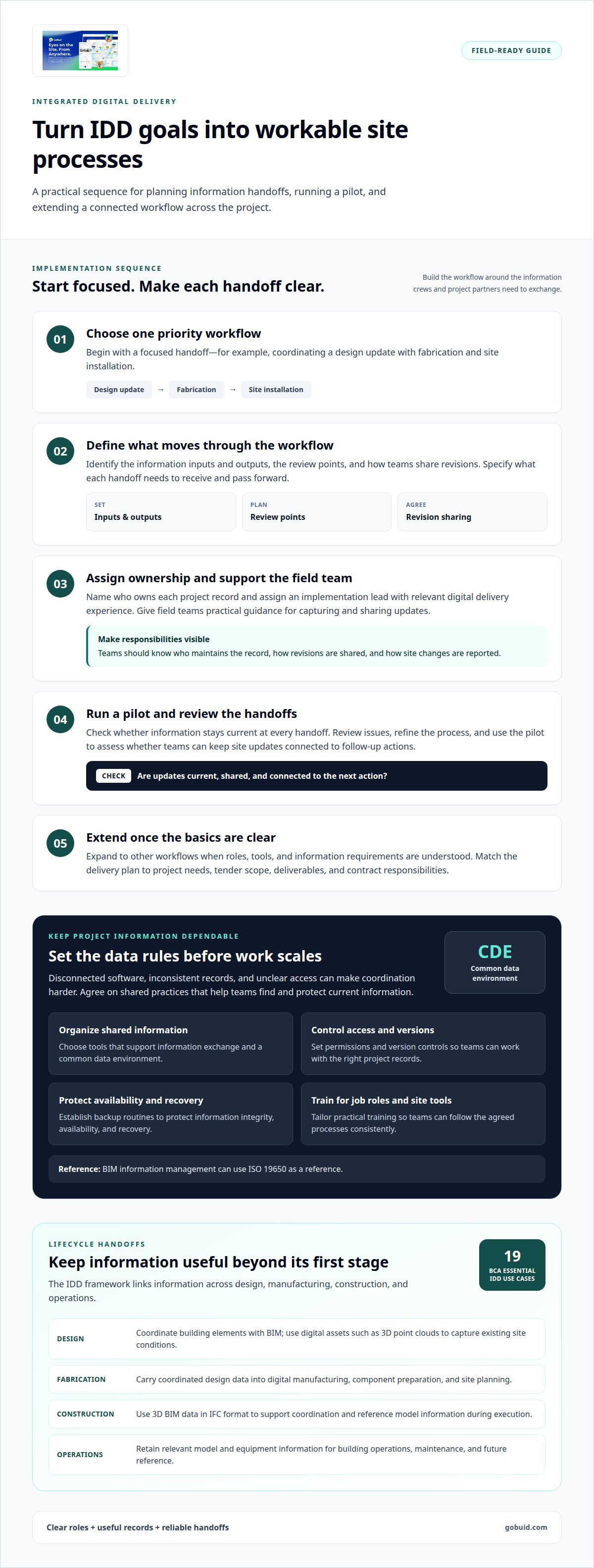
Choose software that supports information exchange and a common data environment (CDE), where project information is organized for team access. BIM information management can use ISO 19650 as a reference. Establish file conventions, access controls, and backup routines so teams can find current information and protect its integrity, availability, and recovery.
How Can Contractors Implement IDD in Singapore?
For US contractors, IDD implementation starts with project needs, tender commitments, and team capability. Plan digital delivery processes around the information crews and project partners need to exchange.
Start implementation with a focused workflow, such as coordinating a design update with fabrication and site installation. Define who owns each project record, how teams share revisions, and how field staff report changes. Then check whether the process keeps information current at every handoff. Extend it to other workflows once roles, tools, and information requirements are clear.
IDD Plans in Tenders
An IDD implementation plan in a tender describes how the contractor will coordinate project information digitally. Proposed processes should match the tender’s scope, deliverables, and responsibilities. Map the intended workflows, identify accountable roles, and explain how teams will share updates. For example, show how a design change will reach fabrication and site teams. Align the plan with tender and contract requirements.
Common adoption challenges include disconnected software, inconsistent records, and uncertainty about who can access project information. Set permissions, version controls, and backup routines for shared data. Tailor training to job roles and the tools used on site so teams can follow those processes consistently. Funding or grant support depends on the programs available to a company and project, so base the implementation plan on confirmed resources.
Contractor Planning and Implementation Steps
Contractor planning turns IDD goals into clear responsibilities and workable site processes. Choose a priority workflow, define its information inputs and outputs, and set review points. Assign an implementation lead with relevant digital delivery experience, and give field teams practical guidance for capturing and sharing updates. Start with a pilot, review handoff issues, and refine the process before extending it across the project.
During a pilot, a shared digital workflow can help teams keep site updates connected to follow-up actions, giving supervisors a clearer view of progress.
IDD use cases for design, fabrication, construction, and asset management
IDD becomes practical when project information stays useful beyond its original stage. Singapore’s BCA identifies 19 essential Integrated Digital Delivery use cases across building lifecycle stages, connecting design, manufacturing, construction, and operations.
During design, teams use BIM models to coordinate building elements and review design decisions. Digital assets such as 3D point clouds can capture existing site conditions, giving designers a shared reference before work begins. Clear, structured information at this stage gives later teams a more dependable foundation.
In fabrication, coordinated design data can inform digital manufacturing and component preparation. Teams can align model information with production needs, then carry relevant details into site planning. The key is to maintain useful, consistent information as responsibility passes between designers, manufacturers, and contractors.
On site, construction teams can use 3D BIM data in IFC format to support coordination and reference model information during execution. For example, teams can compare planned components with site conditions and share relevant updates with project stakeholders. That makes the model part of the delivery workflow, rather than a file used only during design.
At handover, digital assets can support operations and maintenance by carrying building information into the asset-management stage. Teams can retain relevant model and equipment information for future reference. The practical takeaway: define what each stage needs to receive and pass forward, so information remains usable across the construction project. To organize project performance information in one place, explore a digital project workflow.
BCA identifies 19 essential IDD use cases spanning design, manufacturing, construction, and operations. The guidance centers on coordinating BIM and other digital information across these stages, including using 3D BIM data in IFC format on site and defining what information each stage must receive and pass forward.
GoBuid: generate report in one click
GoBuid helps construction teams organize site records that support project delivery. Use customised forms to capture consistent updates, Manpower Tracking to record workforce information, and Safety & Quality Inspections to document site checks. Generate a report in one click when records need to be shared. This supports clearer reporting alongside an IDD workflow, while project teams manage their own BIM models and lifecycle information.
Turn to these tools when site updates are spread across forms or teams need a consistent record of field activity. They support day-to-day project documentation, not the design or engineering work behind an IDD model. To explore GoBuid for your construction workflows, visit gobuid.com.
Put IDD into Practice on Site
The next step is to turn IDD goals into a repeatable site routine. Agree how teams will capture updates, flag changes, and carry decisions from site activity into project records. Keep ownership clear at every handoff, then review whether field information helps the next team act. Focus on improving how work moves across the project, not just on adopting digital tools.
For teams putting an IDD framework into practice across Singapore construction, GoBuid supports field recording. Its Digital Site Diary lets teams capture site activity as work progresses, alongside the project’s wider digital processes. Use it to maintain consistent daily records and visibility between project locations, and to support follow-through.
Choose one workflow to strengthen first, then build from what the team learns on site. Contact GoBuid to discuss IDD and identify a practical starting point for your project. Clear records and ownership give your team a solid base for the next improvement.
Frequently Asked Questions
How Does IDD Work in Construction?
IDD keeps project information connected as decisions and responsibilities move between teams. For example, if a design change affects a prefabricated component, the relevant update should reach those planning fabrication and site installation. Agree on information owners and review points so teams can identify current decisions, resolve clashes, and keep work aligned rather than relying on separate, outdated records.
What Are the Benefits of IDD for Construction Companies?
IDD can help construction companies coordinate work, reduce duplicated information handling, and make decisions using more consistent project data. A practical benefit is when a site team can find the current drawing or recorded change without chasing separate email threads. The value depends on teams using shared information in their workflows, not simply storing digital files in one place.
What Is Integrated Digital Delivery (IDD) in Singapore?
Integrated Digital Delivery in Singapore is a whole-lifecycle approach that connects digital technologies with construction processes and project stakeholders. It brings coordinated information into decisions from early project work through operations. For contractors, this means considering how site teams receive, use, and return project information, rather than treating digital delivery as the design team’s responsibility alone.
Why Is IDD Important for Singapore's Construction Industry?
IDD matters because construction work depends on information passing between organizations, disciplines, and project stages. If a change reaches one team but not another, planning and execution can diverge. A coordinated delivery approach gives project participants a clearer basis for decisions and handoffs. It also supports Singapore’s broader shift toward digital processes in the built environment.
What does IDD mean in Singapore construction?
IDD means Integrated Digital Delivery: a coordinated way to use digital information across construction projects. It connects people, processes, and project data so information can support decisions beyond the stage where it was created. Contractors can use this definition to assess whether a project’s tender or contract requires specific IDD deliverables or workflows.