2026 Singapore ePTW Compliance: Construction Safety Guide
Explore ePTW compliance Singapore construction 2026, from project requirements to field-ready permit workflows, staff training and safer hazardous work.
by Amelia Grant
|
For electronic Permit to Work standards inspired by international safety benchmarks like Singapore's 2026 ePTW compliance Singapore construction guidelines, main contractors managing major public-sector projects must implement robust digital systems. While such mandates often target high-value government developments rather than applying universally to every private site, modern construction firms nationwide rely on platforms like GoBuid to meet evolving safety expectations.
Permit workflows need to function where hazards arise, not merely look complete in a digital record. This guide explains why electronic permits matter for hazardous work, which projects fall under strict oversight, and how teams can implement a system and train staff to use it. It also covers making permit controls, approvals, and records easier to follow across site operations, so the process supports safe work without adding unnecessary friction.
Key Takeaways
- See how electronic permits can bring hazard controls, approvals and site records into a clearer workflow.
- Understand how the public-sector mandate differs from private-project adoption.
- Learn what to plan for when setting up ePTW workflows and preparing staff to use them on site.
- Explore how GoBuid’s Project Analytics Dashboard, customised forms and Safety & Quality Inspections can help teams keep project information organised.
Why are e-PTWs essential for hazardous construction site work?
The Workplace Safety and Health Act sets workplace safety standards, and a February 2024 WSH circular sets out ePTW specifications. For site teams, electronic permits make hazard controls and work authorisations easier to track before tasks begin.
Controls for High-Risk Construction Work
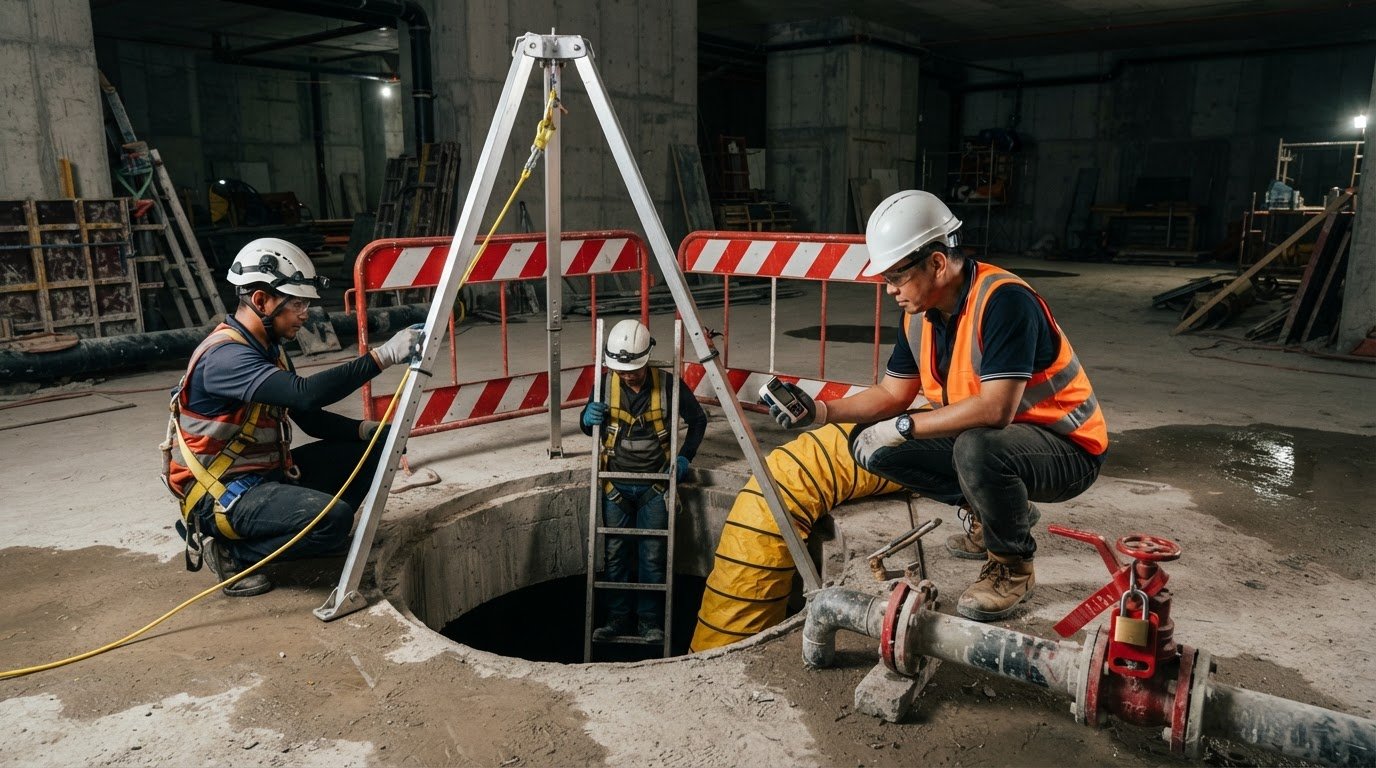
An electronic permit records the task, its location, hazards, controls and required approvals. For confined-space entry, hot work and other hazardous tasks, teams can coordinate controls before work starts. Supporting records can include the relevant risk assessment and task documents. Excavation deeper than 1.5 metres required a permit before work began. A clear record helps supervisors see what has been authorised and which controls apply.
Permit Checks and Lifecycle Steps
A permit lifecycle runs from application and review to approval, any extension or suspension, and closure. Before work starts, review task details, risk controls and supporting documents; record approval and issue the permit. Reassess conditions before extending it, suspend it if controls or conditions change, and close it after work ends. Electronic timestamps and version control create an audit trail for inspectors and ISO 45001 auditors. These checks help teams trace changes instead of relying on loose paper records.
Workers with six years or less of construction-sector experience must pass the required safety course once every two years. Workers with more than six years’ experience must pass it once every four years. These recurring timelines support workplace safety alongside permit controls. PTW non-compliance can result in fines of up to S$500,000, so accurate records and consistent checks matter. An ePTW system can streamline document handling, but it doesn’t replace hazard assessment or safe work practices.
Singapore construction project threshold for mandatory ePTW adoption
For ePTW compliance in Singapore construction in 2026, the mandate applies to public-sector construction and construction-related projects valued at S$3 million or more. Since 1st April 2024, main contractors on projects meeting that threshold must adopt an electronic Permit to Work System. The trigger depends on project type and value, not simply whether work is hazardous. A public project below the threshold does not meet this stated requirement.
Private developers are also adopting digital permits, although the 2024 mandate applies to public-sector projects. For private work, an electronic process can give teams a shared record of permit requests, approvals and site controls. A confined-space task or hot-work activity can follow the project’s chosen permit process. Adoption can support consistent practices across projects without changing the public-sector threshold.
The Ministry of Manpower’s workplace safety framework relates to construction site safety, while the project threshold identifies when main contractors must adopt ePTW. The threshold does not assign every permit action to a specific job title. Teams should define responsibilities in the project workflow so each application has an accountable owner and each approval has a clear record. This helps keep ePTW compliance in Singapore construction in 2026 connected to daily site responsibilities.
Typically, a worker or work supervisor submits a permit request with details of the task. A designated reviewer assesses the risk controls and supporting documents, then an authorised approver records the decision before work begins. The responsible site role documents any change, suspension or extension, and closes the permit after the task and required checks are complete. These are workflow roles, not separate statutory titles determined by the project threshold. Clear ownership helps prevent an application from being mistaken for approval, especially when contractors share a construction site.
EPTW implementation and staff training
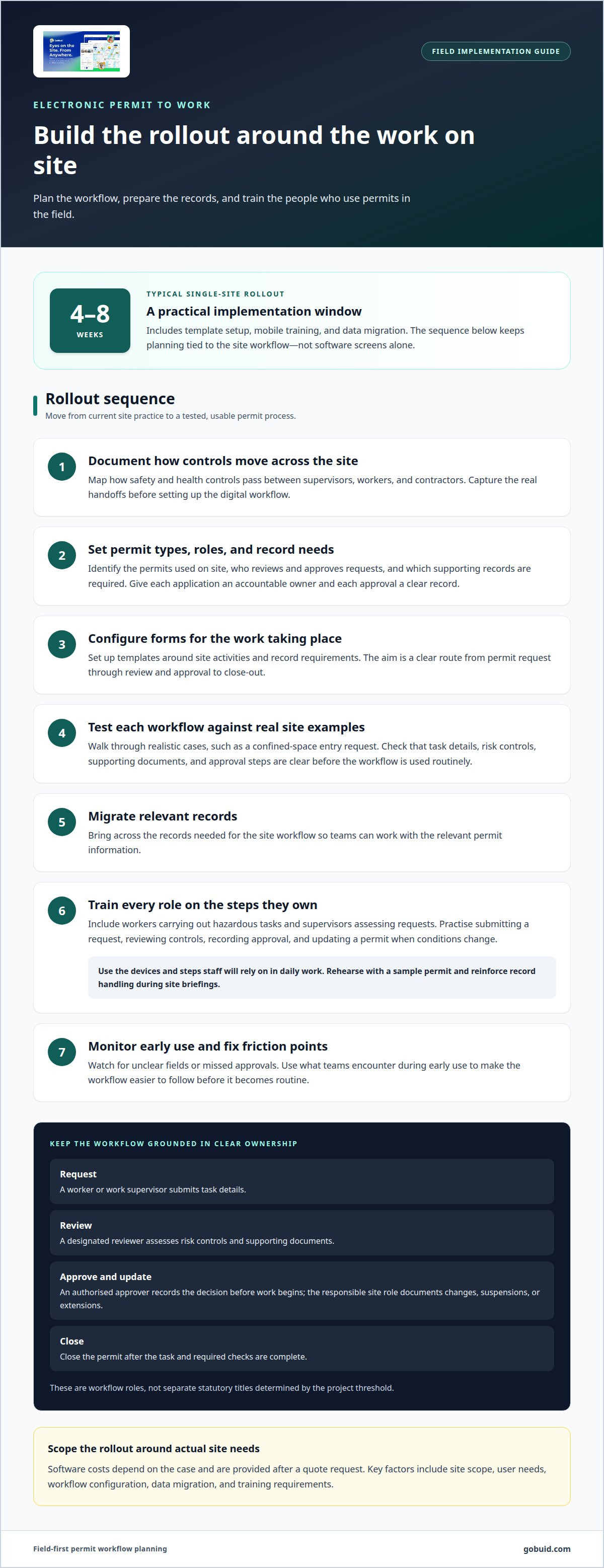
Plan implementation around the construction site workflow, not software screens alone. A typical single-site rollout takes 4-8 weeks, including template setup, mobile training and data migration. Contractors should map permit types, approval roles and record requirements before configuring templates. This gives workers a clear route from request to close-out.
Start by documenting how safety and health controls pass between supervisors, workers and contractors. Configure forms for the work taking place on site, then test each workflow against realistic examples, such as a confined-space entry request. Migrate relevant records and train staff on the devices and steps they will use in their daily work. Monitor early use to catch unclear fields or missed approvals before the workflow becomes routine.
Training should clarify what each role must do: submit a request, review controls, record approval and update the permit if conditions change. Include workers carrying out hazardous tasks as well as supervisors assessing requests. Use a sample permit to practise the full workflow, then reinforce proper record handling during site briefings. Construction teams in Singapore need a process that works for field staff, not just administrators.
Software costs depend on the case and are given after a quote request. Key factors include site scope, user needs, workflow configuration, data migration and training requirements. A defined scope helps contractors understand the resources needed before rollout. It also keeps implementation decisions tied to actual site operations, rather than assumptions about every project or workforce.
For a clearer view of how site information can connect across teams, explore construction workflow tools.
GoBuid: Project Analytics Dashboard
GoBuid’s Project Analytics Dashboard gives teams a clearer view of project information. Use it alongside established permit procedures to organise related site data and make it easier to review. Customised forms structure project records, while Manpower Tracking helps teams follow workforce information. Safety & Quality Inspections support inspection records, and teams can generate reports in one click.
These tools improve day-to-day visibility, but they do not replace hazard assessments, approvals or the site’s required ePTW process. They can help when teams need clearer information across forms, manpower and inspections. Keep permit responsibilities and controls explicit, and use project records to support consistent site coordination.
Contact GoBuid to discuss how its project tools can support your construction team’s workflow.
Make the Next Site Workflow Clearer
For construction teams working toward ePTW compliance in Singapore in 2026, the next step is making site information useful beyond the permit itself. Clear records help teams coordinate decisions, keep project details accessible and make follow-up easier across active work. GoBuid’s Digital Site Diary supports site documentation, while Customised forms help capture information in a consistent format. Teams can also generate a report in one click when they need to bring project information together.
Use these tools to support your site process, while keeping permit approvals and safety controls within your established workflow. Start with the information your teams need to record and share. Contact GoBuid to discuss ePTW and how clearer project records can support your construction team. Take the next step with a workflow built around the people doing the work.
Frequently Asked Questions
What are the new WSH regulations for Electronic Permits to Work?
Singapore’s Workplace Safety and Health Act provides the workplace safety framework, while a February 2024 WSH circular sets out ePTW specifications. The mandate requires main contractors to use an electronic PTW system on qualifying public-sector construction projects. For teams, the practical change is managing permit applications and records electronically, while keeping risk controls and approvals clear for each task.
What is PTW in Singapore?
PTW means Permit to Work. It is a documented authorisation process for work requiring defined controls before it begins. A permit connects a specific task with its hazards, precautions, responsible people and approval. For example, before excavation, the team needs to know what work is authorised and which controls apply. The permit supports safe coordination but does not replace risk assessment or supervision.
Which companies need a PTW or ePTW system?
The ePTW mandate applies to main contractors on qualifying public-sector construction and construction-related projects. It does not create a blanket ePTW mandate for every private construction company. Private developers may still use electronic permits to coordinate work and keep permit records accessible. Contractors and subcontractors should follow the permit process established for their tasks and responsibilities on each project.
What does ePTW mean in Singapore construction, and which work activities require a permit to work?
ePTW means an electronic Permit to Work system used to document and manage work authorisations. Permit controls are relevant to hazardous activities such as confined-space work and hot work. Singapore also required a permit before excavation deeper than 1.5 metres could begin. The task and its hazards determine the controls recorded; using an electronic system doesn’t change the work’s underlying risks.
What Singapore laws and MOM requirements govern electronic permit-to-work systems on construction sites in 2026?
The Workplace Safety and Health Act sets Singapore’s workplace safety framework, and a February 2024 WSH circular sets out ePTW specifications. The electronic-system mandate applies to qualifying public-sector construction projects. An electronic record can help teams show permit decisions and changes during an audit, but software alone doesn’t establish compliance. Site controls and work practices still need to match the task and its risks.