The Field Guide to Construction Equipment Management: Systems for Real-Time Control
by Sam Chen
|
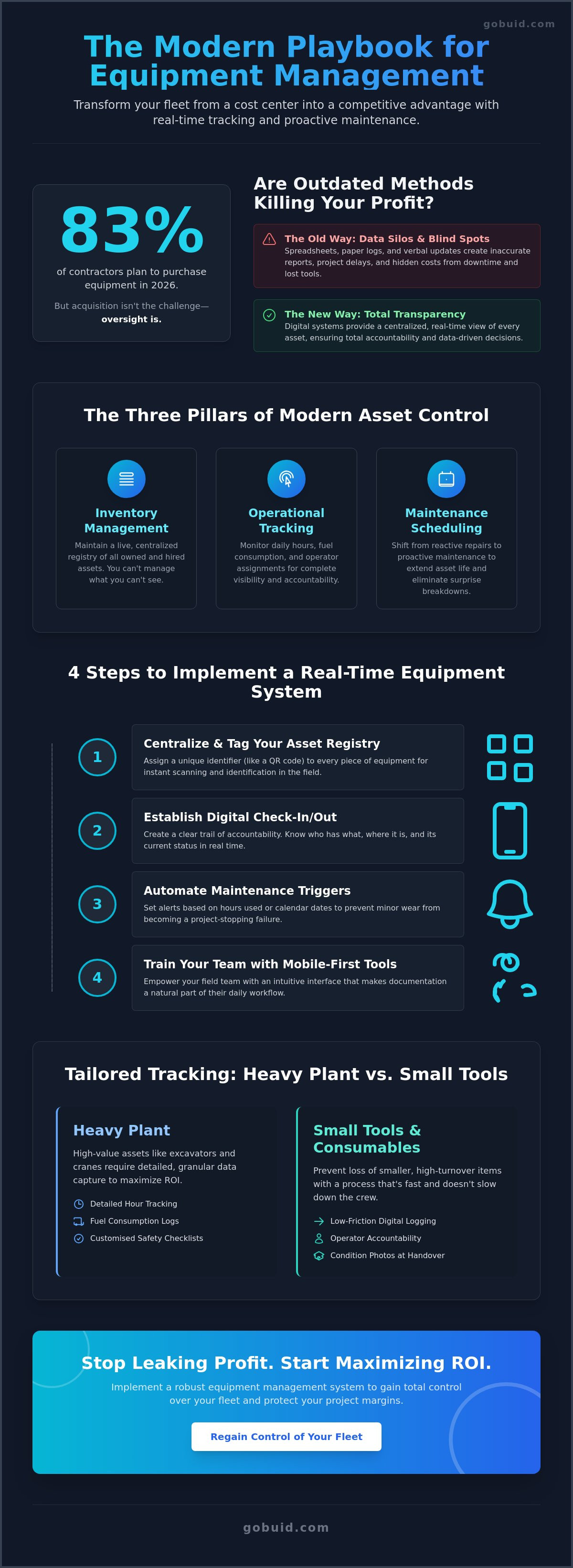
83% of construction contractors plan to purchase at least one piece of equipment in 2026, but the real challenge isn't acquisition; it's oversight. You can't manage a modern fleet with outdated spreadsheets and verbal updates. Effective equipment management is now a critical site documentation requirement that directly impacts your bottom line. When you lose track of hired plant or face inaccurate reporting for project billing, your profit margins disappear. High costs from equipment downtime aren't just an inconvenience. They're a sign of a system that's failing your operational reality.
You know that keeping a project on schedule requires every asset to be in the right place at the right time. It's frustrating when manual tracking leads to missed maintenance or lost tools. This field guide provides the roadmap to regain control. You'll learn how to implement digital systems that offer a centralized list of all assets and real-time visibility into equipment status. We'll show you how to automate maintenance alerts and use precise data to eliminate downtime. By the end of this article, you'll have the tools to maximize your fleet ROI and maintain total transparency across every job site.
Key Takeaways
Define equipment management as a systematic process that integrates tracking and maintenance to protect your project margins.
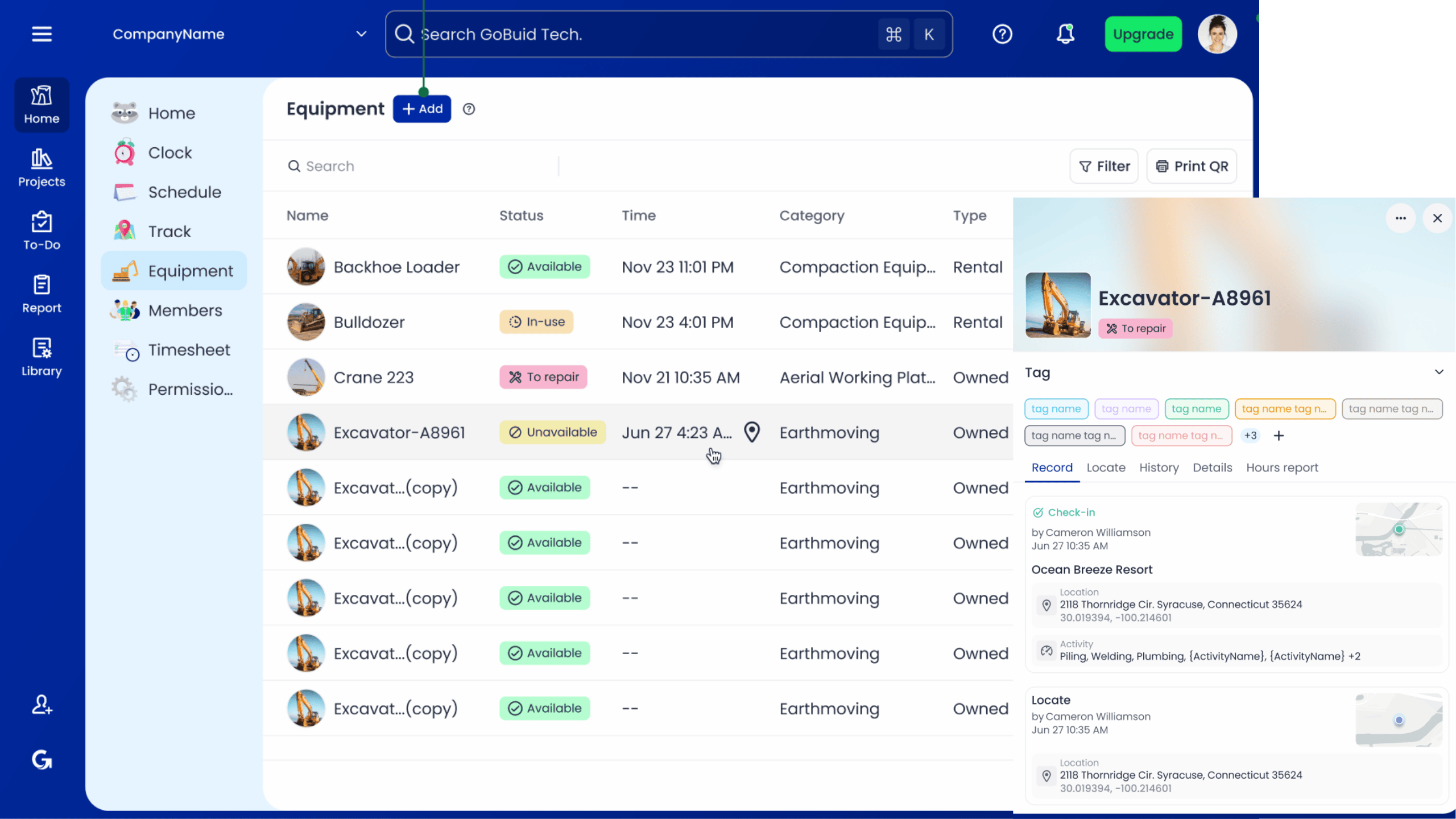
Centralize your asset registry with unique identifiers like QR codes to ensure every tool is accounted for across multiple sites.
Implement digital check-in and check-out workflows to gain real-time visibility into equipment status and operator accountability.
Use a project analytics dashboard to identify underutilized assets and stop budget leaks caused by idle hired plant.
⭐ Learn more about GoBuid's feature - without the heavy enterprise price tag
What is Equipment Management in Modern Construction?
Equipment management is the systematic process of tracking, maintaining, and optimizing the utilization of physical assets on a project. It serves as the bridge between asset availability and project deadlines. This discipline integrates with broader construction management principles to ensure every excavator, generator, and power tool contributes to project success. Relying on paper logs or verbal check-ins creates dangerous data silos. These manual methods result in delayed reporting and a high risk of human error that can stall a site for days.
To better understand how modern systems transform these workflows, watch this masterclass session:
The Three Pillars of Asset Control
Effective control rests on three operational functions. First, inventory management requires a live, centralized registry of both owned and hired plant. You can't manage what you can't see. Second, operational tracking monitors daily hours, fuel consumption, and operator assignments. Finally, maintenance scheduling moves your team from reactive repairs to proactive preventive maintenance. This shift extends asset life and prevents the sudden failures that derail tight schedules.
The Financial Impact of Poor Tracking
Unrecorded downtime is a silent profit killer. When an asset sits idle or breaks down unexpectedly, it eats into your project margins. Beyond heavy machinery, the hidden cost of misplaced small tools adds up to significant capital loss over a single quarter. Implementing a robust Equipment Management system reduces administrative overhead by automating data flow between the field and the office. This data shouldn't exist in isolation. It must feed directly into your digital site diary. Connecting equipment logs to site progress ensures accurate billing and provides the total transparency required for high-quality execution.
How to Implement a Real-Time Equipment Management System
Transitioning from manual logs to a digital system requires a structured approach. Implementation begins by centralizing your asset registry. Assign every piece of equipment a unique identifier, such as a QR code or barcode, for immediate scanning in the field. Once tagged, establish a digital check-in and check-out process. This creates a clear trail of operator accountability and ensures you always know who is responsible for a specific machine. For a unified project view, integrate these logs directly into your Digital Site Diary. This connection allows site managers to see equipment status alongside daily progress reports without switching platforms.
Maintaining peak performance requires moving beyond memory-based scheduling. Set automated maintenance triggers based on actual hours used or specific calendar intervals. This proactive strategy aligns with the industry standards detailed in the equipment management guide published by AEM. By automating these alerts, you prevent minor wear from turning into a project-stopping failure. If you want to streamline this process further, you can contact our team to see how these triggers work in a live environment.
Managing Heavy Plant vs. Small Tools
High-value assets like excavators and cranes require detailed tracking of hours and fuel. Small tools and consumables often disappear because the tracking process is too cumbersome. Use low-friction digital logging to secure these items without slowing down the crew. Standardize your safety checks by using Customised forms for different equipment types. This ensures a generator gets a different inspection than a power drill, maintaining high safety standards across the board.
Training Your Field Team for Success
System adoption lives or dies with the field team. Choose mobile-first interfaces that fit the fast-paced site environment. Build a "Site First" culture where documentation is a natural part of the daily workflow rather than an afterthought. Encourage the use of progress photos during handovers to document the physical condition of equipment. This transparency protects the business from unfair repair claims and keeps everyone accountable for the fleet's health.
Maximizing Fleet ROI with Analytics and Reporting
Effective equipment management relies on moving from passive data collection to active project analytics. A digital dashboard transforms raw numbers into actionable intelligence. You can't improve what you don't measure. Transitioning to data-driven insights allows you to identify underutilized assets that are draining your project budget. Real-time data allows managers to pivot fleet allocation before costs spiral, ensuring every machine on site earns its keep. To maximize ROI, you must understand the core equipment management system components that drive financial performance.
The power of one-click reporting provides instant stakeholder transparency and ensures billing accuracy without the manual paperwork. You no longer need to spend hours compiling spreadsheets for client meetings. One click generates a professional summary of asset usage, maintenance history, and operational costs. This speed is a competitive advantage in a high-pressure environment where decisions must happen fast.
Key Performance Indicators (KPIs) to Watch
Utilization Rate: Track the percentage of time equipment is actually working versus sitting idle. Low utilization on hired plant is a direct hit to your profit.
Mean Time Between Failures (MTBF): Measure the reliability of your fleet. A low MTBF indicates that your preventive maintenance schedule needs adjustment.
Maintenance Cost vs. Asset Value: Monitor this ratio to decide when to repair and when to replace. It's the only way to avoid the "money pit" trap of aging machinery.
Automating Compliance and Safety Inspections
Digital record-keeping is the backbone of successful safety audits. It ensures all operators have valid licenses attached directly to their digital equipment logs. If a license expires, the system alerts you immediately. Closing the loop on safety is critical. Digital systems turn inspection faults into actionable work orders instantly. This ensures that a failed pre-start check leads to a repair, not a workplace accident. You maintain total transparency while protecting your team and your project timeline.
Regain Control of Your Operational Reality
Mastering equipment management is the most direct path to protecting your project margins and eliminating site chaos. You've learned how to centralize your asset registry and integrate digital logs to close the visibility gaps that lead to lost tools. Transitioning from reactive repairs to automated maintenance alerts ensures your fleet remains operational when it matters most. By leveraging a project analytics dashboard, you can stop budget leaks and ensure every piece of hired plant is utilized to its full potential.
Success on the modern job site requires tools that bridge the gap between physical labor and digital precision. Our mobile-first design ensures high field adoption, while the ability to generate reports in one click provides the transparency your stakeholders demand. You don't have to settle for inaccurate reporting or high downtime costs any longer. It's time to empower your team with a system built for high-quality execution and total accountability.
Streamline your fleet today with GoBuid’s professional management tools. You have the strategy. Now, take the final step toward a more productive and profitable project environment.
Frequently Asked Questions
What is the difference between asset tracking and equipment management?
Asset tracking is the simple act of knowing where an item is located at any given time. Equipment management is a broader operational discipline that includes tracking but adds utilization analysis, preventive maintenance scheduling, and financial reporting. It connects the physical location of a tool to the project's productivity and bottom line. While tracking tells you where the excavator sits, management tells you if it's actually earning its keep.
How can digital equipment management reduce construction costs?
Digital systems eliminate the high costs of unrecorded downtime and misplaced small tools. By using real-time data, managers identify underutilized hired plant that should be returned to the supplier to stop budget leaks. Automated maintenance alerts prevent minor mechanical issues from escalating into catastrophic failures. This precision reduces administrative overhead and ensures project billing remains accurate, protecting your profit margins from human error.
Do I need GPS hardware for every piece of equipment?
You don't need expensive GPS hardware for every asset on site to maintain control. While heavy plant often benefits from telematics, smaller tools and consumables are managed effectively through digital check-in and check-out workflows using QR codes. This software-driven approach provides visibility into who is using a tool and where it was last seen without the hardware investment. It's a practical way to maintain total transparency across your entire inventory.
How do I handle maintenance for hired or leased equipment?
Treat hired equipment as a temporary part of your fleet and document its condition through digital forms. Use customized inspection checklists to record the state of the machine during handover and return. Even if you aren't responsible for major repairs, tracking hours used on hired plant ensures you aren't overcharged. It also helps you verify that the supplier is meeting their maintenance obligations before the machine arrives on your site.