Standardizing Construction Site Inspections: A Guide to Operational Excellence
Learn how standardizing construction site inspections can eliminate fragmented data, reduce risk, and drive operational excellence with our 5-step digital fr...
by Guillermo Sánchez
|
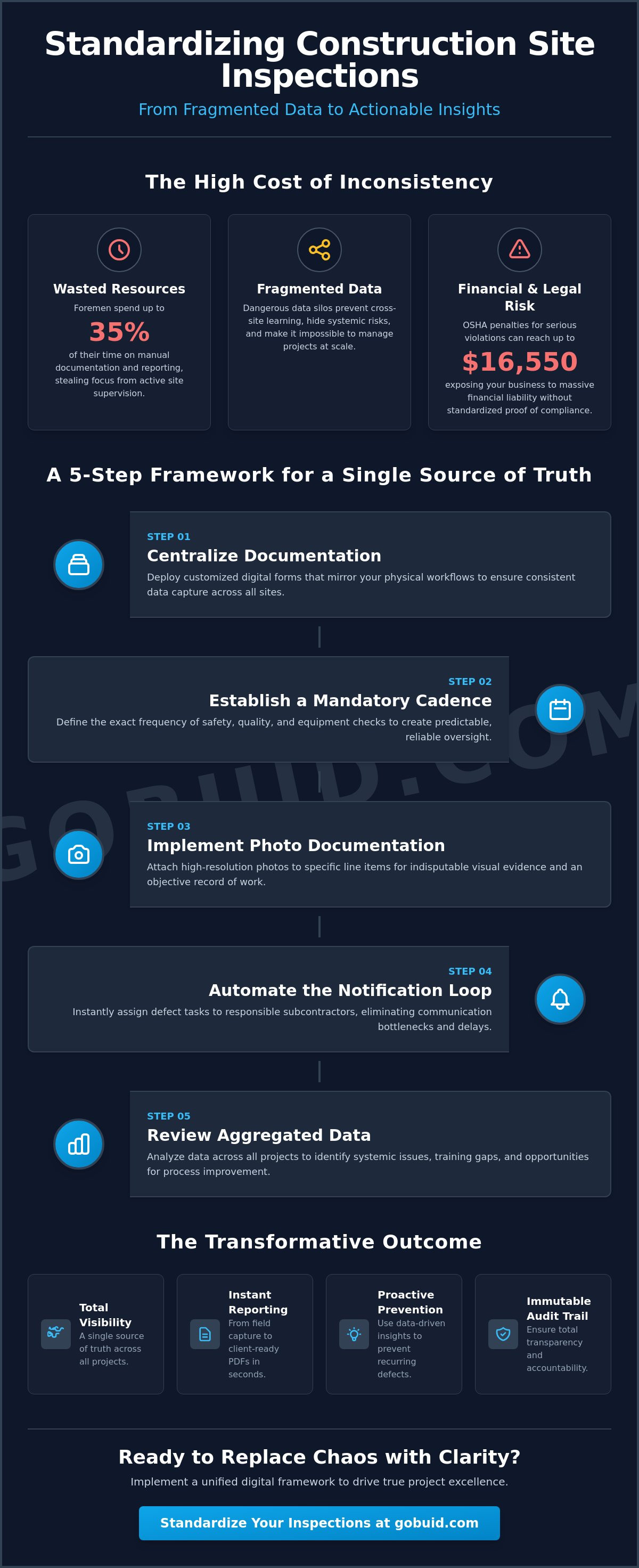
Standardization isn't about adding more checklists. It's about removing the administrative friction that prevents your field teams from being accurate. You've likely seen the cost of fragmented data firsthand. When every site follows its own rules, you lose visibility and waste hours manually compiling reports that are already outdated. With OSHA penalties for serious violations now reaching up to $16,550 in 2026, standardizing construction site inspections is no longer optional. It's a requirement for operational survival.
You've felt the frustration of inconsistent data and the lack of real-time visibility into your worksites. It's a common industry challenge that slows down progress and increases risk. This article outlines how to implement a unified, digital inspection framework that replaces chaos with clarity. You'll learn how to establish a single source of truth across all project sites, generate professional reports instantly, and leverage data-driven insights to prevent recurring defects. It's time to bridge the gap between your physical operations and digital precision to drive true project excellence.
Key Takeaways
- Identify how fragmented data silos compromise project visibility and increase regulatory risk.
- Implement a 5-step framework for standardizing construction site inspections to ensure consistency across every project location.
- Centralize documentation by deploying customized forms that mirror your physical workflows without the paperwork burden.
- Transition to a "one-click" reporting model to move from field data capture to client-ready PDFs in seconds.
- Maintain an immutable audit trail through a digital site diary to ensure total transparency and accountability.
- ⭐ Learn more about GoBuid's feature - without the heavy enterprise price tag
Table of Contents
-
A 5-Step Framework for Standardizing Construction Site Inspections
-
Leveraging Digital Workflows for Instant Reporting and Insights
The Operational Risk of Non-Standardized Site Inspections
Standardizing construction site inspections is the deliberate alignment of forms, inspection frequency, and reporting protocols across every project in your portfolio. It's the end of the "every site does it their way" mentality. Without this alignment, you create dangerous data silos. These silos prevent cross-site learning and hide systemic risks until they become expensive failures. When data is trapped in individual folders or disparate apps, your ability to manage at scale vanishes.
The administrative cost of these fragmented systems is staggering. Industry research indicates that foremen spend up to 35% of their working hours on documentation and manual reporting. This is time stolen from active site supervision. Standardizing your workflow directly reduces rework costs by ensuring defects are caught early and consistently. A rigorous building inspection process ensures that quality isn't left to chance or individual interpretation.
To see how a lack of standardized oversight leads to poor execution on-site, watch this example:
Why Traditional Checklists Fail Modern Projects
Static PDF forms and paper checklists are too slow for today's fast-paced sites. They're rigid and often incomplete. When data entry is inconsistent, you're left with "garbage in, garbage out" reporting. You can't analyze what you haven't captured accurately. Real-time updates are impossible with paper, leaving management blind to emerging safety hazards or quality lapses. To solve this, you need customized forms that enforce data integrity at the point of capture.
The Legal and Financial Stakes of Inconsistency
Standardized records are your best defense against litigation and insurance claims. They provide an immutable trail of what happened and when. Site compliance is the continuous adherence to established safety protocols and regulatory requirements as documented through verifiable, standardized inspection data. Without this proof, you're exposed to massive financial liability and potential OSHA penalties. Consistency isn't just about quality; it's about protecting your bottom line.
This commitment to compliance extends to all areas of your business, including driver certifications. Just as you standardize site inspections, using a reliable service to Book Your Road Test ensures that your staff meets regulatory requirements without unnecessary scheduling delays.
A 5-Step Framework for Standardizing Construction Site Inspections
Implementing a scalable standard across multiple sites is the primary challenge for growing firms. Standardizing construction site inspections requires a transition from reactive observation to proactive management. You can't manage what you don't measure consistently—a principle that applies whether you're overseeing a job site or coordinating a youth program with resources from MakingFriends.com. Follow this 5-step framework to scale your operations without increasing administrative overhead.
-
Step 1: Centralize documentation. Deploy customized forms that mirror your specific physical workflows. This ensures every site captures data using the same parameters.
-
Step 2: Establish a mandatory cadence. Define exactly how often safety, quality, and equipment checks occur. Aligning your internal protocols with ASTM's standards ensures your projects meet recognized industry benchmarks.
-
Step 3: Implement photo documentation. High-resolution visual evidence attached to specific line items eliminates disputes. Photos provide an objective record that words alone cannot match.
-
Step 4: Automate the notification loop. When a defect is logged, the system must assign the task to the responsible subcontractor immediately. This removes the Project Manager as a communication bottleneck.
-
Step 5: Review aggregated data weekly. Identify systemic issues across all active sites. If multiple projects report the same waterproofing defect, you've identified a training gap rather than an isolated incident.
Designing High-Utility Digital Forms
High-utility forms are the backbone of standardizing construction site inspections. Focus on mandatory fields to protect data integrity. If a field is critical for safety compliance, don't make it optional. Logic-based forms further reduce the time spent on a walk-around. These forms adapt in real-time, displaying only the relevant questions based on the inspector's previous answers. This removes clutter and keeps the team focused on high-risk areas.
Integrating Equipment and Manpower Tracking
Connect your site inspections directly to equipment management. This integration ensures that maintenance compliance and safety checks are part of the daily routine. Tracking manpower alongside these safety checks provides a holistic site overview. You can optimize your project oversight by unifying these disparate data points into a single digital environment.
Leveraging Digital Workflows for Instant Reporting and Insights
The administrative bottleneck often occurs after the inspector leaves the field. Standardizing construction site inspections loses its value if data sits in a queue for days. You need a one-click workflow that converts field observations into executive-ready documentation instantly. This immediacy allows project leaders to act on site realities while the work is still in progress. It moves your team from reactive damage control to proactive management.
A digital site diary creates an immutable audit trail for every project. This level of transparency is critical when aligning your safety protocols with OSHA's Focused Inspection Guidelines. By focusing on high-risk hazards through a centralized system, you ensure that compliance is a data-driven strategy. Centralized data identifies recurring defects across different project teams. This allows you to spot trends and stop delays before they impact your schedule or budget.
From Field Data to Executive Dashboards
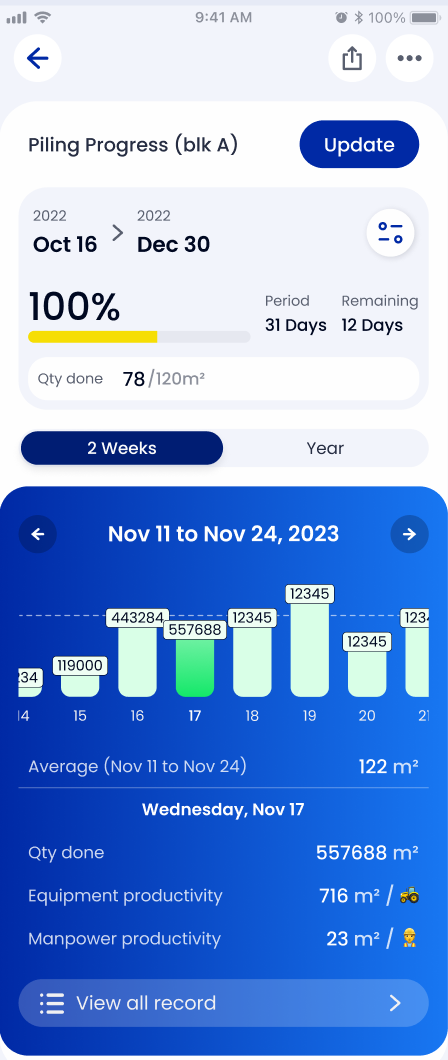
A Project Analytics Dashboard transforms raw numbers into actionable KPIs. It provides a high-level view of quality trends and safety compliance across your entire portfolio. Real-time sync connects the site office to the head office instantly. This connection removes the delay between identifying a problem and implementing a solution. You gain total visibility without a single phone call or manual email chain.
Closing the Loop: Automated One-Click Reporting
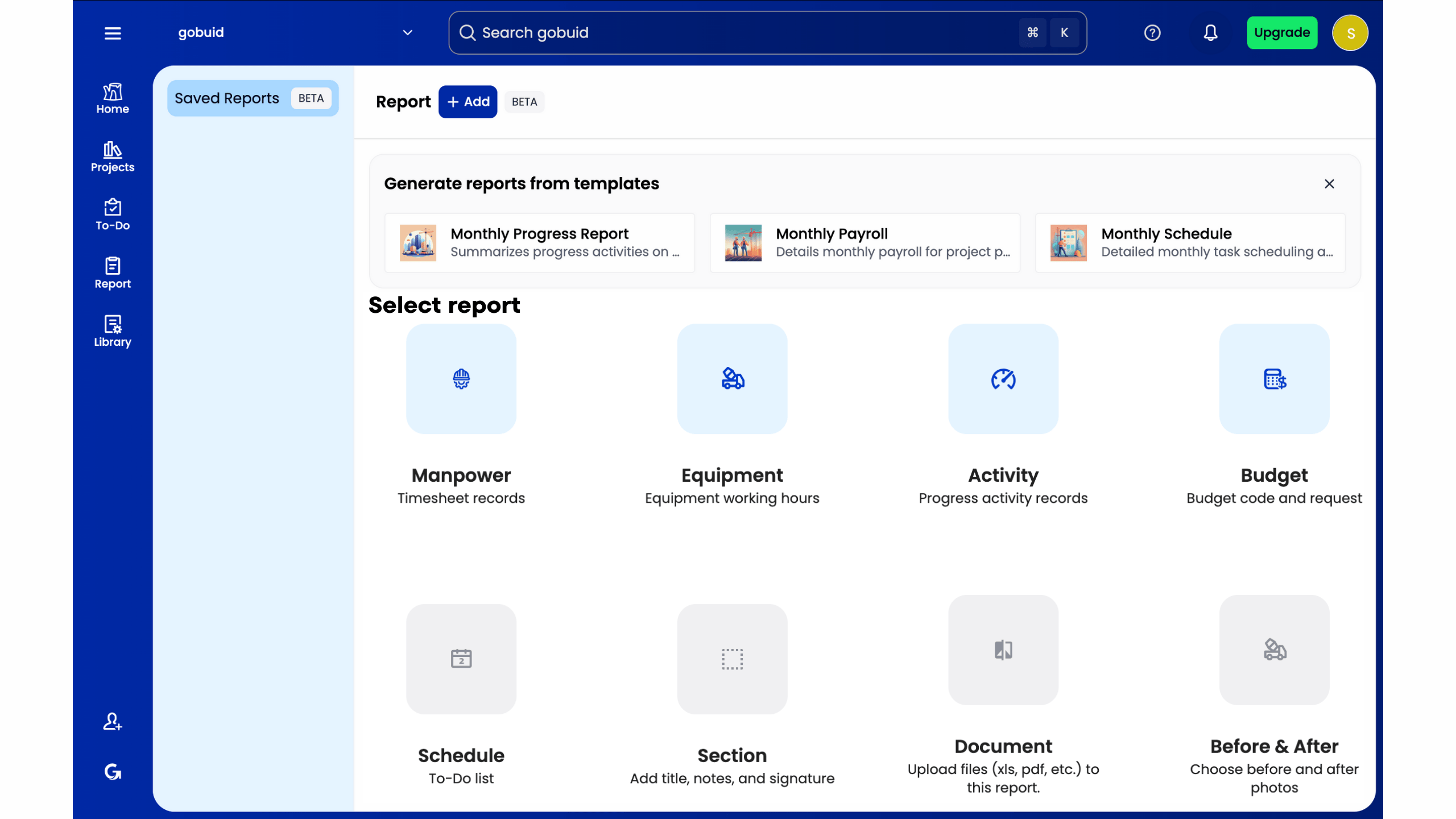
Closing the loop on standardizing construction site inspections requires speed. GoBuid enables you to generate reports in one click, reclaiming hours of administrative time every week. These reports maintain a professional appearance that builds trust with clients and stakeholders. Digital documentation ensures every photo, note, and signature is perfectly formatted. Your records are ready for distribution the moment the inspection ends, ensuring total accountability across the project lifecycle.
Maintaining this level of professionalism is also a powerful tool for recruitment. To learn how to leverage your operational excellence into a stronger employer brand, visit GBS Worldwide for specialized talent attraction strategies.
Mastering Operational Control Across Every Site
Operational excellence is not a static goal; it's a continuous process of refinement. You've seen how fragmented data and manual reporting create unnecessary risk and waste. By standardizing construction site inspections, you eliminate these bottlenecks and build a foundation for scalable growth. A unified framework ensures that every project team follows the same high standards, catches defects early, and maintains total transparency across your portfolio.
The transition to a digital workflow isn't just about speed. It's about data integrity and long-term profitability. You can now move from field capture to executive-level insights without the traditional administrative friction. This shift allows your foremen to focus on supervision while the system handles the documentation burden. You gain a reliable, immutable audit trail that protects your business and proves your commitment to quality at every stage. To further expand your digital reach and attract international clients, Cheerway provides specialized B2B website solutions and SEO services.
To complement these digital standards with expert architectural and engineering consultancy, you can find out more about how Global Engineering Office supports large-scale projects across the Middle East.
Similarly, for firms managing complex supply chains, Perimeter Global Logistics (PGL) provides the domestic and international freight solutions needed to ensure that materials and equipment reach the site with the same level of precision and oversight.
Take control of your project data today. Streamline your site inspections with GoBuid and start for free. You can deploy customized forms for any site requirement and generate professional reports in one click. It's time to bridge the gap between site reality and digital precision to drive your next project to success.
Frequently Asked Questions
How do I start standardizing inspections across multiple construction sites?
Start by auditing your current documentation to identify common data points across all projects. Define a unified set of inspection criteria and mandatory frequencies that every team must follow. Centralizing these requirements into a digital framework ensures every site uses the same baseline, which eliminates fragmented data silos and creates a consistent reporting standard across your entire portfolio.
Can I customize digital inspection forms for specific project requirements?
Yes, you can build customized forms that adapt to specific site conditions or trade requirements. While the core framework remains standardized, digital tools allow you to add project-specific logic or mandatory fields. This flexibility ensures that inspections remain relevant to the physical work being performed while maintaining a consistent data structure for head office analysis.
What is the difference between a site inspection and a safety audit?
A site inspection is a frequent, operational check focused on identifying immediate hazards or quality defects during active work. A safety audit is a more formal, periodic evaluation of your overall safety management system and regulatory compliance. Both are essential components of standardizing construction site inspections to ensure total transparency and risk mitigation.
How does digital reporting help with construction site compliance?
Digital reporting provides an immutable audit trail with time-stamped entries and verified photo documentation. This creates a transparent record of compliance that's instantly accessible during inspections or legal inquiries. By automating data capture, you remove the risk of lost paperwork or missing signatures, ensuring your site always meets current regulatory standards.
Will using an inspection app actually save my foremen time in the field?
Can standardized inspections help reduce construction insurance premiums?
Insurance providers often favor firms that demonstrate a proactive, data-driven approach to risk management. Standardized inspections provide documented proof of your safety and quality protocols. By consistently identifying and resolving hazards before they lead to claims, you create a lower risk profile that can lead to more competitive insurance rates over time.