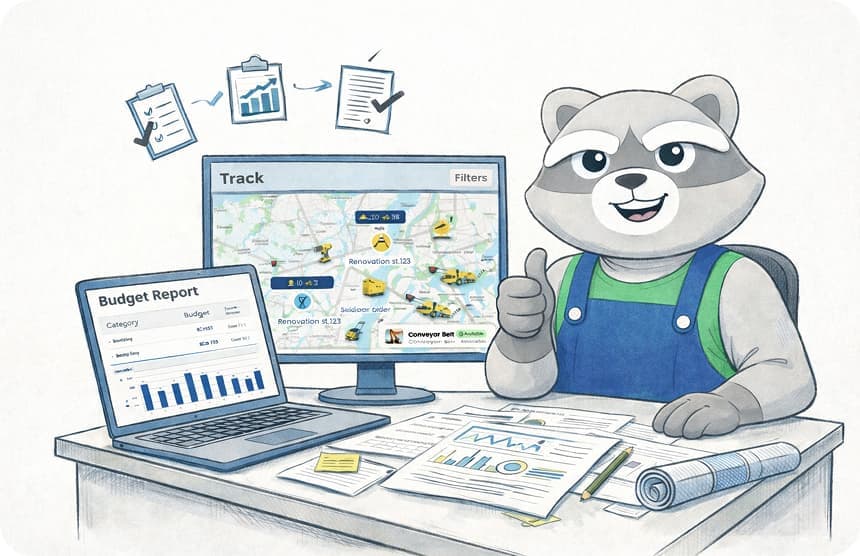
What Is a Construction Foreman? Role, Duties & Skills
A construction foreman leads the on-site crew. Learn what a foreman does, key responsibilities, required skills, and how the role differs from a supervisor.
by Sam Chen
|
If your lead spends 25% of their shift buried in paper field reports, they aren't managing your site; they're acting as an expensive filing clerk. It's a common trap in an industry where the foreman definition is often blurred with that of a general supervisor. You've likely felt the frustration of losing real-time visibility into field progress while your most experienced hands are stuck behind a clipboard. It's time to stop the administrative bleed and reclaim control over your job site workflows.
We'll show you how the role is evolving into a high-tech bridge between field execution and project analytics for 2026. You'll learn exactly how a modern foreman drives project ROI by leveraging centralized data to cut through the chaos of manual submittals. This guide covers the essential responsibilities, the critical distinctions in hierarchy, and the digital tools that turn field data into a single source of truth.
Key Takeaways
Master the modern foreman definition and understand how this role acts as the critical bridge between senior management and field execution.
Optimize daily workflows by mastering manpower tracking and ensuring rigorous compliance with site safety and quality standards.
Clear the confusion between project roles by identifying the specific scope of authority that separates foremen from superintendents.
Eliminate data silos and reporting delays by transitioning from traditional paper-based site diaries to real-time digital field tools.
Leverage a centralized digital toolkit to unify site diaries, manpower tracking, and safety inspections into a single source of truth.
⭐ Learn more about GoBuid's feature- without the heavy enterprise price tag
What is a Foreman? The Modern Construction Definition
A foreman is the primary supervisor responsible for a specific work crew or department on a construction site. They're the essential conduit between senior project management and the skilled tradespeople executing the work. This role demands a high-level blend of technical mastery and practical leadership. By 2026, the standard foreman definition includes mandatory proficiency in digital documentation and real-time site reporting to maintain project velocity.
Etymology and Historical Context of the Role
The term originates from the Middle English word for a chief servant or steward. Historically, a foreman was the master craftsman who led by physical example. Over the last 60 years, the role shifted from performing manual labor to providing specialized management oversight. Modern foremen prioritize workflow optimization and resource allocation over swinging hammers; they'll ensure the crew remains productive through strategic planning and clear communication.
The Foreman’s Position in the Site Hierarchy
In the site chain of command, the foreman answers directly to the Superintendent or Project Manager. They manage direct reports including subcontractors, laborers, and equipment operators, typically overseeing crews of 8 to 12 members. As the first line of defense for project quality, they ensure every task meets the 100% compliance standard required for safety and structural integrity. They bridge the gap between high-level office schedules and the rugged reality of the field.
The modern foreman definition also encompasses several core operational requirements:
Direct supervision of daily field operations and trade coordination.
Verification of daily timecards and material deliveries to prevent budget leakage.
Real-time reporting of site progress via centralized mobile platforms for instant office visibility.
Strict enforcement of OSHA safety protocols and site-specific rules to maintain zero-incident records.
Visibility is the primary goal for the modern foreman. By utilizing digital tools, they create a single source of truth that prevents miscommunication and costly rework. This evolution from manual labor to data-driven leadership defines the successful 2026 project site. It's no longer just about the work performed; it's about the accuracy of the data captured during the process.
Core Responsibilities: What Does a Foreman Do Daily?
The foreman is the engine of the job site. While a standard foreman definition focuses on supervision, the daily reality involves balancing labor, machinery, and documentation. They start every morning by assigning specific tasks to the trade crew. This ensures 100% manpower utilization. They don't just watch; they manage. This includes tracking equipment hours and reporting maintenance needs for heavy machinery. Every delay, weather shift, or progress milestone goes into the site diary. This log serves as the project's legal and operational pulse.
Field Supervision and Quality Control
Precision drives the construction schedule. Foremen conduct hourly inspections to verify that work aligns with technical blueprints. They spot craftsmanship faults early. Fixing a misaligned rebar cage today saves 15% in rework costs next week. They also act as the traffic controller for different trades. By coordinating electricians and drywallers, they prevent the workflow bottlenecks that stall 30% of mid-sized projects.
Safety Leadership and Compliance
Every shift begins with a mandatory toolbox talk. The foreman ensures every worker wears the required PPE and follows local BCA standards. They manage high-risk activities through Permits to Work (PTW). It's a life-saving protocol, not just paperwork. Maintaining hazard logs ensures the site remains compliant during surprise inspections. This prevents fines that often exceed $10,000 per violation.
The Administrative Burden: Reporting and Documentation
Digital tools are currently redefining the foreman definition by shifting the focus from manual clipboards to real-time data entry. These leaders are now part-time data managers. They capture progress photos to validate work for stakeholders. They verify material deliveries against purchase orders to ensure that 500 bags of cement actually arrived. The day ends with a daily report. This summary bridges the gap between field chaos and office clarity. Using a centralized field management tool helps turn these manual logs into actionable data.

Foreman vs. Superintendent vs. Supervisor: Key Differences
Role confusion on a job site triggers delays and budget overruns. While titles often overlap in casual conversation, the scope of authority defines each role with precision. A 2023 report from FMI Corporation indicates that construction professionals spend 35% of their time on non-productive activities, often due to poor communication and role ambiguity. Eliminating this friction starts with a clear understanding of who owns which decision.
The foreman definition centers on direct field leadership. They are the primary link between the boots on the ground and the project management office. While a foreman manages a specific crew, a superintendent manages the entire site, and a supervisor often oversees administrative functions across multiple projects. High-performing teams use these distinctions to create a single source of truth for accountability.
Foreman: Manages 5 to 15 craft workers; focuses on daily task execution and safety.
Superintendent: Oversees all trades on-site; manages the master schedule and subcontractor coordination.
Supervisor: Usually an umbrella term for management; handles high-level resource allocation and departmental budgets.
Operational Scope and Decision-Making
Foremen make tactical, hour-to-hour decisions that keep the project moving. If a piece of equipment breaks at 7:30 AM, the foreman reroutes the crew immediately. They live in the immediate present. Superintendents operate on a different horizon, focusing on strategic scheduling and 3-week look-aheads. They ensure that materials for next month's pour arrive on time. These roles must collaborate through real-time field reports to ensure that daily progress aligns with long-term milestones. When the foreman identifies a site constraint, the superintendent clears the path at the organizational level.
Technical Expertise vs. Management Skills
Technical mastery is the foreman's greatest asset. Most possess 10 or more years of hands-on experience in a specific trade, such as electrical or masonry. They know the "how" behind every weld and wire. Superintendents transition into a broader management sphere, requiring financial and contractual knowledge. They must interpret complex submittals and manage the prime contract's legal requirements. The career path from a skilled foreman to a superintendent involves trading the tool belt for a laptop. It requires a shift from mastering the craft to mastering the process of construction management. Effective organizations provide the digital tools necessary to make this transition seamless, turning field data into actionable insights.
The Evolution of the Foreman: From Paper to Digital Site Diaries
Traditional paper reporting is a relic that costs time and money. It traps vital information in silos and forces project managers to wait 48 hours or more for critical updates. This delay creates a dangerous blind spot that often leads to cost overruns. The modern foreman definition now includes digital literacy as a core competency. Today's Digital Foreman uses mobile tools to capture ground-truth data directly from the field. This transition creates a single source of truth that bridges the gap between site reality and office expectations.
Eliminate data silos with centralized cloud storage.
Capture field data in real-time to prevent project drift.
Automate manpower tracking to stop payroll disputes before they start.
A 2023 industry study revealed that 75% of contractors still struggle with fragmented communication. When a foreman relies on memory or handwritten notes, details vanish. Digital site diaries ensure that every observation, from weather delays to equipment failures, is logged with a timestamp. This shift doesn't just change how work is recorded; it changes how work is managed.
Solving the Administrative Bottleneck
Digital forms replace the chaos of lost clipboards and coffee-stained logs. A foreman using mobile-first tools can reduce daily reporting time by 60% compared to manual entries. Instant photo documentation provides a visual timeline of progress that protects the firm from liability. This level of detail settles disputes in minutes rather than weeks. You don't just record what happened; you prove it. Moving to a digital workflow reduces the reporting lag from several days to mere seconds.
Real-Time Data as a Leadership Tool
Modern site management relies on analytics, not guesswork. Leading national contractors use digital site diaries to identify productivity trends as they emerge. If a crew hits a bottleneck on Tuesday, the office knows by Tuesday afternoon. This visibility improves accountability across the entire job site. Automated tracking ensures labor hours are 100% accurate, removing the friction of manual entry errors. It's a shift toward data-driven leadership that empowers the foreman to make informed decisions on the fly.
Ready to upgrade your field reporting and gain total site visibility? Experience the digital evolution with Buid today.
Empowering the Modern Foreman with GoBuid
GoBuid serves as the definitive digital toolkit for the high-performing foreman. While a basic foreman definition focuses on managing labor and materials, the modern reality demands a bridge between rugged field execution and sleek office precision. GoBuid centralizes site diaries, manpower tracking, and safety inspections into a single, high-speed application. It eliminates the fragmentation of paper notes and scattered text messages. By establishing a single source of truth for every project, you ensure that 100% of your team stays aligned on the latest site conditions and safety protocols.
This software isn't just an administrative add-on; it's a force multiplier for field leadership. It turns the site supervisor into a digital foreman who commands data as effectively as they command a crew. You don't need to be a tech expert to master the interface. It's built for the dirt and sweat of the job site, providing a reliable, calm authority over project workflows that often feel chaotic. It's the connective tissue that keeps a project moving forward without the usual friction of missing documentation.
One-Click Reporting for Maximum Efficiency
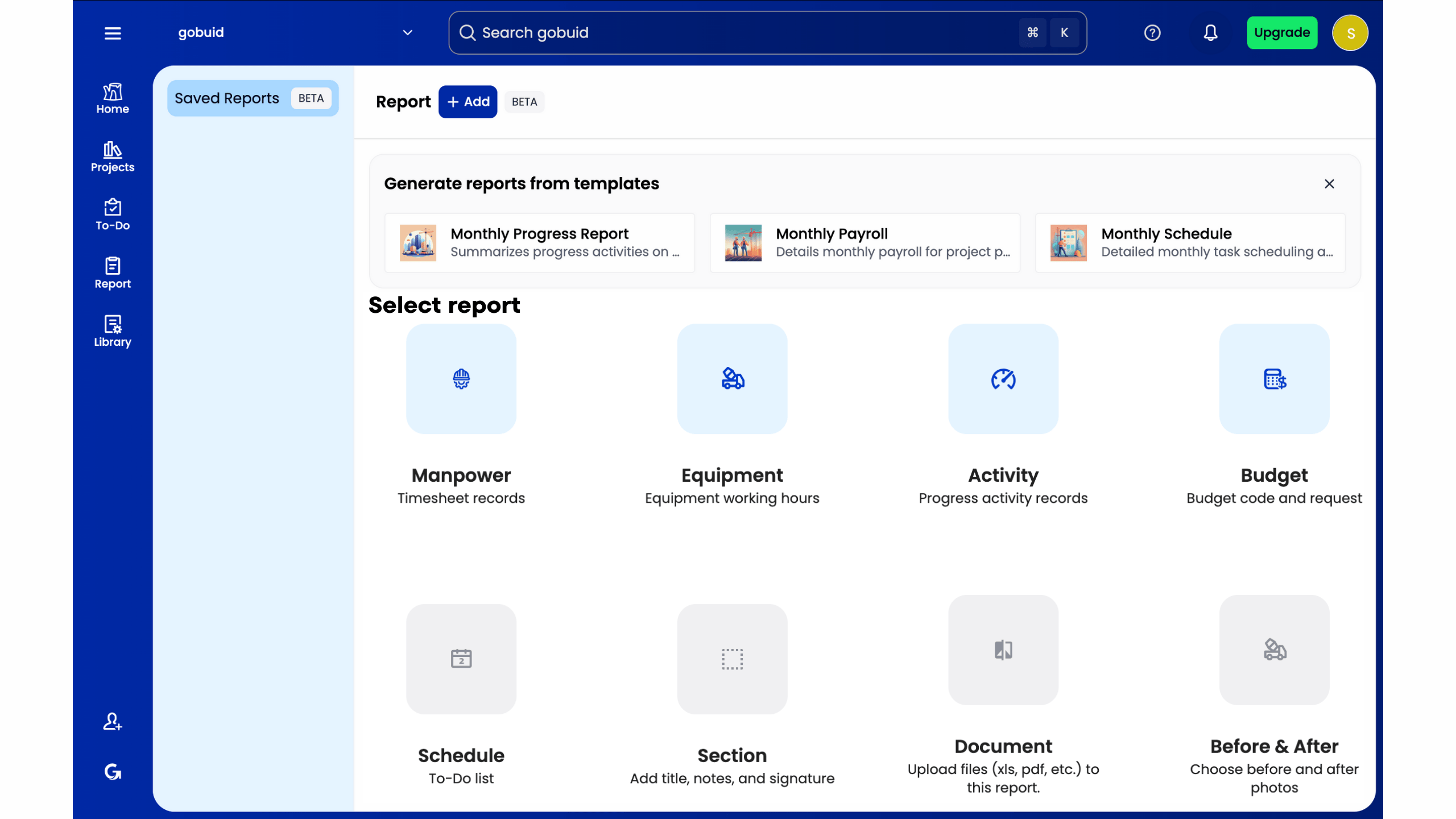
Stop wasting 60 minutes every afternoon on manual data entry. GoBuid allows you to generate professional daily reports in seconds. The system automatically distributes site updates to all stakeholders, ensuring the project manager and client stay informed without a single phone call. You can focus on leading your crew instead of fighting with broken spreadsheets or lost clipboards. This automation recovers up to 10 hours of administrative time per week, allowing for better supervision and higher quality control on the ground.
Visibility and Control in the Palm of Your Hand
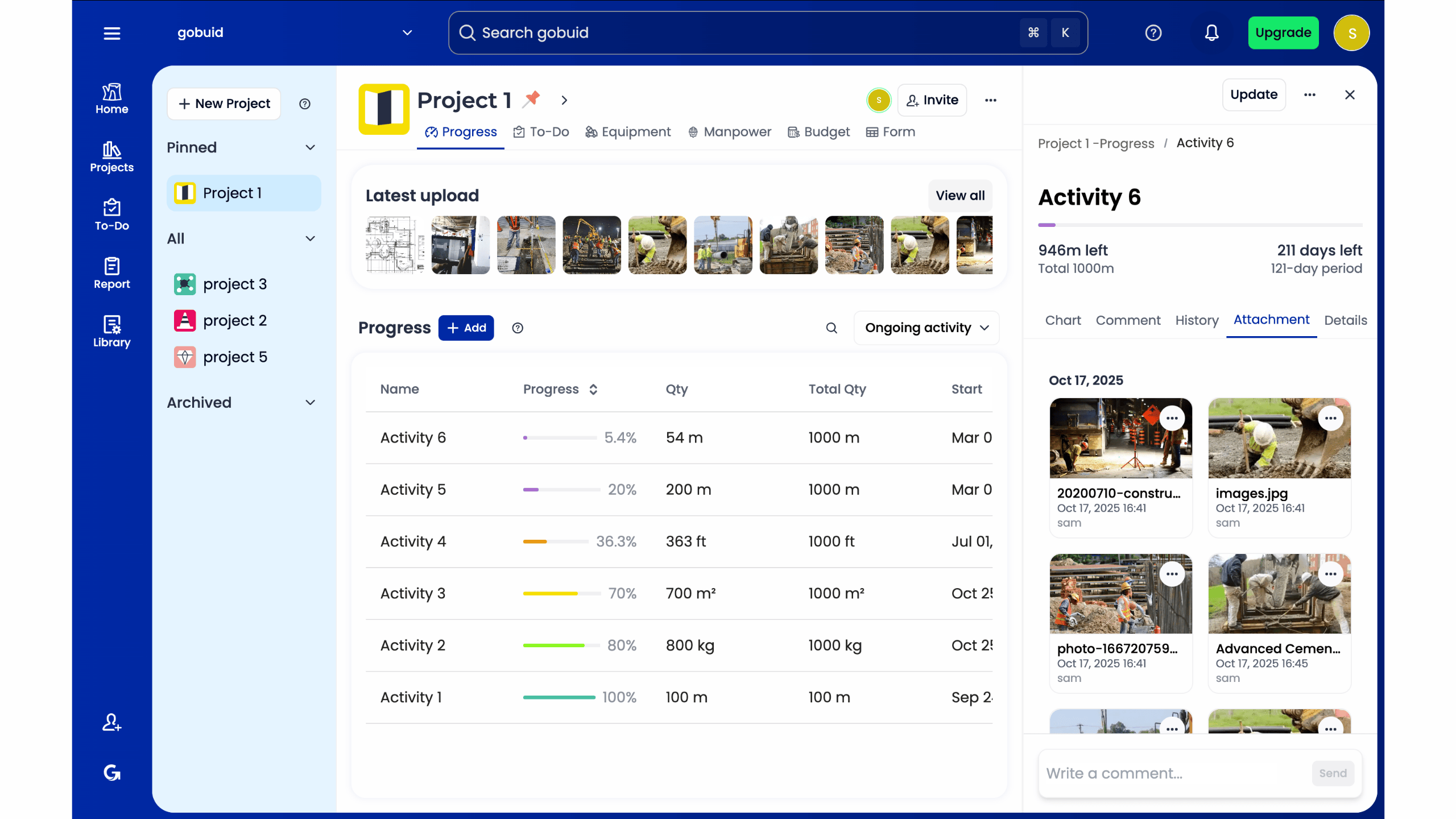
Accountability requires clear evidence. With GoBuid, you capture progress photos and link them directly to site diary entries for instant context. You can track equipment and manpower through localized, real-time dashboards that provide a snapshot of site productivity. This level of visibility ensures that your foreman definition includes the role of a data-driven strategist. GoBuid's no-lock-in contract reflects a commitment to utility and results rather than restrictive licensing. You get a hardworking, innovative partner that values transparency and helps you get the job done right every single day.
Modernize Your Site Leadership
The foreman definition has shifted from simple site supervision to complex project orchestration. Success now depends on how quickly field data reaches the decision-makers. You need a system that eliminates the 60-minute daily struggle with paper reports and messy spreadsheets. Transitioning to a digital workflow ensures your team remains focused on the build, not the admin. It's about creating a single source of truth that bridges the gap between the field and the office. Industry data suggests that companies using integrated site diaries see a 15% increase in field productivity by removing manual data entry hurdles.
Stop letting critical project data get lost in transit. GoBuid provides the tools to capture every detail instantly. You'll gain access to one-click report generation and real-time manpower tracking without the burden of long-term commitments. We offer no lock-in contracts because we believe our software should prove its value every day on the job site. It's time to give your team the technological edge they deserve.
Empower your foreman with GoBuid’s digital site diary
Build with confidence and take control of your project's trajectory today.
Frequently Asked Questions
What is the difference between a foreman and a leadman?
A foreman manages multiple crews and coordinates directly with the superintendent, while a leadman acts as a working supervisor for a single small team. The foreman handles high-level administrative duties like daily logs, scheduling, and labor allocations across the site. A leadman focuses on immediate task execution and provides technical guidance for 3 to 5 workers while still performing manual labor.
Can a foreman be a woman or is there a gender-neutral term?
The industry increasingly uses gender-neutral titles like field supervisor, crew leader, or site manager to reflect a modern workforce. While the traditional foreman definition remains the standard industry term, 11% of construction professionals are now women according to 2023 BLS data. Companies adopt inclusive titles to modernize their culture and attract a broader talent pool to the job site.
What are the most important skills for a construction foreman in 2026?
By 2026, a foreman must master digital literacy, data-driven decision making, and proactive conflict resolution. You'll need to navigate 3D BIM models and manage automated workflows in real-time to maintain project momentum. Proficiency with mobile field software is mandatory as 80% of top-tier firms plan to automate site reporting by the end of 2025.
How much does a construction foreman typically earn on a national level?
A construction foreman earns a national average salary of $72,480 per year as of May 2023. Top earners in heavy civil or industrial sectors often exceed $95,000 annually depending on their specific trade expertise. Total compensation packages frequently include performance bonuses, vehicle allowances, and 401k matching programs that reflect the high level of responsibility required for the role.
Is a foreman considered part of management or labor?
The role is a hybrid position often classified as front-line management. You represent the first level of management but typically rise through the ranks from a skilled trade background. In union environments, the position is often designated as a working foreman under collective bargaining agreements. You're the essential link that bridges the gap between the field and the office.
What qualifications do you need to become a foreman?
Most foremen require 5 to 10 years of field experience in a specific trade and an OSHA 30-hour safety certification. While a college degree isn't mandatory, 45% of new supervisors now hold professional certifications in construction management. You must demonstrate total mastery of blueprints, local building codes, and personnel management before stepping into this leadership role.
How does digital software help a foreman do their job more effectively?
Digital software provides a single source of truth that eliminates communication gaps between the field and the office. Tools like Buid automate daily reports and submittals, saving foremen 2 hours of paperwork every shift. You get real-time visibility into project budgets and labor productivity. This centralized data allows you to fix issues before they become expensive rework.
What is a 'straw boss' in the context of construction?
A straw boss is a worker who takes on temporary supervisory duties without the formal title or full authority of a foreman. They lead a small group of 2 to 4 laborers on specific, short-term tasks. The term identifies a transition role for workers moving toward permanent leadership positions. It's a practical way to test a worker's management potential before a formal promotion.