Construction Project Documentation Best Practices for 2026
Learn the top construction project documentation best practices for 2026. Save hours on reporting, ensure audit-ready records, and boost site transparency.
by Amelia Grant
|
What if documentation wasn't a chore you did after the work, but a natural byproduct of the work itself? Most site managers lose hours every week to administrative bloat and chasing down inaccurate field data from the crew. It's frustrating to reach the end of a long shift only to realize your manpower and equipment tracking is a mess of guesswork. Implementing construction project documentation best practices shouldn't feel like a second job that slows down your physical progress.
You can master the essential strategies to eliminate paperwork lag and ensure 100% project transparency across every square foot of your site. We'll show you how to regain control over chaotic workflows and reduce the time spent on end-of-day reporting. This guide breaks down how to maintain audit-ready records and achieve real-time visibility using the latest 2026 standards. We'll cover everything from the May 2026 OSHA Hazard Communication updates to the shift toward mobile-first, data-driven site diaries that connect your field operations to the office instantly.
Key Takeaways
- Replace fragmented paper logs with a Digital Site Diary to establish a single, reliable source of truth for all site activities.
- Standardize field data capture using customised forms that ensure every supervisor records the same essential project metrics.
- Implement construction project documentation best practices to maintain 100% transparency across manpower and equipment tracking.
- Utilize a project analytics dashboard to transform raw field data into actionable insights for better decision-making.
- Eliminate hours of administrative labor by learning how to generate reports in one click for all project stakeholders.
- ⭐ Learn more about GoBuid's feature - without the heavy enterprise price tag
Table of Contents
The Foundation of Construction Project Documentation
Documentation is the living record of every nail driven and every safety check completed. It's the pulse of the jobsite. Effective construction project documentation best practices ensure that site activities, safety protocols, and progress aren't just recorded; they're utilized. Following standard Construction management principles ensures your records serve as a defensive shield against liability and a roadmap for project success. It's about moving from reactive paperwork to proactive data capture.
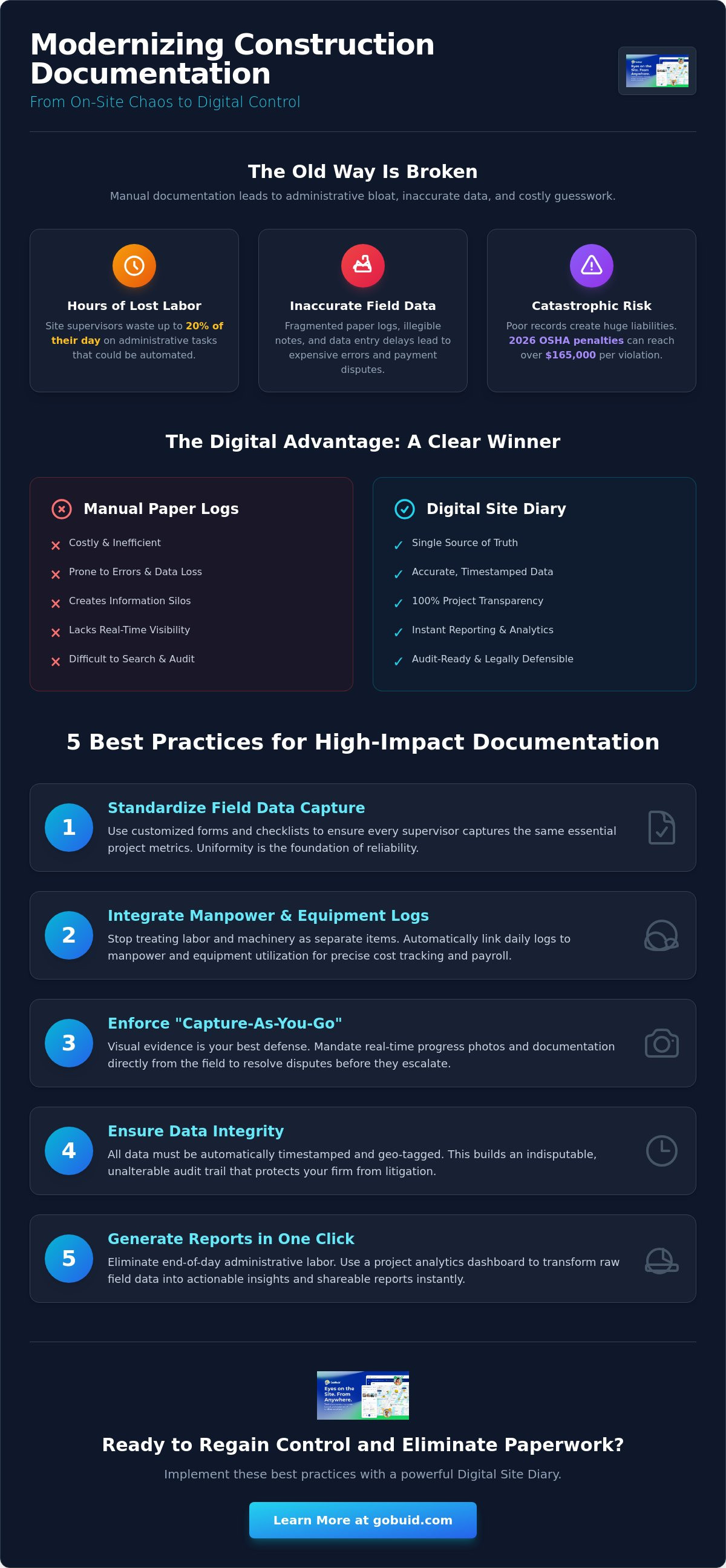
Relying on fragmented paper logs is a gamble with your margins. Poor record-keeping leads to payment disputes and catastrophic compliance failures. In 2026, OSHA penalties for serious violations can reach $16,550, while willful or repeat violations can climb to $165,514. You can't afford to be reactive. Adopting a Digital Site Diary transforms documentation into a real-time asset that protects your bottom line and keeps your team accountable.
To better understand the fundamental role of documentation in modern building, watch this helpful video:
The shift to digital isn't just about saving trees. It's about data integrity. When information is siloed in physical folders, it's effectively invisible. Digital systems allow for immediate verification. This transparency prevents the "truth decay" that happens when field notes are transcribed days after the event. By capturing data at the source, you ensure your project records are accurate, timestamped, and audit-ready from day one.
Digital vs. Manual Documentation
Manual entry carries massive hidden costs. Think about the lost hours. Site supervisors often spend 20% of their day on administrative tasks that could be automated. Illegible notes and coffee-stained logs lead to delayed communication and expensive errors. Centralized data bridges this gap. It ensures field and office teams see the same version of the project instantly. There's no more guessing about manpower counts or equipment location. Everything is synchronized, providing a unified data point that keeps the entire professional team aligned and productive.
5 Best Practices for High-Impact Site Documentation
Efficiency isn't about doing more paperwork. It's about making the work document itself. High-impact documentation happens in the moment, not at 5:00 PM in a cramped site trailer. Implementing construction project documentation best practices requires a shift from passive recording to active data capture. When data flows directly from the field to the office, you eliminate the lag that causes budget overruns and scheduling delays.
Start by standardizing your intake. Use Customised forms to ensure every supervisor captures the same essential data points. This eliminates the "I forgot to write that down" excuse. Second, prioritize real-time manpower and equipment tracking. You need to know exactly who was on-site and which machinery was running to maintain accurate cost records. Third, enforce a "capture-as-you-go" policy for Progress Photos & Documentation. Visual evidence is your best defense. Finally, ensure all data is timestamped and geo-tagged. This builds an indisputable audit trail that protects your firm from litigation and ensures every entry is anchored to a specific time and place.
Standardizing Field Data Capture
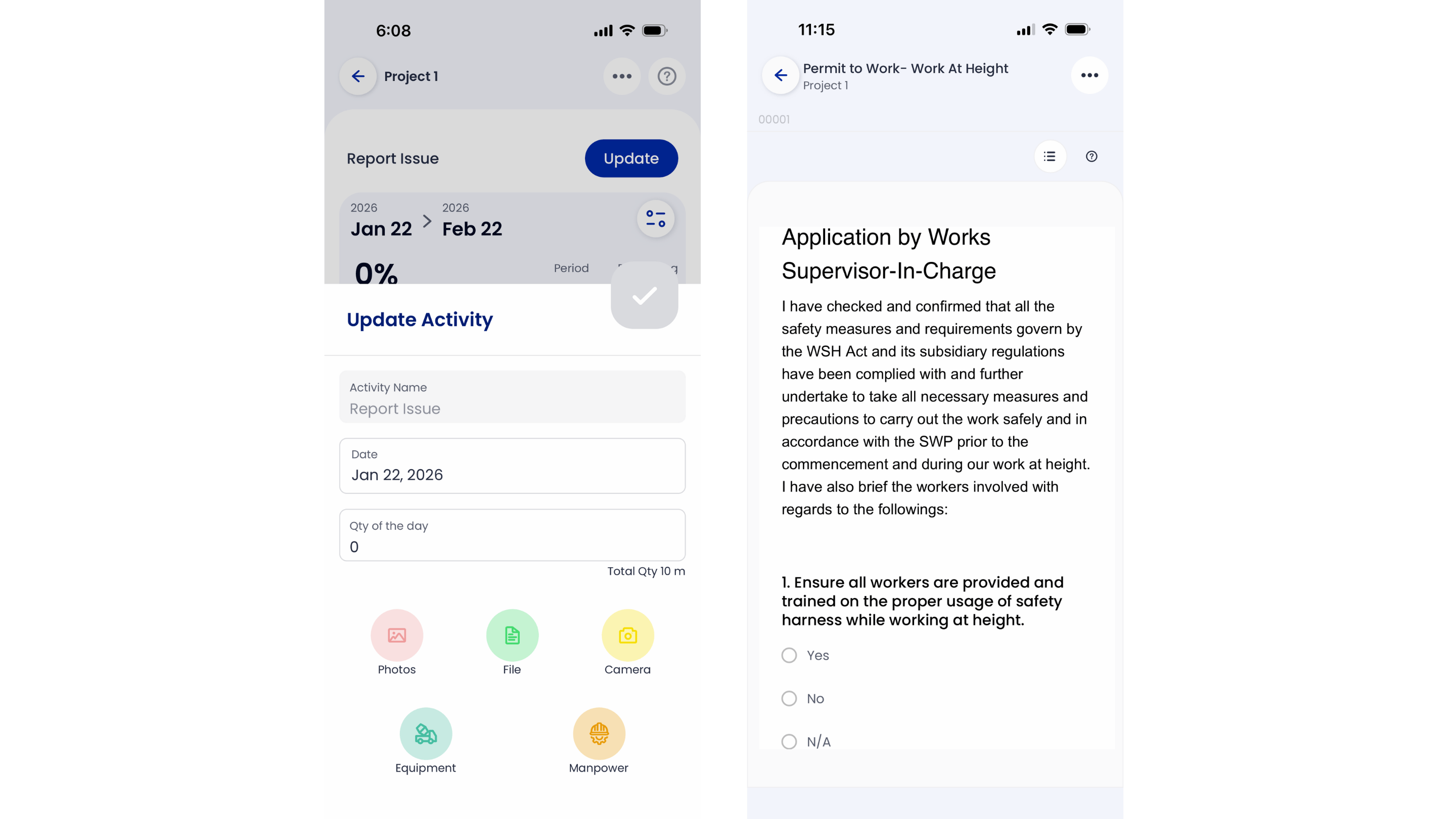
Uniformity is the foundation of reliability. Create checklists for safety and quality inspections that even junior staff can follow without error. This level of procedural rigor is mirrored in professional standards like the WSDOT Construction Manual, which emphasizes consistent record-keeping for audit readiness. Visual evidence, including high-resolution photos and videos, remains the most effective way to resolve site disputes before they escalate into legal battles.
Integrating Manpower and Equipment Logs
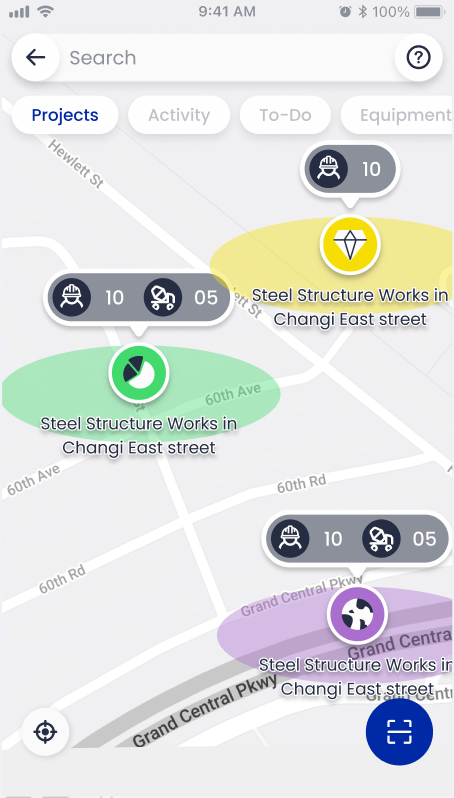 Stop treating labor and machinery as separate line items. Your daily logs should automatically account for every person on-site and every piece of equipment utilized. This integration creates a direct link between the site diary and payroll precision. When site records are accurate, billing becomes a streamlined process rather than a monthly negotiation. Accurate tracking ensures you never pay for idle time or unverified labor hours, keeping your project margins healthy and predictable.
Streamlining Reporting for Project Stakeholders
Data collection is only half the battle. The real value lies in how you present that data to those who hold the purse strings. Transitioning from raw field logs to a Project Analytics Dashboard changes the narrative. It moves you from simply stating "what happened" to explaining "what it means." This shift is essential for maintaining professional credibility and project momentum.
Compiling reports manually is a drain on your most valuable resource: time. Modern construction project documentation best practices dictate that reporting should be instantaneous. You can generate report in one click, pulling together manpower counts, equipment usage, and site photos into a professional PDF. This level of immediacy builds radical transparency with clients and stakeholders. They don't have to wait for a month-end summary to see progress. High-performing firms are already leveraging the best construction project management software 2025 to automate these workflows. It's about creating a unified data point that everyone can trust.
Automating the Reporting Cycle
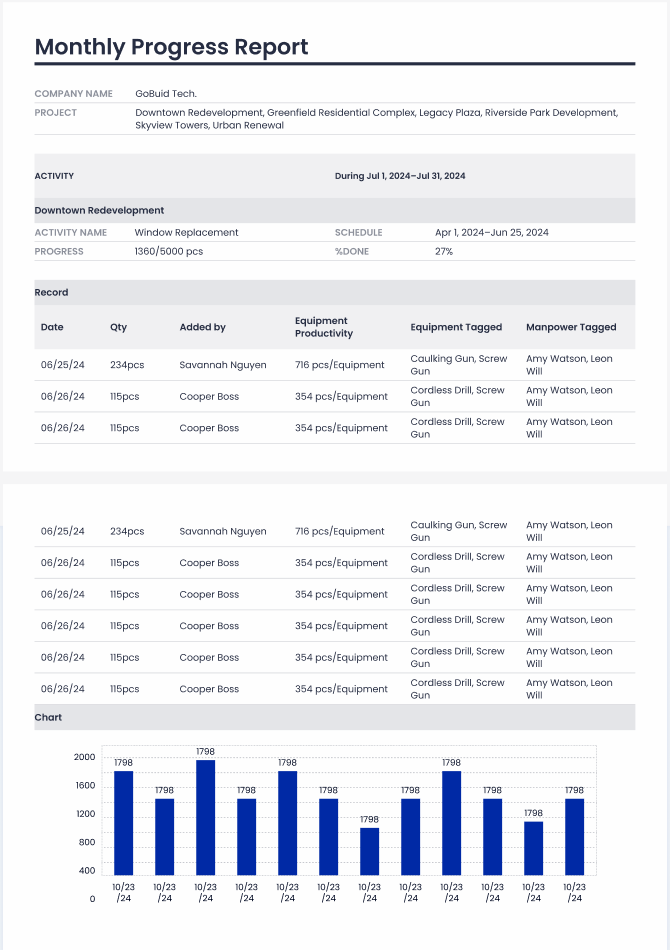 Establishing a reporting cadence shouldn't require manual labor. Set up a workflow where daily, weekly, and monthly reports are populated automatically from your Digital Site Diary. One-click reports are versatile. You can customize them for safety officers who need hazard logs or for owners who only care about budget and progress milestones. It's about delivering the right data to the right person at the right time without the administrative overhead.
Data-Driven Decision Making
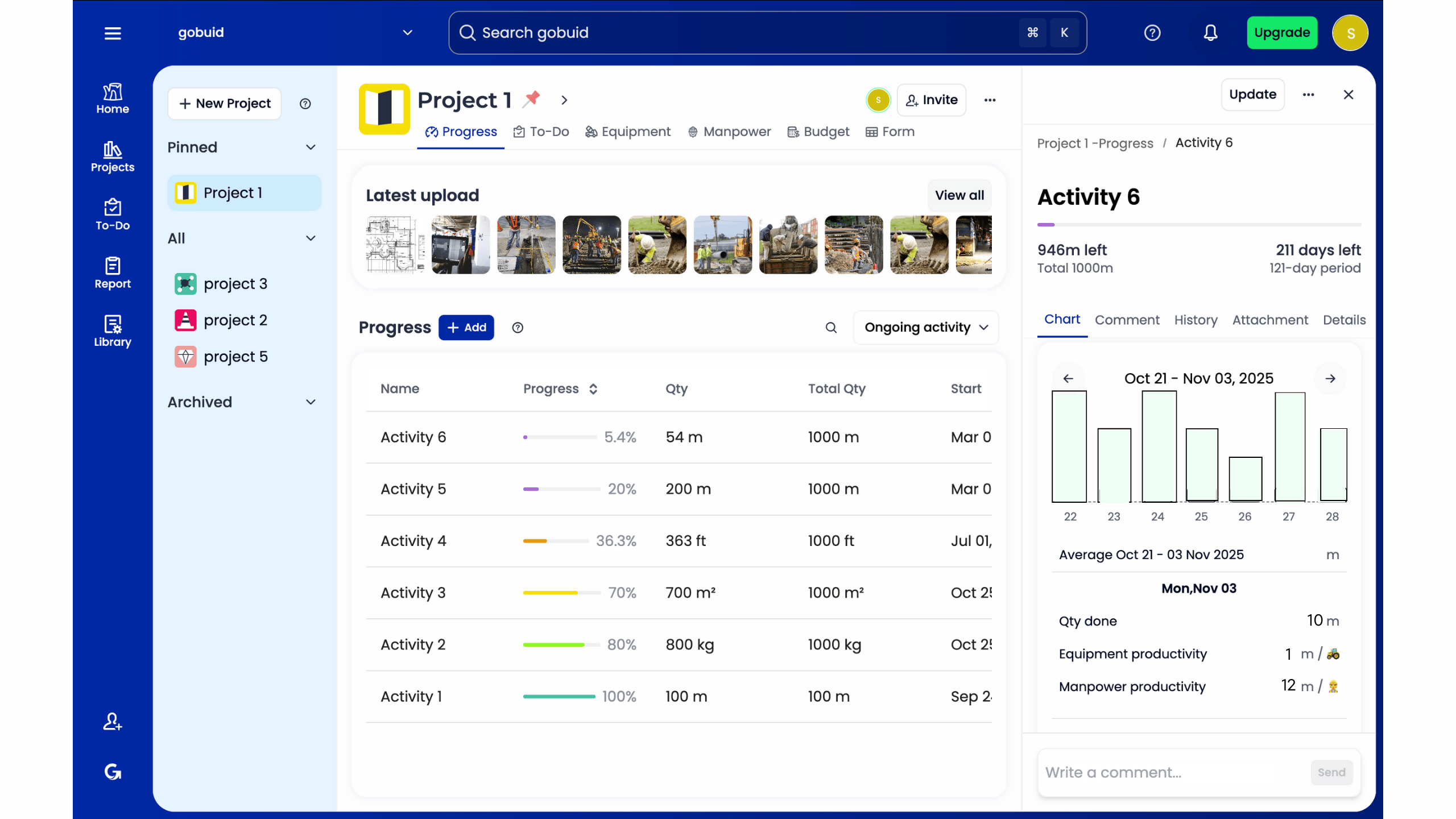
Your documentation is a goldmine of historical data. Don't let it sit in a digital archive. Use analytics to identify bottlenecks in manpower or equipment usage before they derail your schedule. Comparing real-time data against past project performance allows you to sharpen your future estimates. This data-driven approach ensures you aren't just finishing the current job; you're building a more profitable foundation for the next one. Proactive management starts with the data you capture today.
Modernize Your Project Oversight
Precision in the field requires precision in your records. You've seen how moving to a digital site diary eliminates the lag between physical work and office oversight. Transitioning from reactive paperwork to proactive data capture isn't just a trend; it's a necessity for protecting your margins in 2026. By implementing these construction project documentation best practices, you ensure that every hour of labor and every piece of equipment is tracked with absolute accuracy.
Stop letting administrative bloat drain your team's productivity. You can replace chaotic, fragmented logs with a unified data point that serves your entire professional team. High-quality execution depends on total transparency and audit-ready records that you can access instantly from any location. It's time to bridge the gap between your site realities and your digital tools. Regain control over your workflows and ensure your documentation works as hard as your crew does.
Start streamlining your site documentation with GoBuid to gain access to real-time manpower and equipment tracking. Empower your supervisors to generate professional reports in one click and spend more time on the work that actually builds your business. Take the first step toward a more efficient, data-driven jobsite today.
Frequently Asked Questions
What are the most important construction documents to maintain?
The core documents include the daily site diary, safety and quality inspection logs, and progress photos. These records provide the evidentiary foundation for payment claims and legal protection. You should also maintain updated manpower and equipment logs to verify site activity against the project schedule. Keeping these centralized ensures that stakeholders have immediate access to the project's status without digging through physical files.
How can I improve construction documentation efficiency on-site?
Eliminate manual entry by adopting digital tools that allow for real-time data capture. Using customised forms ensures that field teams collect specific, required data points consistently. This approach removes the need for end-of-day transcription and reduces administrative errors. Efficiency improves when documentation becomes a seamless part of the physical work rather than a separate task performed after the shift ends.
Is digital documentation legally admissible in construction audits?
Digital records are widely accepted in audits and legal proceedings if they meet specific integrity standards. Implementing construction project documentation best practices involves using systems that automatically apply timestamps and geo-tags to every entry. These metadata points create an indisputable audit trail. Modern platforms ensure that once a record is submitted, it's archived in a tamper-proof format that satisfies regulatory and financial auditors.
What is the best way to track manpower and equipment on a project?
The most effective method is utilizing an integrated digital site diary that links labor hours and machinery usage to specific tasks. This eliminates the guesswork associated with manual headcounts. Real-time manpower tracking allows you to monitor productivity levels and adjust resources before bottlenecks occur. By centralizing this data, you create a unified data point that simplifies payroll and ensures equipment's utilized at maximum efficiency.