Master Your BCA Audit: Essential Construction Checklist
Use a BCA audit construction documentation checklist to organize permits, contracts, inspections, and corrective actions with traceable project records.
by Amelia Grant
|
A BCA audit construction documentation checklist should cover permits and approvals, insurance and bonding records, contracts and budgets, a clear document index, inspection records, audit trails, and corrective actions. Each item needs traceable evidence showing what was filed, reviewed, or resolved. Tailor the checklist to the project’s scope and risks instead of relying on a generic template.
Records can easily become scattered across the site, office, and project teams. A consistent structure makes documents easier to find and helps track issues from inspection through resolution. This guide covers which records to gather, how to index and track them, and how to document corrective actions. You’ll also learn to tailor the checklist to the project so the audit file stays clear, complete, and useful to the people doing the work.
Key Takeaways
- Tailor checklist items to the project’s scope, risks, and work type instead of relying on an unchanged template.
- Organize permits, approvals, insurance, bonding, and contract records in a clear index so each document is easy to trace.
- Log inspections, findings, and corrective actions with clear status and ownership; according to the Occupational Safety and Health Administration, general construction requires fall protection at heights over 6 feet.
- Use GoBuid’s Progress Photos & Documentation, Customised forms, and one-click reports to keep field records organized and ready to review.
Audit trails, document indexes, and corrective actions
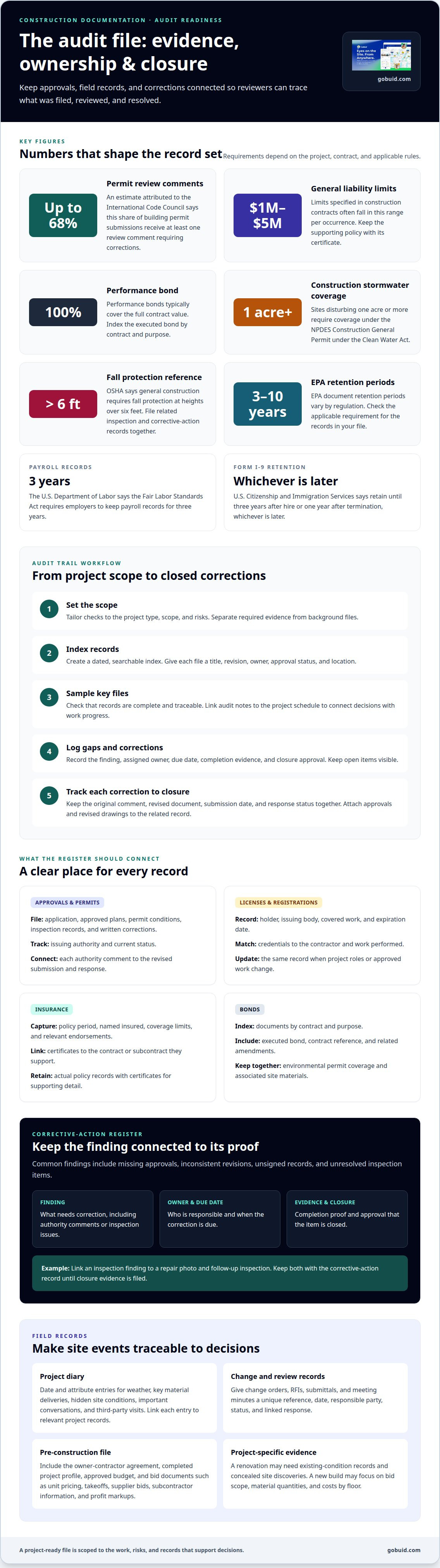
Use a BCA audit construction documentation checklist to create a dated, searchable index. Record each file’s title, revision, owner, approval status, and location so reviewers can trace decisions from request to approval. Tie the index to the project scope to distinguish required evidence from background files.
What are the steps in a construction documentation audit? Set the scope, index records, sample key files, log gaps, and track corrections to closure. Link audit notes to the project schedule to show how decisions relate to work progress.
How should change orders, RFIs, submittals, and meeting minutes be documented for an audit? Give each item a unique reference, date, responsible party, status, and linked response. Attach approvals and revised drawings to the same record. Use the BCA audit construction documentation checklist to ensure every record has a clear place in the audit file.
Track corrective actions in a register that records the finding, assigned owner, due date, completion evidence, and closure approval. For example, link an inspection finding to a repair photo and follow-up inspection. Keep open items visible until the supporting evidence is filed.
Common findings include missing approvals, inconsistent revisions, unsigned records, and unresolved inspection items. For permit review corrections, log the authority’s comment, revised document, submission date, and response status. This preserves the correction history for review.
Safety records should connect hazards, controls, and inspections. According to the Occupational Safety and Health Administration, general construction requires fall protection at heights over 6 feet. File related inspection and corrective-action records together.
What Makes an Effective Construction Document Checklist?
Tailor the checklist to the project’s type, scope, and risks. A renovation may need records of existing conditions and concealed site discoveries. A new build may focus on bid scope, material quantities, and costs by floor. Select relevant checks, then assign an owner and record location to each item. An unchanged template can overlook project-specific risks.
Include pre-construction records before fieldwork begins. File the owner-contractor agreement, completed project profile, approved budget, and bid documents. Bid files may include unit pricing, takeoffs, supplier bids, subcontractor information, and profit markups. Compare planned and actual costs by square foot and floor, then investigate variances such as market price changes or environmental issues.
Project diaries connect site events to schedule and cost decisions. Record weather, key material deliveries, hidden site conditions, important conversations, and third-party visits. For example, an entry about a concealed condition can help explain a later schedule change. Date and attribute each entry, and link it to relevant project records.
What project records should be included in a construction audit? Include agreements, budgets, bids, schedules, project diaries, cost records, and supporting invoices. Add records relevant to the project’s work and risks, such as material tracking or subcontractor files.
How long must construction audit documents be retained? EPA document retention periods vary from 3 to 10 years depending on the regulation. The U.S. Department of Labor says the Fair Labor Standards Act requires employers to keep payroll records for three years. U.S. Citizenship and Immigration Services says Form I-9 must be retained until three years after hire or one year after termination, whichever is later.
For a consolidated view of project performance, explore a Project Analytics Dashboard.
Licenses, permits, insurance, and bonding records
Build one register for approvals, insurance, and bonds. For each permit, file the application, approved plans, conditions, inspection records, and written corrections. Add the issuing authority and current status. An estimate attributed to the International Code Council says up to 68% of building permit submissions receive at least one review comment requiring corrections. Keep each comment beside the revised submission and response.
Include licenses and registrations relevant to the project and its contractors. Record the holder, issuing body, covered work, and expiration date so reviewers can connect credentials to the work performed without searching through scattered emails. File updates in the same record when project roles or approved work change.
Insurance records should show the policy period, named insured, coverage limits, and relevant endorsements. Link certificates to the contract or subcontract they support. General liability limits specified in construction contracts often range from $1 million to $5 million per occurrence. Keep the actual policy records with certificates, so the audit trail includes supporting detail.
Index bonding documents by contract and purpose. Performance bonds typically cover 100% of the contract value. Include the executed bond, its contract reference, and related amendments. For environmental coverage, sites disturbing one acre or more require coverage under the NPDES Construction General Permit under the Clean Water Act. File permit coverage and associated site materials together.
Before an audit, sort records by project phase and approval status. Flag missing dates, expired documents, and unresolved permit comments for follow-up. Keep the register current as approvals and policy periods change. Organize project documentation so field records and supporting approvals stay connected.
GoBuid: Progress Photos & Documentation
GoBuid’s Progress Photos & Documentation helps teams keep visual site records alongside project information. Capture progress by location or work phase, then connect photos to relevant documentation for review. This gives project teams a clearer record of completed work and site conditions.
Customised forms structure recurring field records, while Manpower Tracking records workforce information. When audit preparation requires a concise project summary, generate a report in one click. These tools help teams maintain consistent records across active work areas and project stages.
Bring GoBuid into the workflow when progress evidence and field records are difficult to keep organized. To discuss how it can support your project documentation, contact GoBuid.
Set Your Next Project Up for a Clearer Audit
Make audit readiness part of the project workflow rather than a scramble before review. Establish a consistent process for capturing site activity, assigning records, and keeping teams aligned from mobilisation through closeout. A practical BCA audit construction documentation checklist can turn that process into a repeatable routine.
GoBuid supports this workflow with a Digital Site Diary, Customised forms, and reports generated in one click. Use these tools to organize day-to-day project records and keep the team focused on current work. Choose a starting point that fits the project, then build the habit across the crew.
Contact GoBuid about your audit and discuss a practical next step for your documentation workflow. Clear records start with a process your team can keep using.
Frequently Asked Questions
What Pre-Audit Preparation Steps Prevent Last-Minute Scrambling?
Begin preparation with a two-week buffer before the audit date. Confirm the audit scope, assign a records lead, and map requested evidence to its file location. Then test a sample request, such as retrieving a signed subcontract or inspection record. This dry run reveals access gaps, unclear ownership, and missing context while there’s still time to address them.
What Regulatory Documents Must You Have Ready for Auditors?
Prepare documents that apply to the project’s contract, workforce, and regulated work. For federal projects, the Davis-Bacon Act requires contractors to pay wages and fringe benefits according to Department of Labor rates for the locality and trade. Keep relevant wage documentation with the project’s contract records, so an auditor can connect the applicable requirement to project activity.
What Site and Equipment Compliance Records Do Auditors Review?
Auditors may review records linking site activity to equipment and safety controls. Organize equipment identification, assignment, and usage information alongside relevant inspection and incident records. For example, a record showing equipment assigned to a work area can help explain a site inspection entry. Date and attribute entries, and retain supporting photos or forms when they add context.
What construction documents are required for a BCA audit checklist?
The required file set depends on the audit scope and project type. Build a project-specific index around the audit request, then connect each item to its source and status. Include evidence of the approved baseline and actual delivery, such as scope documents, schedule changes, cost support, and closeout records. Separate superseded files from current records to prevent confusion.
What permits, inspections, and certificates should construction audit files include?
Include permits and approvals relevant to the work, along with inspection outcomes and any resulting clearance or completion records. Tie each document to the work area or phase it covers. For example, an inspection record should identify the inspected scope and outcome, while a permit amendment should be filed with the approval it changes. This helps reviewers assess applicability and sequence.