How to Reduce Construction Rework: A Data-Driven Guide for 2026
Learn how to reduce construction rework and protect your profits. Our 2026 guide uses data-driven strategies and digital tools to eliminate costly errors.
by Michael R. Henderson
|
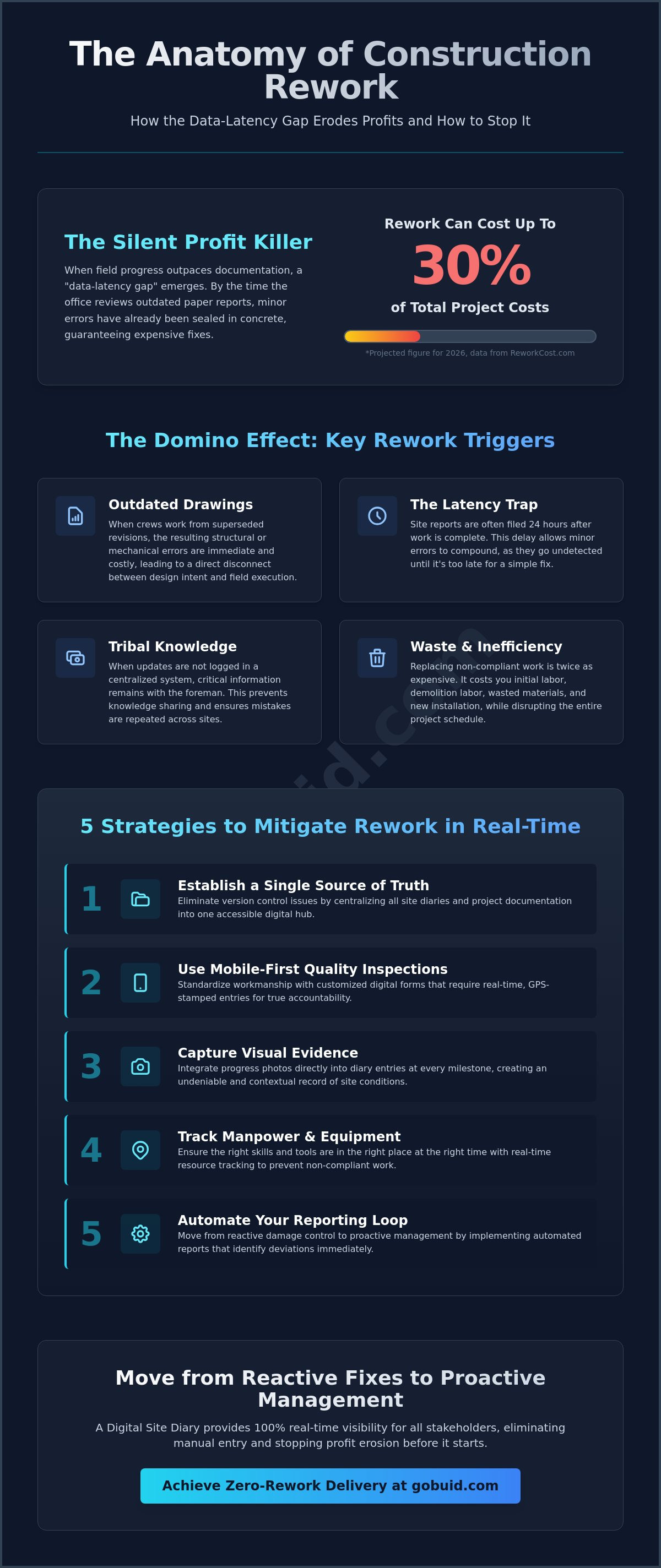
Rework can drain up to 30% of your total project costs in 2026, according to data from ReworkCost.com. Most firms accept these losses as an inevitable part of the job. They're wrong. Learning how to reduce construction rework is no longer just about craftsmanship. It's about closing the data-latency gap that occurs when field progress outpaces your documentation. When the office doesn't know what the field is doing in real-time, expensive errors are guaranteed.
You've felt the friction when site teams and project managers aren't aligned. You've watched profit margins vanish into wasted materials and redundant labor. We understand the anxiety of potential safety liabilities and the need for total transparency. This guide delivers actionable strategies and digital tools to eliminate communication gaps. We'll show you how to leverage real-time site visibility, digital site diaries, and automated reporting to achieve zero-rework delivery and protect your bottom line.
Key Takeaways
- Understand why rework consumes up to 20% of project costs and how to identify the disconnect between design intent and field execution.
- Discover how to reduce construction rework by establishing a single source of truth for all site diaries and project documentation.
- Standardize quality control using mobile-first digital forms to ensure consistent workmanship across every phase of the build.
- Transition from reactive fixes to proactive management with a Digital Site Diary that provides 100% real-time visibility for all stakeholders.
- Eliminate manual entry and documentation friction by centralizing field data to stop profit erosion before it starts.
- ⭐ Learn more about GoBuid's feature - without the heavy enterprise price tag
Table of Contents
-
Identifying the Hidden Causes and Costs of Construction Rework
-
5 Practical Strategies to Mitigate Rework Risks in Real-Time
-
Eliminating Documentation Friction with Digital Site Management
Identifying the Hidden Causes and Costs of Construction Rework
Rework is a silent profit killer. According to the Construction Industry Institute (CII), direct field rework costs can range from 2% to 20% of total project costs. These numbers represent more than just bad luck; they represent a fundamental failure in project visibility. Understanding how to reduce construction rework starts with identifying why the field is often disconnected from the project office. When design omissions go unnoticed, the gap between intent and execution widens, leading to expensive corrections later. For kitchen contractors and design professionals, ArchKit Design offers an augmented reality application that allows for real-time visualization of plans on-site, ensuring the physical build aligns perfectly with the digital model.
To better understand why projects fail and how to stop rework on your job sites, watch this analysis from engineering experts:
The primary culprit is often the "Latency Trap." In a traditional environment, site reports are filed 24 hours after the work is complete. This delay allows minor errors to compound. By the time a manager reviews a manual paper diary, the concrete is poured or the walls are closed. These paper-based systems are the primary contributor to undetected workmanship faults because they lack immediate accountability and visual context.
The Domino Effect of Poor Communication
Outdated drawings are a catalyst for failure. If a crew works from a superseded revision, the resulting structural or mechanical errors are immediate and costly. This issue is exacerbated by tribal knowledge. When site updates aren't logged in a centralized system, critical information stays in the foreman's head rather than the project office. This lack of transparency ensures that mistakes are repeated across different site locations, turning a single error into a systemic problem.
Material Waste and Labor Inefficiency
Replacing non-compliant work is twice as expensive as doing it right the first time. You pay for the initial labor, the demolition labor, the wasted materials, and the new installation. Beyond the direct costs, rework disrupts your entire schedule. It forces subcontractors to reschedule, creating a ripple effect that delays subsequent trades. Adopting lean construction principles helps teams focus on flow and value, but you need a Digital Site Diary to make those principles actionable in the field. Identifying these triggers early is the only way to protect your margins.
5 Practical Strategies to Mitigate Rework Risks in Real-Time
Reducing rework requires more than just better intentions; it requires a technical workflow that captures data at the source. Research by the National Academy of Construction highlights the severe impacts of design and construction rework on project viability. To combat this, you must implement five core strategies. First, establish a single source of truth for all site diaries to eliminate version control issues. Second, move to mobile-first quality inspections. Third, capture progress photos at every milestone. Fourth, track manpower and equipment in real-time to ensure resources match the plan. Finally, automate your reporting loop to identify deviations immediately. Knowing how to reduce construction rework means moving from reactive damage control to proactive site management.
Implementing real-time manpower and equipment tracking ensures that the right skills and tools are in the right place at the right time. This prevents the common scenario where under-equipped crews perform non-compliant work simply to keep the schedule moving. When the field and office share the same data point, accountability becomes the standard rather than the exception.
Standardizing Quality with Customised Forms
Generic checklists often miss the nuances of high-stakes builds. By using Customised forms, you can enforce specific compliance standards for every trade, from electrical to structural steel. Digital checklists ensure accountability by requiring real-time data and GPS-stamped entries, effectively preventing the "pencil-whipping" of safety and quality inspections. This ensures that every inspection is a true reflection of site conditions rather than a manual box-ticking exercise.
Visual Evidence: The Power of Progress Photos
High-quality visual records are the foundation of effective site documentation. For projects requiring professional-grade clarity, Three Sixty Snap Inc. offers specialized photography and videography services that ensure every milestone is captured with precision, providing an undeniable record for all stakeholders.
Context is everything in construction. Integrating Progress Photos & Documentation directly into your site diary entries creates an undeniable record of work. These timestamped visual records resolve disputes instantly and provide stakeholders with proof of compliance without a site visit. When photos are linked to specific tasks, you create a historical audit trail that protects your firm from future litigation. Using a centralized platform to increase productivity allows your team to focus on quality rather than chasing lost files. This proactive approach is the most effective way to understand how to reduce construction rework while protecting your profit margins.
Eliminating Documentation Friction with Digital Site Management
Administrative friction is often the primary reason site teams fail to document critical issues. When the reporting process is cumbersome, supervisors prioritize the build over the paperwork. This creates a data vacuum where errors thrive. Moving to a digital approach transforms site management from a reactive exercise in damage control to a proactive, data-driven workflow. A Digital Site Diary ensures 100% visibility for project stakeholders, bridging the gap between field progress and office oversight. By reducing administrative overhead, you empower your supervisors to focus on quality execution rather than manual data entry.
The National Academy of Construction report on rework identifies human and organizational factors as major contributors to project failure. Digital tools address these factors by standardizing how information flows across the site. When everyone operates from a unified data point, the risk of miscommunication drops significantly. This is a fundamental step in learning how to reduce construction rework across complex, multi-trade projects.
One-Click Reporting: Speed as a Quality Metric
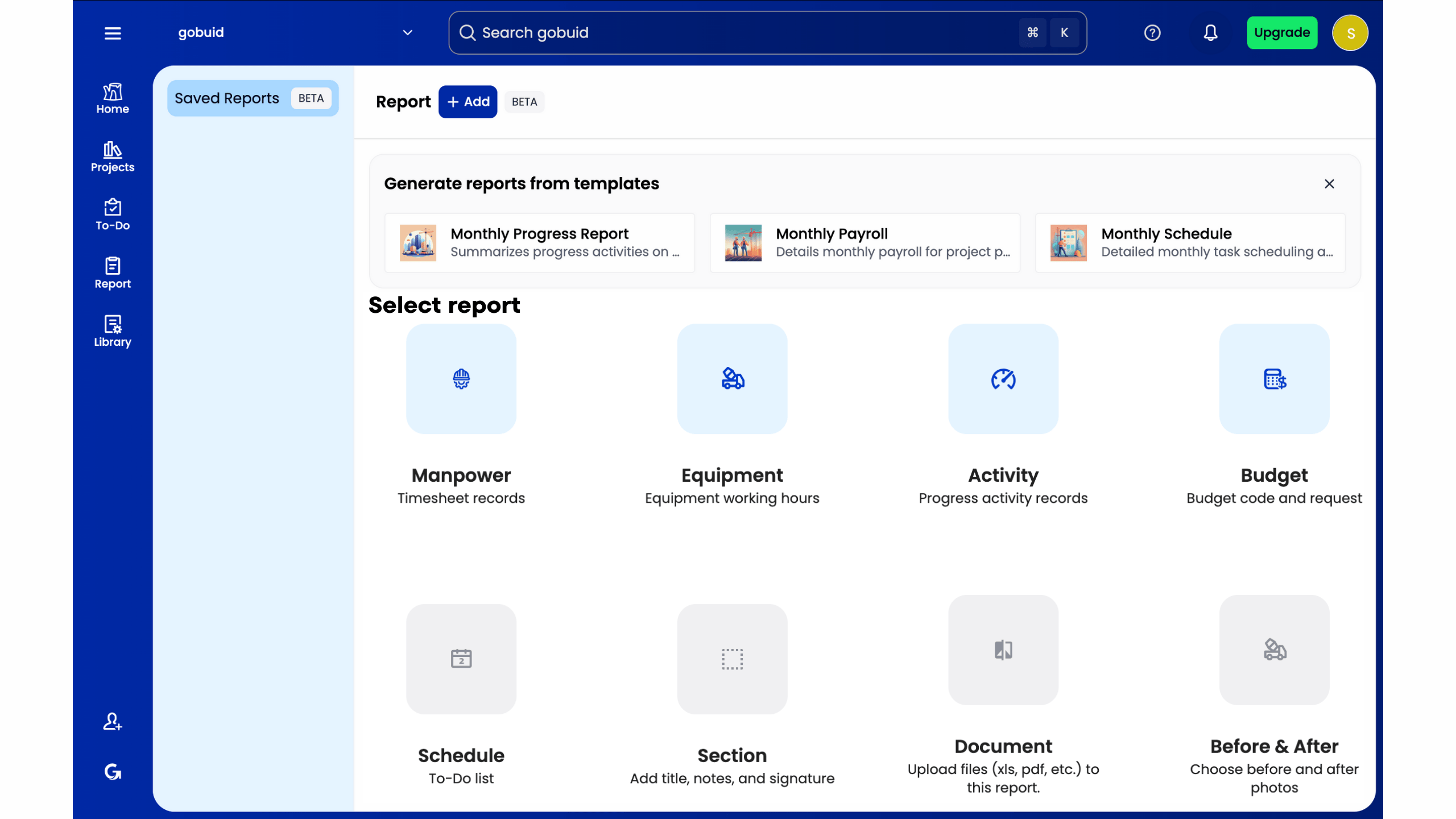
In a fast-paced environment, the speed of information is a quality metric. The ability to generate reports in one click is essential for rapid decision-making. Managers don't have time to chase down paper site diaries or manually compile spreadsheets. A Project Analytics Dashboard transforms raw site data into actionable insights instantly. This immediate feedback loop allows teams to catch deviations before they become permanent fixtures of the build.
Maintaining Accountability Across the Site
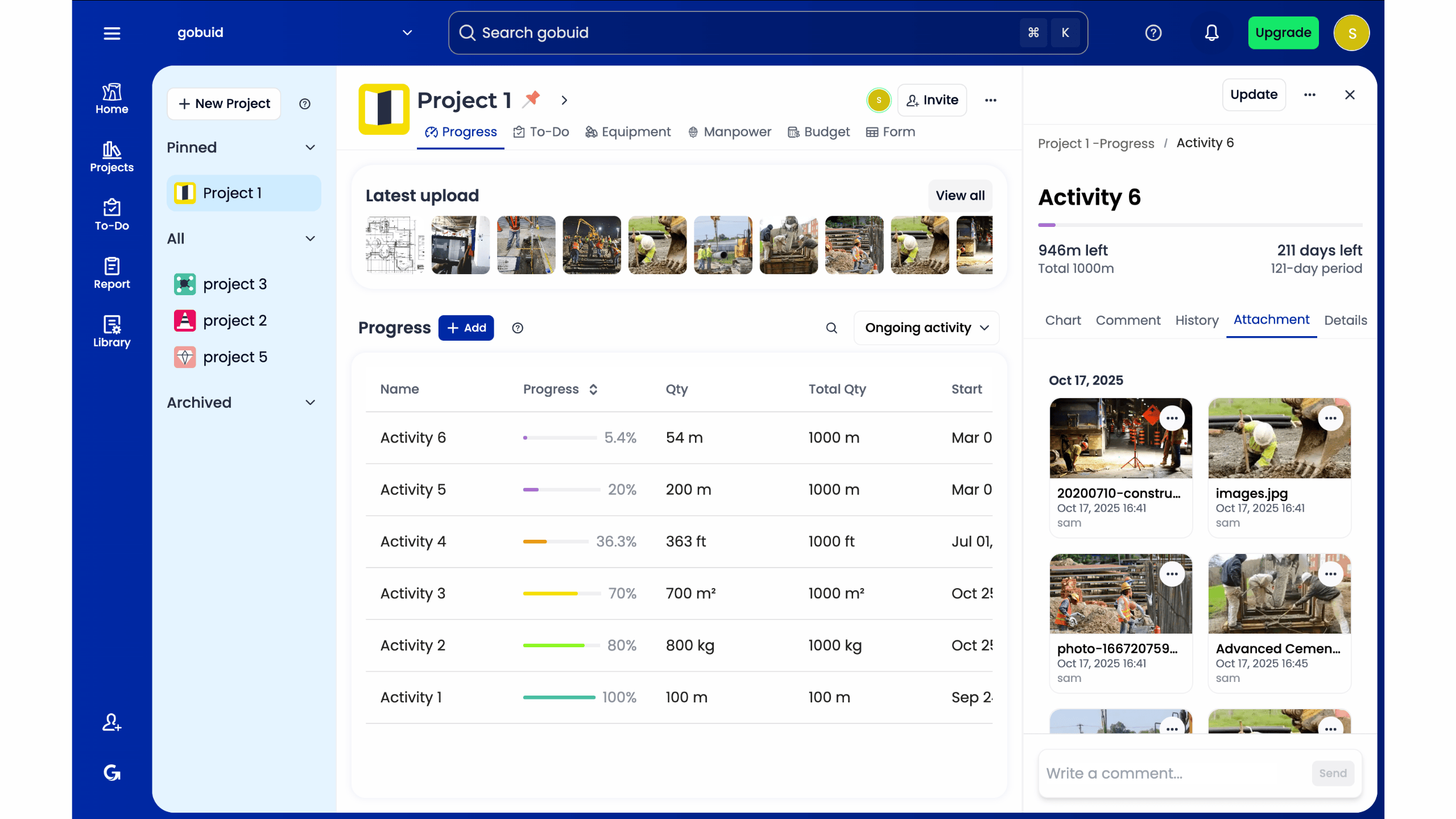
Accountability requires precise tracking of manpower and equipment. Skill-gap errors often occur when resources are misallocated or unqualified labor performs specialized tasks. Centralizing this data prevents these oversights before they lead to non-compliant work. Effective Team Collaboration facilitates this transparency across every operational location. By streamlining these processes, you ensure that every member of the professional team is aligned with the project standards, providing a definitive solution for how to reduce construction rework.
Reclaim Your Project Margins Through Real-Time Data
Rework is a manageable risk, not an industry standard. You've seen how the latency trap and manual documentation create the friction that drains your profits. By centralizing your site data and standardizing inspections through digital tools, you eliminate the communication gaps that lead to costly errors. Learning how to reduce construction rework is the most direct path to protecting your bottom line and ensuring total project accountability.
Precision in the field requires precision in your documentation. Utilize a Project Analytics Dashboard to identify bottlenecks before they require demolition or replacement. Empower your supervisors to stay focused on quality execution with automated tools that remove the administrative burden. It's time to bridge the gap between your physical operations and digital precision to ensure every project is delivered right the first time.
Stop the rework cycle and generate your first site report in one click with GoBuid. Regain control over your site workflows and lead your professional team toward a future of zero-rework project delivery.
Frequently Asked Questions
What is the most common cause of construction rework?
Design errors and project changes are the primary drivers, accounting for 52% of all rework cases. These issues are often exacerbated by poor communication between the field and the office, leading crews to work from outdated drawings. This disconnect creates a latency gap where mistakes aren't caught until the work is already non-compliant. Establishing a single source of truth is the first step in learning how to reduce construction rework at the source.
How much does rework actually cost a construction company?
Rework typically accounts for 5% to 15% of the total project cost on well-managed sites, but can soar to 30% on poorly managed ones. These figures include direct field rework, which the Construction Industry Institute estimates at an average of 5% of total costs. Beyond material waste, these errors cause schedule delays and reduce overall labor productivity across all trades, directly eroding your profit margins.
Can construction management software really reduce rework?
Yes, software reduces rework by providing real-time visibility and closing the communication loop between stakeholders. Digital tools allow for immediate progress photo capture and automated reporting, catching deviations before they require demolition. By centralizing documentation, you ensure every team member works from the most current data point. This transparency is essential for firms looking for practical ways on how to reduce construction rework while maintaining high quality standards.
What are the benefits of a digital site diary over paper logs?
Digital site diaries eliminate the 24-hour reporting delay inherent in paper logs, which often hides workmanship faults until they become expensive. They provide instant access to timestamped visual records and manpower tracking, ensuring higher accountability across the site. Supervisors save hours on administrative overhead, allowing them to focus on quality control rather than manual data entry. This transition moves your team from reactive fixes to proactive site management.