Monitoring Skilled vs. General Labor Ratios: A Practical Construction Guide
Improve jobsite productivity by monitoring skilled vs general labor ratios. Learn practical field methods to balance your crews and keep work on schedule.
by Sheldon Huang
|
A labor ratio can look steady on paper while the work on site has already shifted. Monitoring skilled vs general labor ratios only helps when the numbers show who is doing what, where, and during which project phase.
Daily headcounts change, and one overall ratio can hide a trade imbalance or a change in the work underway. Attendance records alone won’t show whether the crew mix matches completed work. To make useful comparisons, record labor by category and connect it to the task, work area, and time period.
This guide explains how to define skilled and general labor consistently, compare planned and actual crew mix using reliable daily records, and spot meaningful changes early. You’ll learn to read ratios alongside trade, task, project phase, and production context, then use current site data to guide workforce decisions. Digital manpower tracking, site diaries, and project analytics can bring those records into a clearer view while keeping the focus on the work itself.
Key Takeaways
- Set clear, consistent criteria for classifying skilled and general labor so daily records can be compared.
- Choose whether to track workers, labor hours, or both, and keep each comparison on the same basis.
- Make monitoring skilled vs general labor ratios more useful by separating trades or work areas when the overall figure obscures important shifts.
- Read ratio changes alongside progress and site conditions, then review unusual movements with the people closest to the work before changing crew plans.
What Skilled vs. General Labor Ratios Show on a Construction Site
A skilled-to-general labor ratio describes the relationship between workers classified as skilled and those classified as general labor. Agree on practical definitions for your site before recording the numbers. For example, your team might distinguish workers carrying out specialist trade tasks from workers performing general support tasks. The construction worker overview provides background on the range of roles found on construction sites.
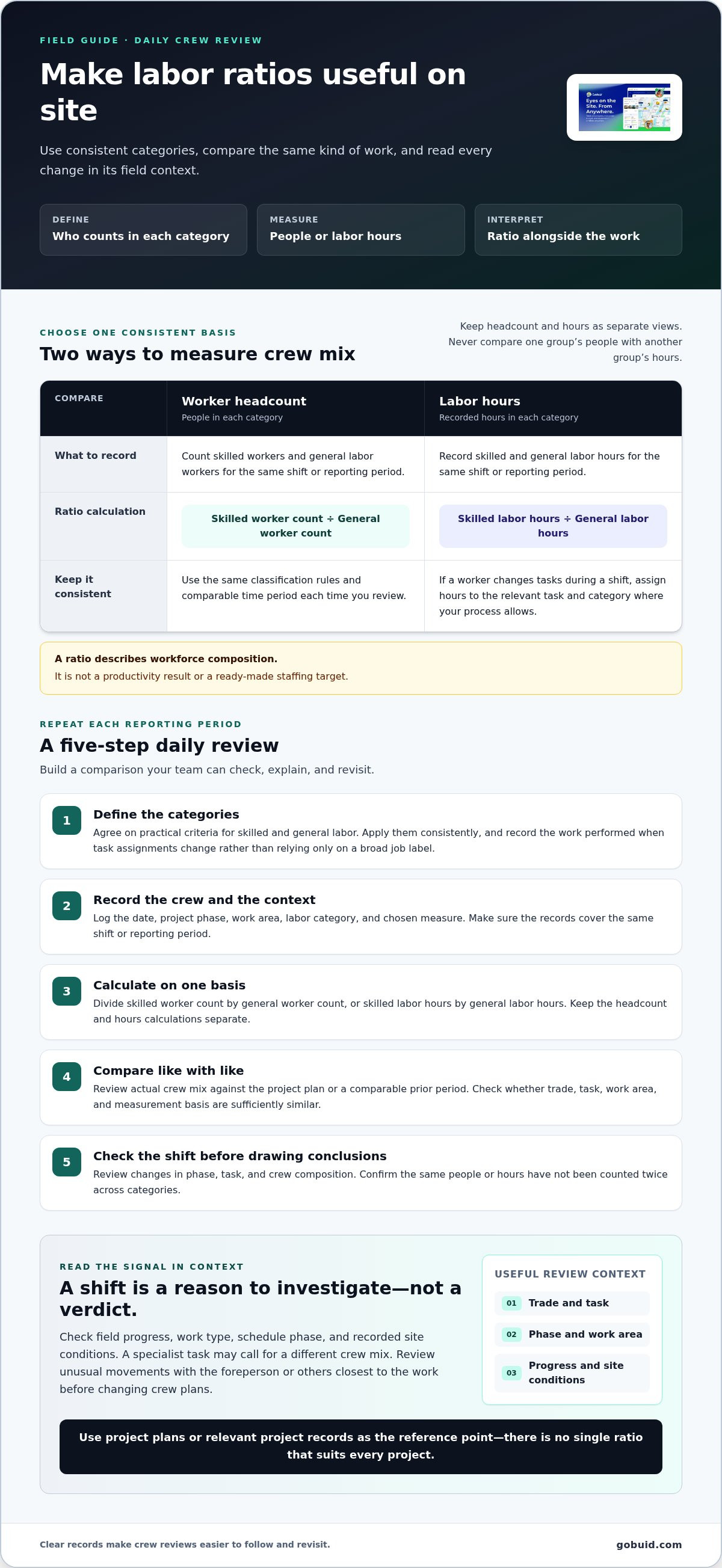
Choose what the ratio measures: worker headcount, labor hours, or both as separate views. A headcount ratio compares the number of people in each group. An hours-based ratio compares their recorded labor hours. Don’t combine one group’s headcount with the other’s hours. If a worker performs different kinds of tasks during a shift, record the hours against the relevant task and category where your process allows. The ratio describes workforce composition, not productivity or a ready-made staffing target.
For a practical look at managing construction teams, watch this project management overview:
Why the right labor mix changes with the work
A crew mix that fits one phase may not fit the next. Trade requirements, task sequence, and site conditions all affect which workers are needed. A work area focused on a specialist installation may call for a different mix than one preparing or clearing the area. That shift alone doesn’t show a problem.
For monitoring skilled vs general labor ratios, compare like with like: use the same classification rules, measurement unit, and time period. Where work differs, review trades or areas separately. No single ratio suits every project. Read the figure alongside the work underway; it’s a snapshot of crew composition, not a verdict on how well the crew is performing.
How to Monitor Skilled vs. General Labor Ratios Day by Day
A repeatable daily workflow turns crew records into a comparison your team can review. Keep worker classifications and measurement units consistent throughout each comparison. For background on general labor roles, the U.S. Bureau of Labor Statistics describes construction laborers and helpers and their typical duties.
- Define categories. Set clear criteria for skilled and general labor, then apply them consistently across the project. If task assignments change, record the work performed rather than relying on a broad job label alone.
- Record the crew. Log the date, project phase, work area, labor category, and either worker count or labor hours. Use daily site records, and make sure the figures cover the same shift or reporting period.
- Calculate the ratio. Divide skilled worker count by general worker count, or skilled labor hours by general labor hours. Keep headcount and hours as separate measures.
- Compare like with like. Review actual crew mix against the project plan or a comparable prior period. Separate trades or work areas if a combined figure hides important differences.
- Review the shift. Check the recorded data and note changes in phase, task, or crew composition before drawing conclusions. Confirm that the same people or hours haven’t been counted twice across categories.
Choose a consistent measure and build a reliable baseline
For monitoring skilled vs general labor ratios, record each observation with its date, phase, and work area. A ratio without that context can make unlike days appear comparable. Don’t rely on an unsupported industry benchmark; use the project plan or your own relevant records as the reference point. When comparing with a prior period, check that the trade, task, and measurement basis are sufficiently similar.
Current manpower records and project analytics can help bring daily observations together for review. GoBuid’s construction management features include workforce tracking and project data review. Keeping those observations organized makes it easier to see what changed and where.
GoBuid helps your team bring site information into clearer view.
How to Interpret Labor Ratio Changes and Take the Next Step
A ratio shift is a signal to investigate, not a verdict on crew performance. Read it alongside field progress, work type, schedule phase, and recorded site conditions. If the skilled share rises during specialist work, that may reflect the task underway. If the mix changes but progress or site notes tell a different story, check the records and circumstances before acting.
The 2023 FMI Labor Productivity Study examines construction labor productivity, a useful reminder to assess workforce records in context rather than treating a ratio as a result on its own. Review unusual changes with the foreperson or others closest to the work. Their field knowledge can help clarify whether the shift reflects the plan, a task change, or an unexpected site condition.
Turn workforce records into a practical crew review
Set a regular review rhythm. Compare planned and actual labor mix with documented field progress, using dated records to spot patterns across comparable work periods. A repeated change can prompt a closer look, but it doesn’t prove the ratio caused a schedule or production outcome. Note what you reviewed and what field context helped explain the change so the next review has a clear reference point.
Digital site diaries can keep manpower observations alongside notes on work completed and site conditions. Clear records make the review easier to follow and revisit. GoBuid’s one-click reporting features turn project documentation into a report your team can review.
For connected project records, explore GoBuid site management features to bring current site information together for workforce decisions.
Make Crew Decisions With Clearer Site Data
Useful labor ratios start with consistent definitions and a consistent measure, whether you track headcount or labor hours. Monitoring skilled vs general labor ratios becomes more meaningful when you compare the crew mix with the work underway, project phase, and field progress. A change is a reason to review the context with the people closest to the work, not an automatic instruction to adjust staffing.
Reliable daily records make that review easier to repeat. GoBuid’s real-time manpower tracking supports current workforce records, while one-click reporting turns project documentation into professional reports your team can review.
Explore GoBuid’s site management tools to connect workforce records with project information. Build a clearer picture of site activity and use it to make thoughtful, field-informed crew decisions.
Frequently Asked Questions
What is a skilled-to-general labor ratio in construction?
A skilled-to-general labor ratio compares the number of workers, or labor hours, classified as skilled with those classified as general labor. The categories should follow clear, consistent site definitions. The ratio describes crew composition for a specific period and work area. It doesn’t measure productivity or set a staffing target by itself.
How do you calculate a skilled vs. general labor ratio?
Divide the skilled labor measure by the general labor measure, using the same unit for both. For example, if a crew has six skilled workers and three general laborers, the headcount ratio is 2:1. For an hours-based comparison, divide skilled labor hours by general labor hours instead. Keep the two measures separate and record the date and work area.
Is there a recommended skilled-to-general labor ratio for every construction project?
No single skilled-to-general labor ratio fits every construction project. The appropriate crew mix depends on the trade, task sequence, project phase, and site conditions. Rather than relying on a broad benchmark, compare actual staffing with the project plan or a relevant prior period. Monitoring skilled vs general labor ratios is useful when those comparisons reflect similar work.
How often should construction teams monitor labor ratios?
Record crew data daily so changes are visible as work progresses, then review it at a consistent rhythm that suits project operations. Compare like periods and consider progress, work type, schedule phase, and site notes. If a change looks unusual, review it with the people closest to the work before making crew adjustments. Current records support timely, informed discussion.