Continuous Flight Auger (CFA) Piling: The Ultimate Guide to Process, Benefits, and Project Management
by Sheldon Huang
|
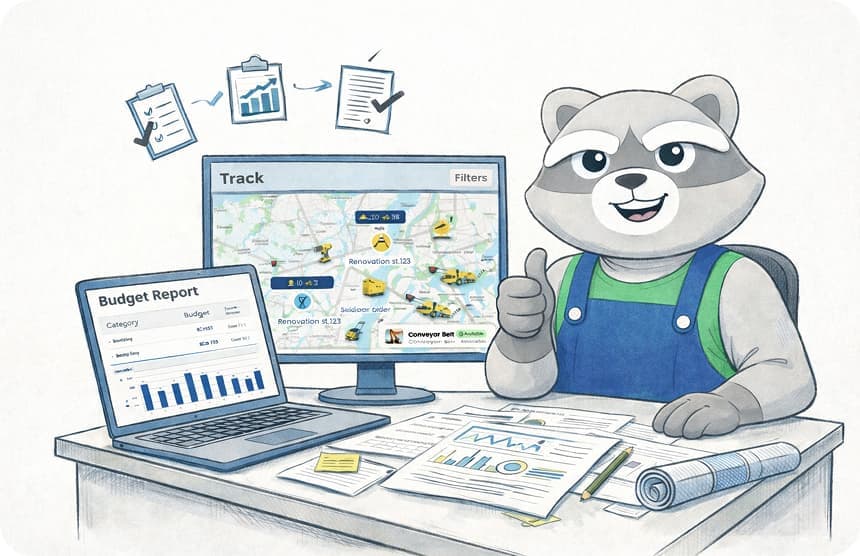
Manual piling logs consume up to 20% of a site engineer's weekly hours, leaving critical foundation data trapped in paper notebooks while the rig sits idle. It's a high-stakes environment where a 30-minute concrete delay can jeopardize the structural integrity of a pile. You know that Continuous Flight Auger (CFA) Piling offers the quietest, fastest route to a stable foundation, but the administrative burden often outweighs the mechanical speed. Managing the flow of concrete, tracking real-time progress, and ensuring BCA-compliant documentation shouldn't feel like a second full-time job. You need visibility into every meter drilled to keep the project moving.
This guide empowers you to master the technical complexities and management requirements of CFA piling. You'll gain the tools to ensure high-performance foundations and seamless site documentation without the usual chaos. We'll explore the end-to-end process, from initial boring to the final automated field report, giving you a single source of truth for your entire foundation team. It's time to bridge the gap between the field and the office for a more efficient job site.
Key Takeaways
Understand why CFA has evolved from a niche method into a mainstream standard for high-performance foundation work.
Master the technical execution of Continuous Flight Auger (CFA) Piling to ensure precision from initial drilling to final completion.
Evaluate the speed and noise-control benefits of CFA versus bored piling to optimize your site’s environmental footprint and timeline.
Secure project approvals by mastering BCA compliance standards and the rigorous documentation requirements for piling logs.
Eliminate administrative bottlenecks by centralizing manpower and equipment management on a single, real-time digital platform.
⭐ Learn more about GoBuid's feature- without the heavy enterprise price tag
Streamlining CFA Piling Projects with Digital Tools
Manual reporting is a bottleneck that stalls fast-paced foundation projects. Site engineers often lose up to 40% of their productive time to fragmented paperwork. This creates a dangerous disconnect between the rig and the head office. Centralizing manpower and equipment management on a single platform eliminates this friction immediately. Continuous Flight Auger (CFA) Piling demands rapid data capture to keep pace with high production rates. Mobile-first documentation ensures every pile is recorded as it’s drilled. This future-proofs your project against data gaps and legal disputes while maintaining a clear audit trail.
Automated Reporting for Piling Operations
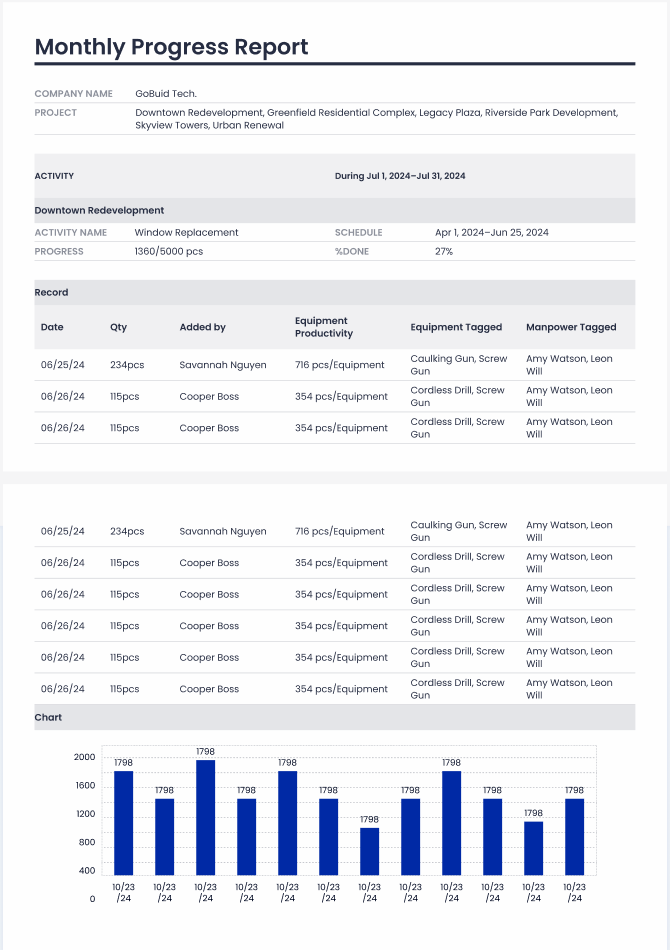
Efficiency starts with eliminating the clipboard. Teams can generate reports in one click to summarize daily piling progress. By using customised forms for safety checklists and pile logs, site engineers reduce administrative overhead significantly. This shift allows technical staff to focus on quality control rather than manual data entry. Digital logs provide instant, verifiable proof of depth and concrete pressure for every pile installed on-site.
Real-Time Visibility and Accountability
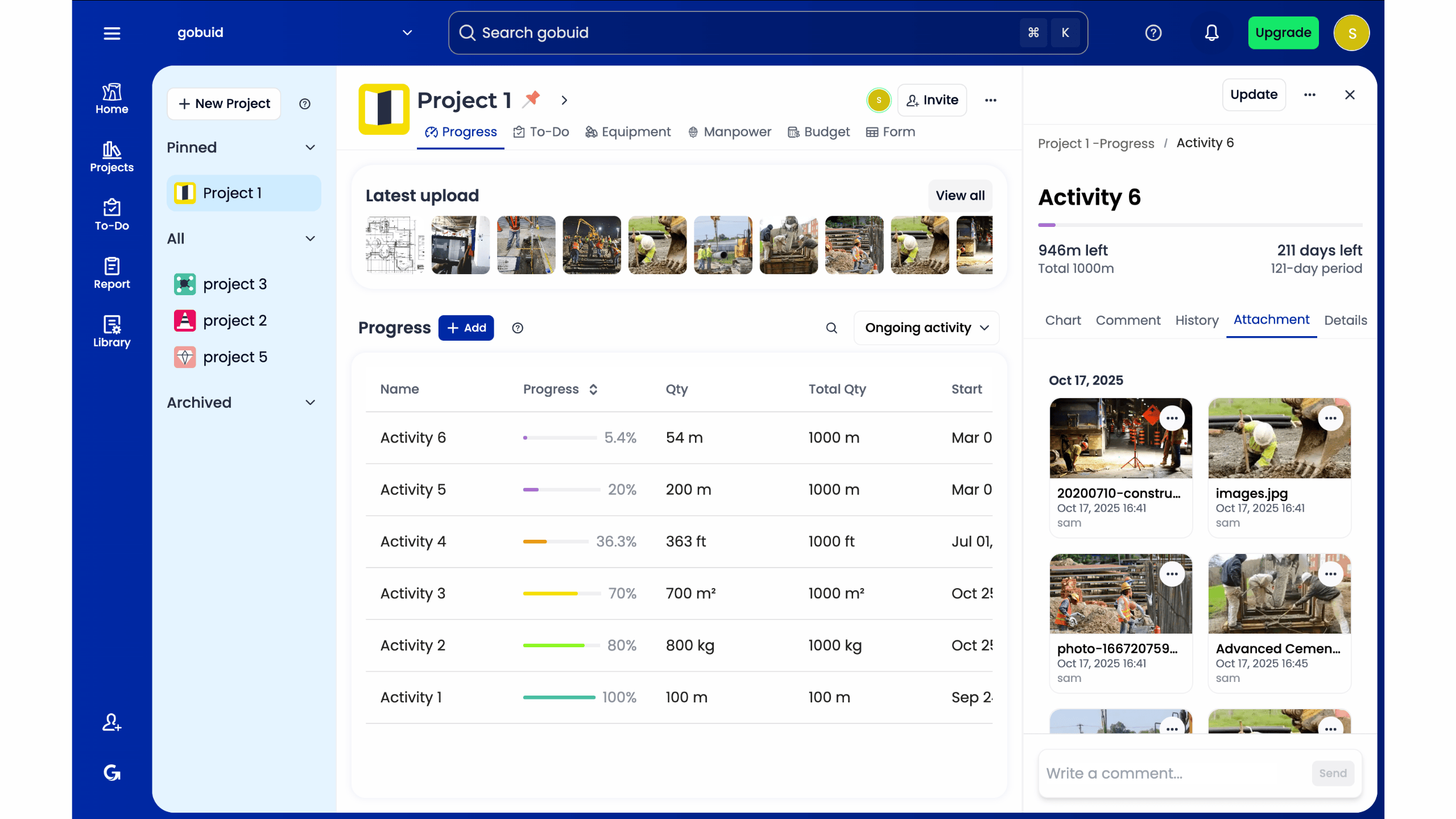
Managing Continuous Flight Auger (CFA) Piling involves balancing rig uptime with tight concrete delivery schedules. Real-time tracking provides a single source of truth for all stakeholders. This removes the guesswork from foundation data and streamlines coordination between the field and the office:
Track subcontractor performance against the master schedule in real time.
Monitor concrete delivery windows to prevent expensive rig idle time.
Maintain a permanent, centralized digital record for quality assurance and handovers.
Accountability increases when every stakeholder sees the same live data. You gain total control over the chaotic workflow of a busy job site. To modernize your project workflow and regain control of your data, book a demo and digitize your piling documentation today.
What is Continuous Flight Auger (CFA) Piling?
Continuous Flight Auger (CFA) Piling is a high-speed, cast-in-place foundation solution. It uses a hollow-stem auger to drill into the ground while maintaining constant soil support. This method eliminates the need for temporary casing or expensive bentonite slurries. Since its introduction in the 1960s, Continuous flight augering has transitioned from a specialized niche technique to a global construction standard. It's now the go-to for 80% of urban foundation projects requiring speed and minimal disruption.
To better understand this concept, watch this helpful video:
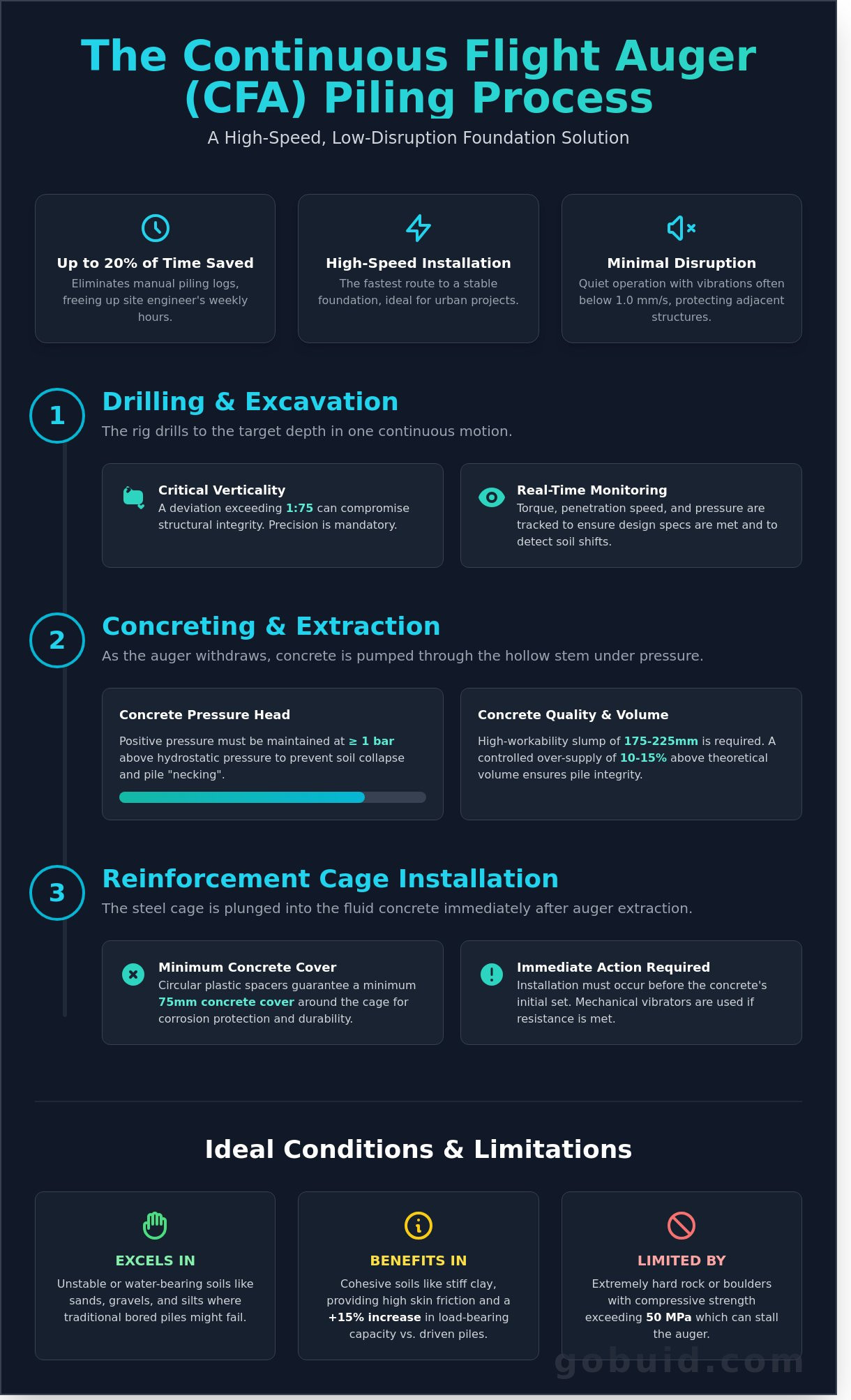
The core mechanics are built for efficiency. The rig drills to the target depth in one continuous motion. As the auger extracts, the rig pumps concrete through the hollow stem under high pressure. This simultaneous action prevents soil collapse and ensures pile integrity. Urban sites benefit most because vibrations are often kept below 1.0 mm/s, protecting adjacent structures and sensitive equipment. It’s a clean, fast, and quiet operation that keeps projects moving.
The Anatomy of a CFA Piling Rig
Efficiency depends on the equipment. A high-torque rotary head provides the power to penetrate dense layers. The hollow-stem auger acts as both a drill bit and a conduit for concrete. On-board computers monitor every second of the pour. These systems track torque, penetration speed, and concrete pressure in real-time. This data ensures the pile meets the 100% design specification before the rig moves to the next point, providing a single source of truth for the field team.
Ideal Soil Conditions for CFA Foundations
Continuous Flight Auger (CFA) Piling works best in unstable or water-bearing soils. It excels in sands, gravels, and silts where traditional bored piles might fail without casing. However, it has limits. Extremely hard rock or boulders with a compressive strength exceeding 50 MPa can stall the auger. In cohesive soils like stiff clay, CFA provides high skin friction, often increasing load-bearing capacity by 15% compared to driven piles. Geotechnical reports must confirm these conditions early to avoid downtime.
The Step-by-Step CFA Piling Installation Process
Precision execution defines successful Continuous Flight Auger (CFA) Piling. Before the auger hits the dirt, operators verify rig positioning against the site plan to a 25mm tolerance. Cross-referencing real-time drilling data with geotechnical survey reports ensures the soil strata match the design assumptions. This pre-start phase eliminates guesswork and prevents costly mid-project adjustments.
Phase 1: Drilling and Excavation
The rig drives the auger into the ground in one continuous motion. Maintaining verticality is critical; a deviation exceeding 1:75 can compromise the pile's structural integrity. Operators monitor torque levels constantly to detect unexpected obstructions or shifts in soil density. Spoil management requires immediate removal of excavated soil from the pile bore to maintain site cleanliness and safety. The drilling rate decreases proportionally as soil density and SPT N-values increase. Use real-time progress tracking to keep the office updated on every meter drilled.
Phase 2: Concreting and Extraction
Once the target depth is reached, concrete is pumped through the hollow stem of the auger. Maintaining a positive pressure head of at least 1 bar above hydrostatic pressure is mandatory to prevent soil collapse or "necking" of the pile. The mix design typically requires a high-workability slump between 175mm and 225mm. According to the Federal Highway Administration manual on Design and Construction of CFA Piles, monitoring the over-supply of concrete, usually 10% to 15% above theoretical volume, is the industry standard for ensuring a continuous, high-quality shaft.
Phase 3: Reinforcement Cage Installation
The final stage involves plunging the steel reinforcement cage into the fluid concrete column. This must happen immediately after extraction before the concrete begins its initial set. Key protocols include:
Using circular plastic spacers to guarantee a minimum 75mm concrete cover.
Utilizing mechanical vibrators if the cage encounters resistance.
Enforcing strict exclusion zones during cage lifting and plunging operations.
Managing these moving parts requires a centralized source of truth to ensure every pile meets the engineer's specifications without delay.
CFA Piling vs. Bored Piling: A Comparative Analysis
Continuous Flight Auger (CFA) Piling outperforms traditional bored piling in speed by roughly 25% for medium-depth foundations. While bored piling requires casing or slurry to stabilize the bore, CFA supports the excavation with the auger itself. This removes the need for bentonite plants or temporary casings. It reduces site footprint requirements by 40% compared to complex rotary setups. This efficiency is critical on urban sites where space is a premium.
Environmental impact is where the CFA method dominates. Noise levels typically stay below 80 decibels at a distance of 7 meters. Vibrations are negligible, often measuring less than 1.0mm/s at 5 meters. These metrics make it the standard for urban infill projects near hospitals or schools.
Cost effectiveness depends on volume. Mobilizing a CFA rig is expensive. However, the production rate of 150 to 200 linear meters per day offsets these initial fees quickly. Contractors gain visibility into these margins by using real-time progress tracking to monitor daily output and material waste.
When to Choose CFA Over Bored Piling
Sensitive Neighbors: Use CFA for projects within 5 meters of existing structures to prevent settlement.
Compressed Timelines: Select this for high-volume residential developments needing 50 or more piles on a tight schedule.
Unstable Ground: Choose this method when sands or gravels would cause hole collapse. It eliminates the 15% extra cost associated with fluid support systems.
The Limitations of the CFA Method
Continuous Flight Auger (CFA) Piling isn't a universal fix. Depth is generally limited to 30 meters. Diameter rarely exceeds 1200mm. Heavy reinforcement cages are difficult to install because they must be vibrated into the wet concrete after the auger is removed. Logistics must be perfect. A 15 minute delay in concrete delivery can cause a "cold joint," ruining the pile. Manage these risks with a centralized reporting system to ensure the field and office stay synced.
Quality Control and Documentation Requirements
Continuous Flight Auger (CFA) Piling demands absolute precision. One data gap can lead to catastrophic foundation failure. You must track concrete pressure, flow rates, and auger revolutions for every single pile. This data isn't optional. It's the core of BCA compliance and meeting the rigorous standards of AS 2159-2009. Managing safety inspections and Permit to Work (PTW) protocols for your piling crews ensures that high-risk activities stay within safety limits. Reliability in the field starts with a commitment to documented truth.
Maintaining Accurate Piling Logs
Move past the era of illegible paper logs. Transition to digital site diaries to capture real-time data directly from the rig. Modern software allows you to attach progress photos to every pile ID, creating a visual record of the entire installation process. You need total traceability. Link every concrete delivery docket to its specific pile to prove material quality. This level of detail removes the guesswork from quality assurance and speeds up the handover process. It bridges the gap between the field and the office instantly.
Addressing Common Piling Defects
Necking and bulging are major risks during the extraction phase. If the concrete supply doesn't maintain sufficient over-pressure, the surrounding soil can collapse into the shaft. This creates a "neck" that reduces the structural capacity of the Continuous Flight Auger (CFA) Piling. To catch these issues early, use Integrity Testing like the Low Strain Impact Test on every completed shaft. Leveraging a project analytics dashboard helps you identify if specific rig operators or concrete mixes are causing recurring defects. This visibility lets you fix the root cause before you've poured fifty faulty piles.
Drive Project Success with Digital Precision
Effective foundation work requires more than just heavy machinery; it demands rigorous oversight and real-time data. Continuous Flight Auger (CFA) Piling provides a high-speed, low-vibration alternative that often increases production rates by 20% compared to traditional bored piling in cohesive soils. To maintain this advantage, your quality control must be instantaneous. Relying on manual logs creates a 24-hour delay in visibility that most modern schedules can't afford. Every missed detail in the field leads to compounding costs in the office.
GoBuid eliminates these bottlenecks by centralizing your field data into a single source of truth. Our platform features one-click reporting for daily site diaries and real-time tracking for all manpower and equipment. You can also implement customizable forms for piling safety inspections to ensure every pile meets design specifications without the paperwork lag. It's time to replace the clipboard with a tool built for the modern job site. Digital transformation isn't a luxury; it's a requirement for staying competitive in today's market.
Digitize your piling logs with GoBuid today to streamline your workflows and protect your margins. Let's get to work on a more efficient future.
Frequently Asked Questions
Is CFA piling cheaper than bored piling?
CFA piling is typically 15% to 20% more cost-effective than traditional bored piling because it eliminates the need for temporary casing or bentonite slurry. This reduction in material handling and faster installation speeds decreases total labor hours by approximately 30%. Costs stay lower because the auger supports the borehole throughout the drilling process, reducing site cleanup and waste disposal requirements.
How deep can a Continuous Flight Auger (CFA) pile go?
Modern CFA rigs typically reach depths between 25 and 32 meters. Specialized high-torque equipment can extend this reach to 35 meters in favorable soil conditions. Continuous Flight Auger (CFA) Piling provides a stable foundation solution for medium-depth requirements without the complexity of telescopic kelly bars. Depth is strictly limited by the length of the continuous auger and the rig's winch capacity.
What is the minimum diameter for a CFA pile?
The standard minimum diameter for a CFA pile is 300mm. Most contractors utilize diameters ranging from 450mm to 1200mm to balance load capacity with equipment efficiency. Smaller diameters below 300mm are typically categorized as micropiles and require different drilling techniques. Choosing the right diameter ensures optimal structural support while maintaining high productivity rates on your job site.
Can CFA piling be used in hard rock?
CFA piling is generally unsuitable for hard rock with Unconfined Compressive Strength (UCS) exceeding 50 MPa. The process excels in sands, gravels, silts, and stiff clays. If the auger encounters a rock layer harder than 50 MPa, drilling rates drop significantly, often resulting in excessive wear on the cutting teeth. In these cases, project managers should switch to rotary bored piling using core barrels.
How do you test the integrity of a CFA pile?
Low Strain Integrity Testing (LSIT) is the standard method used to verify pile quality, typically performed 7 days after casting. This non-destructive test uses a hand-held hammer and accelerometer to detect necking or inclusions in the concrete shaft. For critical loads, engineers may require Cross-hole Sonic Logging (CSL), which involves installing 2 to 4 access tubes within the reinforcement cage before the concrete sets.
Does CFA piling require a permit for noise?
Yes, all piling activities must comply with local council noise limits, which often restrict operations to between 07:00 and 18:00 on weekdays. CFA piling is one of the quietest methods available, generating less than 85 decibels at a 7-meter distance. While it's quieter than driven piling, you'll still need a valid Construction Noise Permit (CNP) for any work scheduled outside standard hours.
What happens if the concrete supply is interrupted during CFA piling?
An interruption longer than 30 minutes usually requires the operator to re-drill the pile while the concrete is still fluid. If the concrete sets before the auger is extracted, the pile is considered a cold joint failure and must be replaced. Real-time monitoring of concrete pressure and flow rates is critical. Maintaining a buffer of 2 ready-mix trucks on site prevents these costly structural defects.
How does GoBuid help with BCA compliance for piling?
GoBuid centralizes all piling logs and inspection forms into a single source of truth that meets Building and Construction Authority (BCA) documentation standards. The platform automates the collection of field reports, ensuring that 100% of required data points are captured instantly from the site. By bridging the gap between the field and the office, GoBuid creates a transparent digital audit trail that simplifies regulatory submissions.