Closed-Ended Steel Pipe Piles: A Guide to Deep Foundation Selection and Management
by Sheldon Huang
|
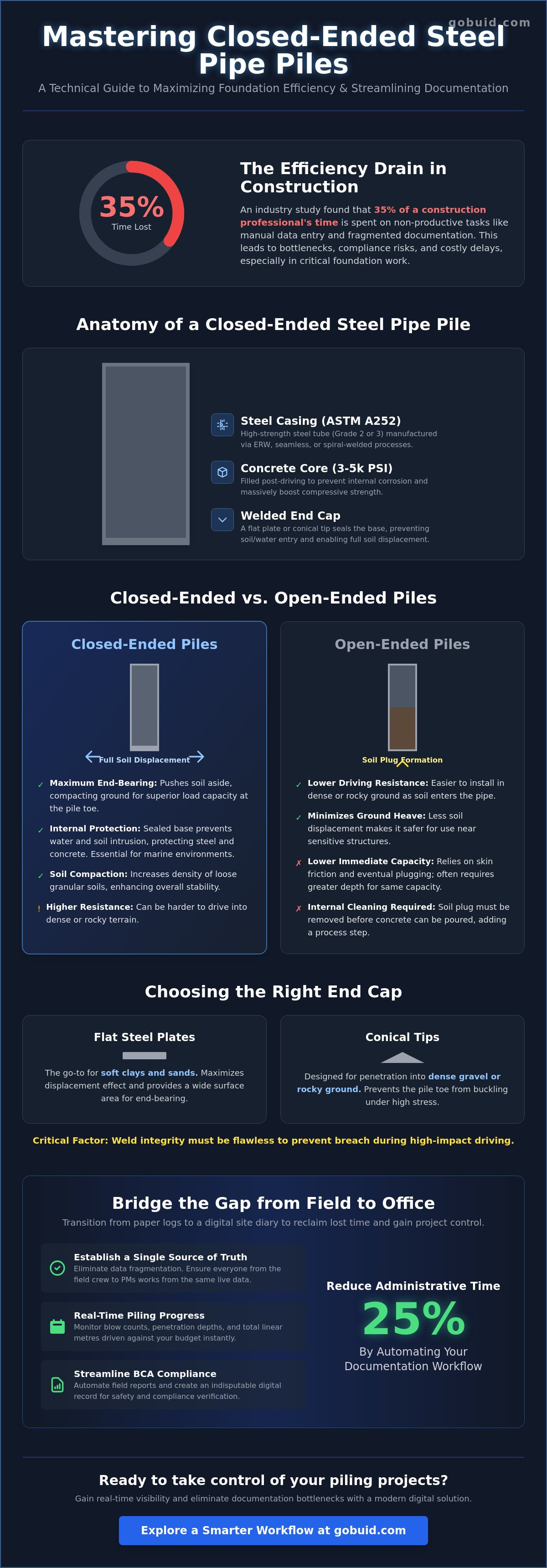
A 2022 industry study by the FMI Corporation found that construction professionals spend 35% of their time on non-productive tasks like manual data entry. This inefficiency is a constant threat during the installation of Closed-Ended Steel Pipe Piles, where the pressure to track blow counts and penetration depths often leads to documentation bottlenecks. You recognize that site diaries shouldn't be a secondary thought, but a primary tool for ensuring BCA compliance and project safety. Relying on paper logs or fragmented spreadsheets creates a disconnect between the field and the office that your schedule simply cannot afford.
This guide provides the technical expertise you need to master Closed-Ended Steel Pipe Piles while showing you how to streamline your documentation for maximum project efficiency. We'll show you how to gain real-time visibility into your piling progress and reduce administrative time by up to 25%. We will explore the critical specifications of these piles, their specific load-bearing advantages, and the digital workflows that bridge the gap between the rugged job site and your final reports.
Key Takeaways
Understand the structural mechanics of Closed-Ended Steel Pipe Piles and how full displacement maximizes end-bearing capacity.
Compare open and closed-ended designs to ensure you select the optimal foundation type for your site’s specific load requirements.
Master the monitoring of blow counts and equipment maintenance to verify pile capacity and eliminate costly site delays.
Transition to a digital site diary to streamline field reports and establish a single source of truth for your piling data.
Track total linear metres driven against your budget in real-time to maintain full financial control and project visibility.
⭐ Learn more about GoBuid's feature - without the heavy enterprise price tag
Digital Documentation for Piling Project Compliance
Paper piling logs are a liability. Manual entry errors often lead to data discrepancies that can derail a project's timeline. Transitioning to a digital site diary eliminates these administrative bottlenecks. When installing Closed-Ended Steel Pipe Piles, precision is mandatory. Centralised data allows project managers to track total linear metres driven against the project budget in real-time. This visibility prevents cost overruns before they become unmanageable.
Managing specialized crews requires high-level coordination. Automated manpower tracking ensures every member of the piling team is accounted for in daily reports. This level of detail is vital for maintaining productivity and safety standards on site. Efficiency isn't just about driving piles; it's about how you handle the data behind them. One-click reporting simplifies the submittal process for engineers and regulatory bodies. It turns hours of manual collation into seconds of automated output.
Track linear footage against budget targets to maintain 100% financial visibility.
Eliminate 20% of administrative overhead by digitizing field data entry.
Ensure compliance with automated timestamps and GPS-verified logs.
Streamlining Reports with GoBuid
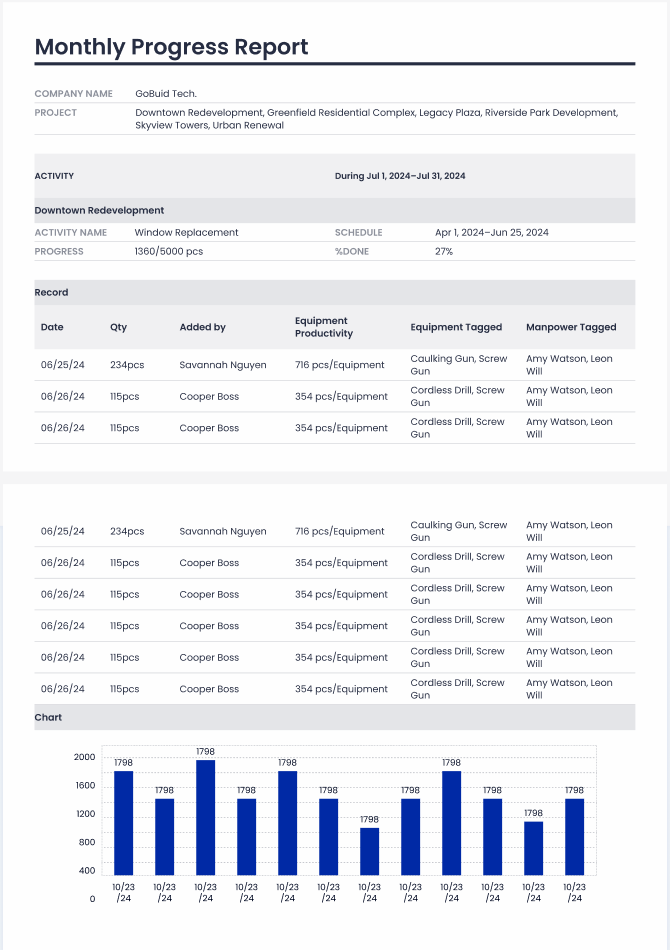
Use one-click reporting to generate professional piling summaries instantly. GoBuid bridges the gap between the field and office with real-time project analytics and status updates. You'll maintain a single source of truth for all records related to Closed-Ended Steel Pipe Piles. This ensures long-term structural accountability and simplifies the handover process. Stop chasing paper and start managing your project with the precision of a digital foreman. It's time to regain control over your chaotic workflows with a tool built for the rugged reality of construction.
What are Closed-Ended Steel Pipe Piles?
Closed-Ended Steel Pipe Piles are high-performance displacement piles used to secure heavy structures. These piles consist of a steel tube sealed at the base with either a flat plate or a conical tip. Unlike open-ended designs, they don't allow soil to enter the shaft during installation. This displacement compacts the surrounding earth, which significantly increases both skin friction and end-bearing capacity. Engineers specify these piles for a Deep foundation when soil conditions require maximum load transfer to deeper, more stable strata.
To better understand the installation process and the impact of these components, watch this helpful video:
Manufacturing standards are strict. Most projects utilize steel that meets ASTM A252 Grade 2 or Grade 3 specifications. The tubes are produced through Electric Resistance Welding (ERW), seamless manufacturing, or spiral-welded processes. After the driving phase is complete, crews typically fill the hollow interior with concrete, often ranging from 3,000 to 5,000 PSI. This internal filling serves two purposes. It prevents internal corrosion and provides a massive boost to the pile's compressive strength. Tracking these installations requires precision, often managed through centralized field reports to ensure every pile hits the required depth and capacity.
End Caps: Steel Plates vs. Conical Tips
The choice of end cap depends on the geology of the site. Flat steel plates are the go-to for soft clays and sands. They maximize the displacement effect and offer a wide surface area for end-bearing. Conical tips are different. They're designed for penetration. If you're driving into dense gravel or rocky ground, a conical tip prevents the pile toe from buckling under the stress. Weld integrity is the most critical factor here. A failed weld during high-impact driving allows water and soil to breach the pile, which compromises the entire structural design. Success depends on rugged hardware and disciplined site management.
Closed-Ended vs. Open-Ended Pipe Piles: Key Differences
Choosing the right pile type dictates project speed and structural integrity. Closed-Ended Steel Pipe Piles function as full displacement piles. They push soil aside during installation, which compacts the surrounding ground. Open-ended piles allow a soil plug to form inside the pipe. This difference impacts how the foundation handles weight. Closed ends deliver higher immediate end-bearing capacity. The entire surface area of the steel tip resists the soil pressure directly. It's a matter of physics and efficiency on the job site.
Data from the Purdue University Joint Transportation Research Program highlights critical variations in the load response of pipe piles. While open-ended piles reduce driving resistance in dense or rocky terrain, they often require greater depth to achieve the same capacity as a closed-ended alternative. Engineers prioritize open ends when working near sensitive structures to minimize ground heave. However, for maximum efficiency in standard conditions, closed ends often provide the most reliable path to completion. Selection depends on three factors: soil report data, required load capacity, and the proximity of existing structures.
When to Choose Closed-Ended Piles
Select closed-ended piles when your design demands peak bearing capacity at the toe. They excel in marine environments. A welded base plate or conical tip keeps water and corrosive elements out of the pipe interior. This extends the lifespan of the steel and protects the concrete fill. In loose sands, these piles are essential. Soil displacement increases lateral pressure. This boost in frictional resistance ensures the structure stays put even under dynamic loads. Effective field teams track these installation variables using a centralized reporting tool to ensure every pile meets the engineer's spec.
Maximum Bearing: Use for heavy vertical loads where soil strata are thin or variable.
Internal Protection: Prevents internal corrosion in saltwater or high-moisture zones.
Soil Compaction: Improves the density of loose granular soils during the driving process, increasing overall stability.
Managing the Piling Process: Installation and Monitoring
Monitoring blow counts isn't just a compliance task; it's the only way to verify pile capacity in real-time. For Closed-Ended Steel Pipe Piles, every hammer strike per foot provides critical data on soil resistance. This Purdue University research on pipe pile load testing highlights how accurate field measurements correlate directly to long-term structural integrity. Site teams must record the final set depths for 100% of the piles driven to meet engineering specifications. If you miss a log, you risk a foundation failure that costs thousands in remediation.
Equipment management keeps the project moving. A broken pile driver can halt production for 48 hours or more, draining your budget through idle labor. Maintain your rigs. Use digital checklists to verify crane hydraulics and hammer leads before the first strike. Documenting start and stop times creates a clear timeline of site productivity. High-resolution photos provide a visual record of weld quality and pile alignment, ensuring every splice meets code before it disappears into the earth.
Quality Control and Safety Inspections
Field teams must conduct regular safety & quality inspections to catch structural deviations before they become permanent. Use customized digital forms to standardize the inspection of pile splices and end cap integrity. This eliminates guesswork. Every piling rig must pass a safety check daily to protect the crew and the schedule. Centralizing these reports ensures the office and the field stay synced. Stop chasing paper and start driving progress. You can't manage what you don't measure.
Bridge the gap between the field and the office by using automated field reports to track every pile in real-time.
Optimize Your Foundation Workflow
Selecting Closed-Ended Steel Pipe Piles provides the structural integrity needed for high-capacity loads in displacement-sensitive soils. Success in deep foundation work depends on more than just hardware. It requires precise installation and rigorous monitoring of every pile driven. Modern projects demand a single source of truth to bridge the gap between the field and the office. The Building and Construction Authority (BCA) requires precise digital records to maintain structural safety standards on complex job sites. You need visibility into every equipment hour and every manpower shift to stay on schedule. Don't let manual errors compromise your project compliance.
Efficiency starts with smarter tools. Stop wasting hours on manual piling logs; generate your site reports in one click with GoBuid. Our platform is trusted by contractors for real-time manpower and equipment tracking. You get BCA-compliant digital documentation at your fingertips with the flexibility of no lock-in contracts. It's the most direct way to eliminate administrative bottlenecks and focus on the build. Take charge of your site management today.
Frequently Asked Questions
What is the main advantage of a closed-ended pipe pile?
The primary advantage is superior end-bearing capacity because the closed bottom prevents soil from entering the shaft. This displacement method compresses the surrounding soil, increasing shaft friction by up to 15% compared to open-ended alternatives. It allows project managers to achieve higher load ratings in loose or medium-dense sands without driving to extreme depths. You get a reliable foundation with fewer linear feet of steel, keeping your project timeline on track.
Can closed-ended pipe piles be driven into rock?
You shouldn't drive standard flat-plate piles directly into hard rock. High impact forces against a flat surface often lead to structural deformation or "mushrooming" of the pile tip. If your site has a rock layer at 40 feet, switch to a 60-degree conical point or a specialized rock shoe. These attachments protect the pile integrity and ensure the foundation meets the 100% structural capacity required by your digital field reports.
How do you calculate the load capacity of a closed-ended pile?
Calculate the load capacity by summing the total end-bearing resistance and the skin friction along the outer surface. Use the WEAP (Wave Equation Analysis of Piles) software to model driving stresses and capacity before the first hammer blow. During installation, field teams use PDA (Pile Driving Analyzer) testing to verify that the closed-ended steel pipe Piles meet the 200-ton or 300-ton design load specified in the project submittals.
What happens if the end cap of a pipe pile fails during driving?
A failed end cap allows soil to fill the pile, which immediately converts the unit into an open-ended pile and reduces end-bearing potential by 80%. This failure creates a critical discrepancy in your real-time field data and necessitates a re-evaluation of the pile's load-bearing status. You'll likely need to extract the damaged pile or drive a replacement within 3 feet of the original location to satisfy the structural engineer's safety factor requirements.
Is it necessary to fill closed-ended pipe piles with concrete?
Filling closed-ended steel pipe piles with concrete isn't always mandatory, but it's a standard industry practice to prevent internal corrosion and increase axial stiffness by 30%. The concrete core adds significant mass, which helps the foundation resist lateral loads and buckling. Check your project's punch list; if the design calls for a composite section, ensure the concrete reaches its 4,000 psi compressive strength before applying the final structural load.