Construction Site Management Best Practices: The 2026 Efficiency Guide
by Sam Chen
|
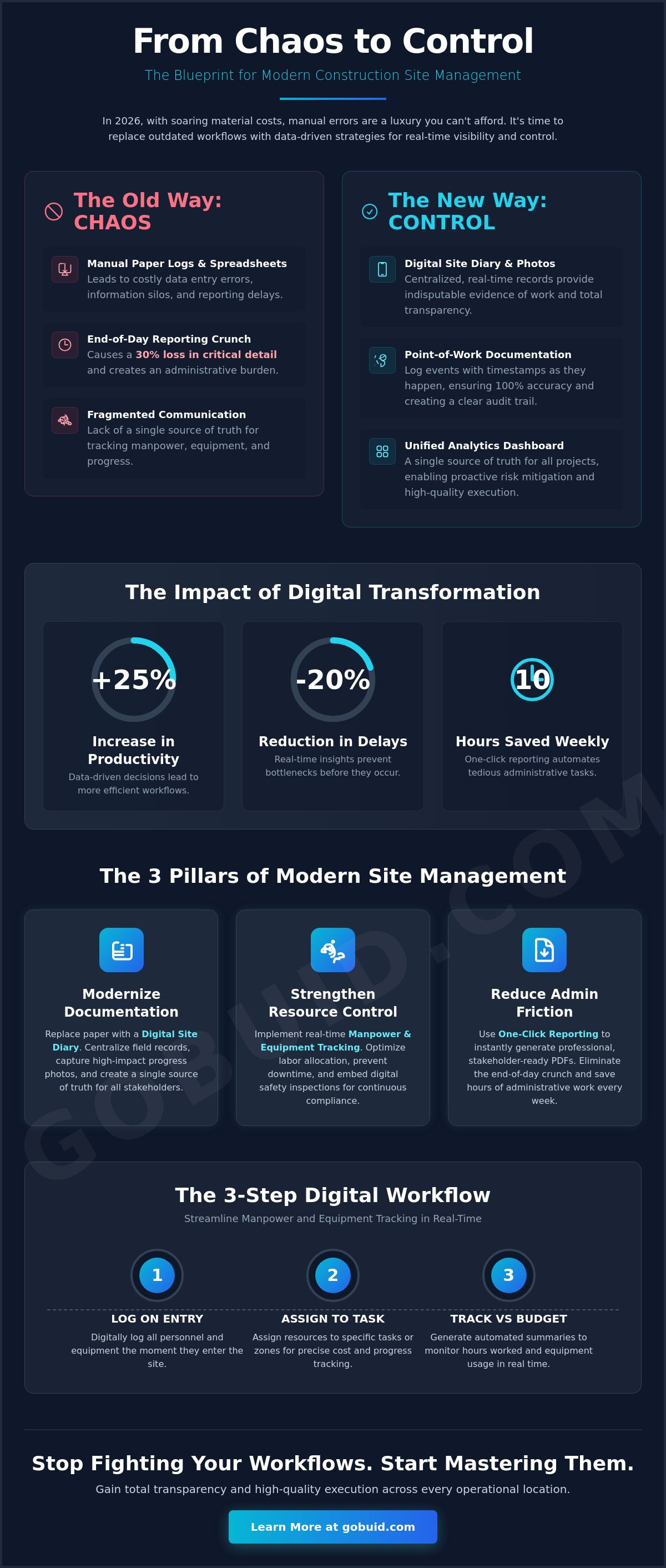
Companies that embrace digital transformation see a 25% increase in productivity and a 20% reduction in project delays. Implementing modern construction site management best practices is no longer optional in 2026. With copper prices reaching $6.61 per pound and structural steel hitting $2,519.61 per ton, your budget cannot absorb the cost of manual data entry errors or reporting delays. You've likely felt the sting of project lag caused by outdated communication and the struggle to track manpower across multiple sites. It's a chaotic way to work, and it's holding your team back.
This guide shows you how to reclaim your time and field control. You'll learn to replace manual spreadsheets with data-driven strategies that offer real-time visibility into every square foot of your project. We'll show you how to generate professional reports in one click, automate safety compliance to meet the latest OSHA standards, and use project analytics to drive high-quality execution. It's time to stop fighting your workflows and start mastering them.
Key Takeaways
Eliminate data silos and provide indisputable evidence of work by replacing paper logs with a Digital Site Diary and real-time progress photos.
Adopt modern construction site management best practices to regain field control and eliminate the reporting delays that cause project lag.
Optimize labor allocation and prevent costly downtime through integrated manpower tracking and equipment management tools.
Save up to 10 hours of administrative work per week by using one-click professional reporting to generate stakeholder-ready PDFs instantly.
Centralize project documentation into a unified analytics dashboard to ensure total transparency and high-quality execution across every operational location.
⭐ Learn more about GoBuid's feature - without the heavy enterprise price tag
Modernizing Field Documentation with Digital Site Diaries
Manual paper logs remain a significant source of operational friction. Transitioning to a Digital Site Diary eliminates data silos by centralizing field records into a single source of truth. This shift is a core component of modern construction management. It ensures site status is visible to stakeholders from any location. Standardizing data entry is one of the most effective construction site management best practices for ensuring consistency in project records. You gain immediate clarity without the need for manual follow-ups.
To better understand how these practices impact daily operations, watch this helpful video:
The End of the 'End-of-Day' Reporting Crunch
Waiting until 5 PM to document the day's events is a mistake. Industry estimates suggest that delaying reports until the end of a shift can lead to a 30% loss in critical detail. Adopt a point-of-work documentation strategy. Use mobile-first tools to log events as they occur. Implementing these construction site management best practices ensures every entry is timestamped. This provides a clear, chronological record. It's your best defense during dispute resolution. It transforms reporting from a burden into a productive habit.
Capturing High-Impact Progress Photos
Progress photos provide indisputable evidence of work completed. To maximize their utility, establish standards for frequency and perspective. Capture wide shots to show the overall site and close-ups to verify specific installations. Ensure lighting is adequate to demonstrate quality. Link these photos directly to your site diary entries. This provides the necessary context for every image. When photos and logs live in the same space, you create a transparent, audit-ready history of the project.
Strengthening Resource Control and Safety Inspections
Effective resource management requires more than a simple head count. Implement real-time Manpower Tracking to optimize labor allocation and verify subcontractor presence across every zone. This approach ensures that your most expensive assets are exactly where they need to be. By integrating Equipment Management, you can monitor utilization rates and prevent costly downtime. These tools provide the precision needed to execute construction site management best practices without the friction of manual tallying.
Safety and quality inspections shouldn't be isolated monthly events. Embed them into the daily workflow to ensure constant compliance. Use Customised Forms to match your specific site protocols and evolving regulatory requirements. This integration turns safety from a checkbox exercise into a live operational metric. You can increase productivity by identifying resource bottlenecks before they impact the schedule.
Automating Manpower and Equipment Logs
Streamline your tracking by following a three-step digital approach:
Step 1: Digitally log all personnel and equipment immediately upon site entry.
Step 2: Assign these resources to specific tasks or zones within the platform for precise cost tracking.
Step 3: Generate automated summaries to track hours worked against your established budget.
This sequence removes the guesswork from field operations. It provides a clear view of labor costs and equipment usage in real time, allowing for immediate adjustments.
Driving Safety Through Consistent Digital Inspections
Digital checklists outperform paper for OSHA and local compliance because they provide instant accountability. For example, digital forms help you meet the May 19, 2026, OSHA Hazard Communication Standard deadline for updated chemical labeling and SDS requirements. Transitioning to digital formats ensures that no field is skipped and every hazard is documented with a photo. Using Mission Control dashboards allows you to identify recurring safety risks across all projects simultaneously. You gain a high-level view of site health. This enables proactive risk mitigation rather than reactive damage control. Adopting these construction site management best practices keeps your team safe and your project on track.
Reducing Administrative Friction via One-Click Reporting
Administrative friction kills project momentum. Most managers spend hours each week chasing paper trails instead of overseeing the site. Adopt a "document once, report everywhere" philosophy to reclaim your schedule. This strategy can save up to 10 hours of administrative work every week. It is a cornerstone of modern construction site management best practices. By leveraging one-click reporting, you produce professional PDFs for clients and stakeholders instantly. You move from chasing data to analyzing it.
Centralize your documentation to create a unified data point. This connects field operations directly to the back office. It eliminates the communication gaps that lead to project lag. When everyone looks at the same real-time dashboard, accountability increases. You don't need to wait for weekly meetings to understand your site's health. The information is already there, formatted and ready for review. It provides the calm authority needed to manage complex workflows without the stress of manual tracking.
From Raw Data to Professional Reports in Seconds
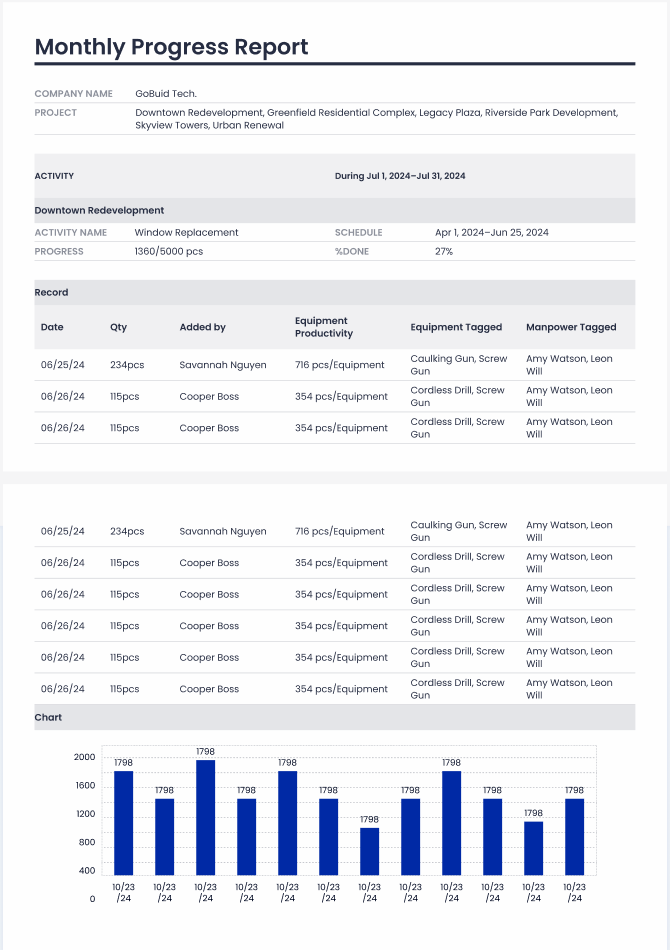
Stakeholders want clarity, not clutter. A high-quality daily report must include precise manpower counts, equipment hours, and timestamped progress photos. GoBuid automates this transformation. The platform converts your daily site diary entries and photos into a formatted report in seconds. This ensures your records are always professional and audit-ready. It removes the end-of-day reporting crunch and ensures your documentation is consistent across every project. You deliver value to your clients without the extra effort.
Actionable Insights via Project Analytics
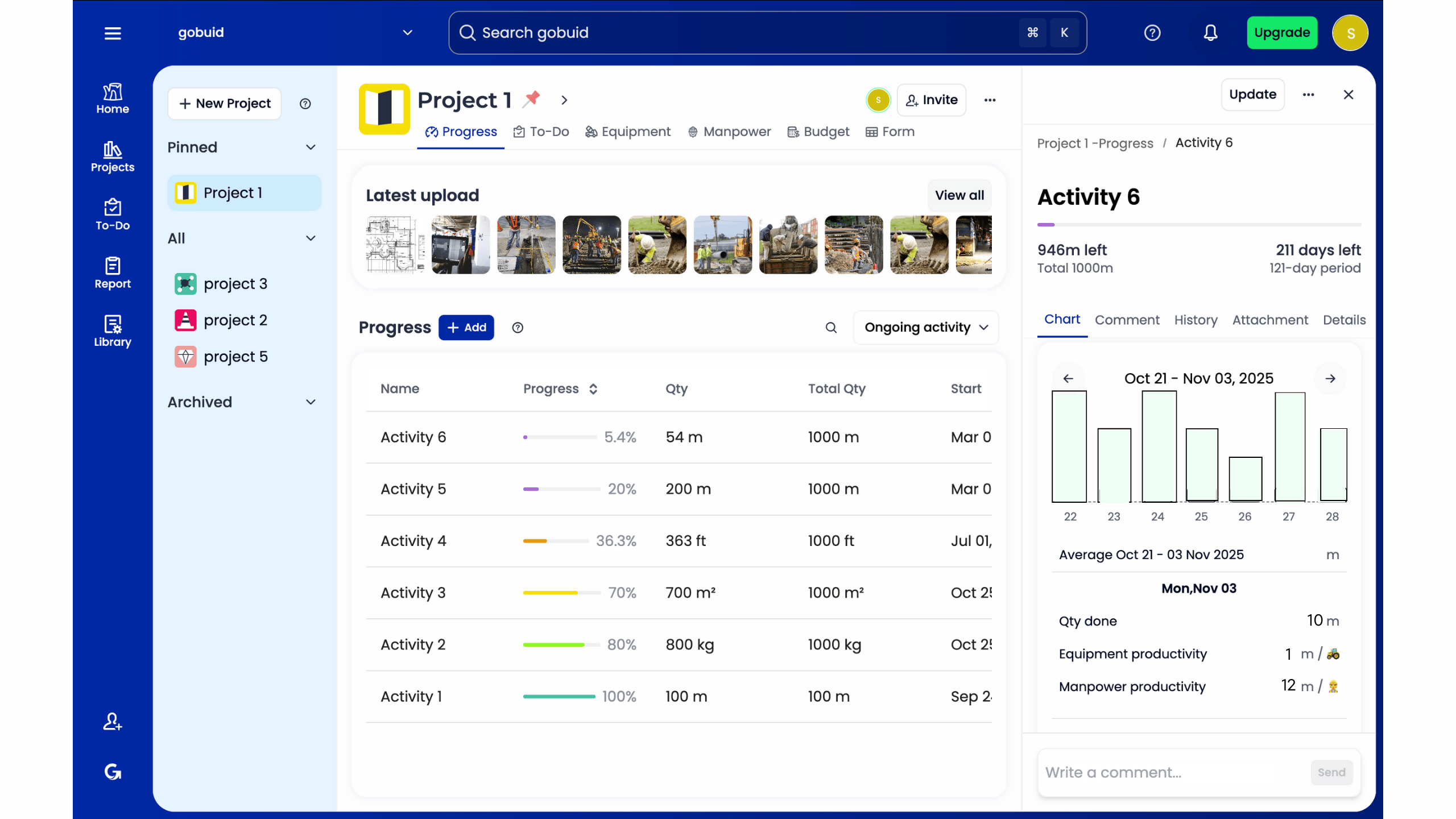
Move from reactive firefighting to proactive management using project analytics. Identify productivity bottlenecks before they derail your schedule. Real-time manpower and progress data show exactly where resources are stalling. This level of insight is essential for maintaining high-quality execution. When evaluating how to scale technology with your project needs, check for flexible service terms that allow you to adjust as your project volume shifts. Implementing these construction site management best practices ensures your firm remains agile and profitable in a competitive 2026 market. You gain total transparency and stay ahead of the curve.
Mastering the Digital Jobsite
Managing a construction site in 2026 demands a shift from manual oversight to digital precision. Digital diaries and real-time photo documentation eliminate data silos and protect your firm from costly disputes while ensuring field teams remain productive. By embedding safety inspections and manpower tracking into your daily workflow, you gain the visibility needed to prevent project lag and budget overruns. These construction site management best practices aren't just about saving time; they're about building a more transparent and accountable operation. Centralizing your data ensures that your field teams and back office remain perfectly aligned at every stage of the build.
It's time to stop fighting chaotic workflows and reclaim your field control. You can generate professional reports in one click and monitor your manpower and equipment in real-time without the typical administrative friction. Our platform provides the tools you need to maintain high-quality execution across every operational location. Consider the benefits of flexible engagement structures that allow you to scale your technology alongside your specific project requirements. Start streamlining your site management with GoBuid today. Regain control of your field operations and focus on delivering high-quality results. Your team is ready for a smarter way to work.
Frequently Asked Questions
What are the most important construction site management best practices?
Core construction site management best practices center on real-time data capture and centralized resource control. Prioritize digital site diaries over paper logs to eliminate information silos. Implement automated manpower tracking to verify subcontractor presence and assign resources to specific zones. These practices ensure total transparency across all operational locations. They allow managers to focus on high-level execution instead of manual data entry and administrative friction.
How does a digital site diary improve project efficiency?
A digital site diary improves efficiency by enabling point-of-work documentation throughout the shift. This approach prevents the data loss typically associated with waiting until the end of the day to write reports. It connects field photos directly to timestamped entries. This provides an indisputable record of work completed. Instant accessibility for all stakeholders means decisions happen faster and project lag is minimized across the entire organization.
Can construction management software help with safety compliance?
Software streamlines safety compliance by embedding inspections directly into the daily site workflow. Digital checklists ensure no critical safety steps are skipped. They allow for immediate hazard reporting with photo evidence. For example, using digital forms helps firms meet the May 19, 2026, OSHA Hazard Communication Standard update for chemical labeling and SDS requirements. Centralized dashboards identify recurring risks across multiple projects to enable proactive mitigation.
How do you track manpower and equipment on a busy construction site?
Track resources by implementing a digital logging system at every site entry point. Assign personnel and equipment to specific tasks or zones within a centralized platform to monitor utilization rates accurately. This method replaces manual headcounts with automated summaries of hours worked against the budget. Real-time tracking identifies bottlenecks early. It ensures that expensive equipment is used efficiently rather than sitting idle on a high-cost jobsite.
What should be included in a daily construction report?
A comprehensive daily report must include precise manpower counts, equipment utilization hours, and timestamped progress photos. Document specific tasks completed, site weather conditions, and any unforeseen delays or safety incidents. Using modern construction site management best practices allows you to generate these reports in one click by aggregating data already captured in your digital site diary. This consistency ensures all stakeholders receive professional, audit-ready documentation every day without extra effort.
Why is real-time reporting better than weekly project updates?
Real-time reporting allows for proactive management by identifying productivity issues as they happen. Weekly updates are reactive and often arrive too late to fix a budget overrun or a scheduling delay. Immediate data access provides total transparency into site health and enables faster course correction. It moves the project team from firefighting mode into a state of calm authority. You make decisions based on accurate, up-to-the-minute project analytics instead of old data.