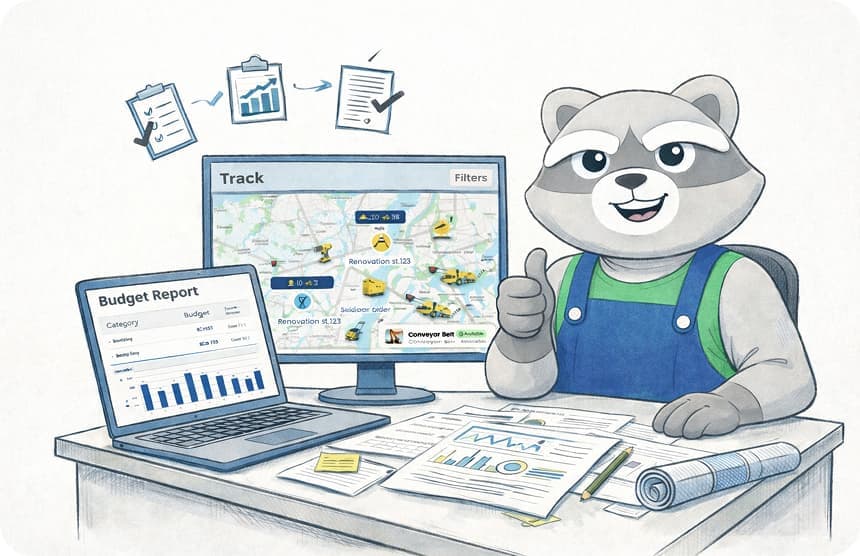
Construction Project Risk Management Software: A Practical Guide for 2026
Failing projects? Our 2026 guide to construction project risk management software helps you mitigate hazards, prevent disputes, and protect your profitability.
by Guillermo Sánchez
|
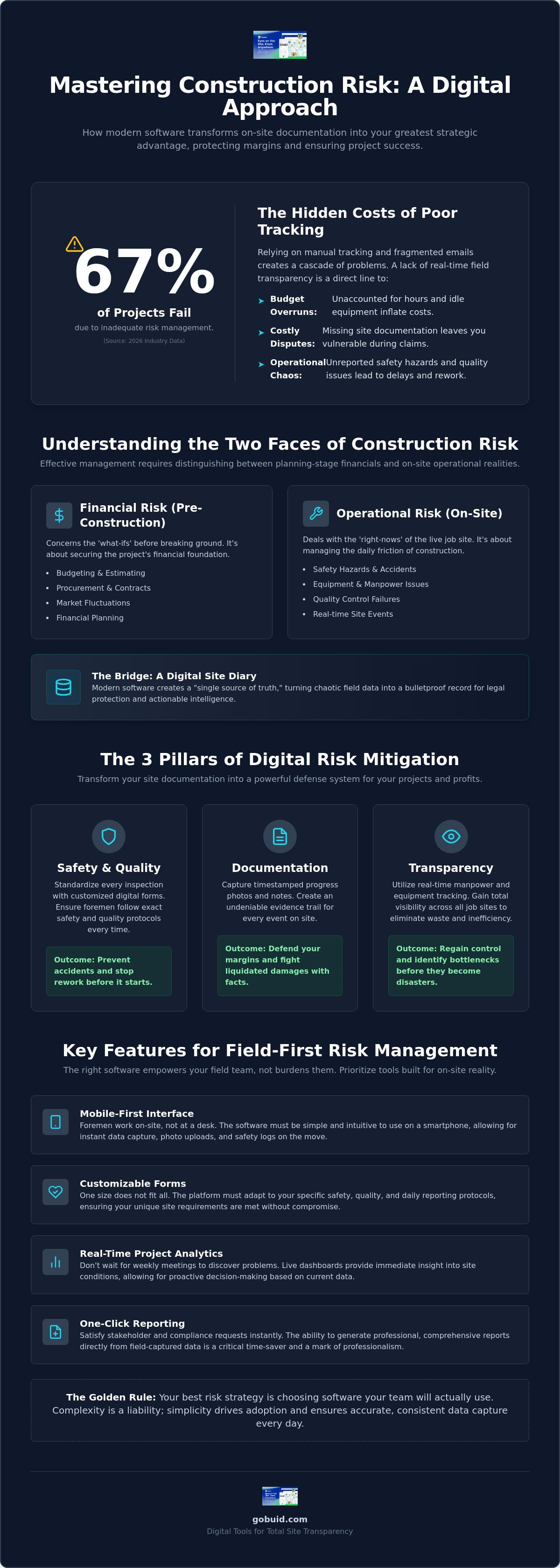
Inadequate risk management contributes to 67% of failed projects, according to 2026 industry data. For project stakeholders, this isn't just a statistic; it's the daily reality of missing site documentation during a dispute or a safety hazard that goes unreported. You know that a lack of field transparency leads directly to budget overruns and operational chaos. Relying on manual tracking or fragmented emails is a liability your margins can't afford.
We agree that effective risk management is built on the ground through consistent, real-time data. This guide demonstrates how modern construction project risk management software transforms site documentation into a strategic advantage. You'll discover how to mitigate operational hazards, prevent costly disputes, and protect your profitability with digital tools designed for the field.
We'll examine the shift toward mobile-first reporting, the necessity of accurate manpower and equipment tracking, and how to generate professional reports in one click to keep stakeholders informed. It's time to bridge the gap between physical site realities and digital precision to ensure total transparency across every job site.
Key Takeaways
- Distinguish between pre-construction financial risks and on-site operational hazards to apply the correct mitigation strategies.
- Discover how construction project risk management software provides the digital site documentation needed to prevent disputes and protect project margins.
- Prioritize mobile-first interfaces and customizable forms to ensure field teams capture high-quality data in real-time.
- Utilize a Digital Site Diary to create a central, bulletproof record of all site events for compliance and accountability.
- Streamline stakeholder communication by generating professional reports in one click directly from field-captured data.
What is Construction Project Risk Management Software?
Construction project risk management software is a digital toolset built to identify, track, and mitigate operational hazards. It moves beyond the boardroom. While Project risk management often focuses on pre-construction financial planning, this software manages the live friction of the job site. It turns chaotic field data into actionable intelligence.
Financial risk deals with budgets and procurement. Operational risk deals with real-time site events. You need a "single source of truth" to bridge this gap. A Digital Site Diary provides this anchor, creating a bulletproof record for legal protection. Without digital documentation, you're relying on memory and loose paperwork to defend against claims.
To better understand how these principles apply to your workflow, watch this comprehensive guide:
Operational risk management is the systematic process of digitising field data to prevent delays and ensure every site event is documented for total accountability. Modern construction project risk management software acts as the connective tissue between physical operations and project analytics.
The Core Pillars of Risk Mitigation
Safety and Quality: Standardise every inspection. Deploy customised forms to ensure foremen follow exact safety and quality protocols. It's about preventing accidents and stopping rework before it starts. High-quality data leads to high-quality builds.
Documentation: Defend your margins. Progress photos and timestamped notes provide the evidence needed to fight liquidated damages. Accurate records turn potential disputes into simple clarifications. If it isn't documented digitally, it didn't happen.
Transparency: Regain control. Real-time manpower and equipment tracking ensures you aren't paying for ghost hours or idle machinery. Total visibility across all job sites means you identify bottlenecks before they become disasters. Accountability starts with transparency.
Key Features to Look for in Risk Management Software
Selecting the right construction project risk management software requires a focus on field adoption. If your team finds the tool cumbersome, they simply won't use it. This creates data gaps that expose your margins to unnecessary risk. You need a platform that bridges the gap between site reality and office precision through high-impact digital tools.
Prioritize a mobile-first interface above all else. Your foremen work on site, not in a trailer with a laptop. They need to capture progress, upload photos, and log safety observations on the move. Additionally, insist on customisable forms. These must adapt to your specific safety and quality protocols, ensuring that your unique site requirements are met without compromise.
Your platform must provide real-time project analytics. This allows for immediate decision-making based on live site conditions rather than waiting for weekly meetings. Finally, evaluate the ease of generating reports in one click. This capability is essential when you need to satisfy stakeholders or respond to urgent compliance requests with professional documentation.
Why Ease of Use is Your Best Risk Strategy
Complex software is a liability on a busy job site. When digital tools are difficult to navigate, field teams often resort to "pencil-whipping" or skipping entries entirely. This leads to missing documentation and inaccurate manpower tracking, which can cause significant budget overruns. A simple, intuitive tool ensures that safety checks and equipment logs are completed accurately every single day.
Flexibility is another key factor for modern contractors. Software providers should offer no lock-in contracts. This allows you to scale your digital tools based on your current project volume without being trapped in rigid enterprise commitments. It's a no-nonsense approach to managing project-based overhead and maintaining operational agility.
The "one-click" philosophy should be your benchmark for efficiency. The less time your team spends on administrative tasks, the more time they can dedicate to site safety and high-quality execution. You can explore these productivity features to see how they reduce cognitive load for your field teams while maintaining total transparency.
Implementing Proactive Risk Mitigation with GoBuid
Effective implementation of construction project risk management software starts with capturing data at the source. You can't manage what you don't measure. Start with a Digital Site Diary to record every event as it happens. This creates a chronological, unalterable record of site activities. It eliminates the ambiguity that leads to disputes and protects your margins from the ground up.
Standardisation is your next line of defence. Deploy customised forms for daily safety walkthroughs and quality checks. These digital checklists ensure your field teams follow exact protocols every single time. Combine this with manpower tracking to identify labor inefficiencies before they impact the schedule. If a subcontractor is falling behind, you'll see the trend in real-time, not in a post-mortem report after the budget is blown.
Visual evidence is the ultimate liability shield. Capture progress photos to provide a visual audit trail for every project phase. These photos, linked directly to your site diary entries, turn "he said, she said" arguments into objective facts. It's a no-nonsense approach to accountability that keeps your projects moving forward.
Turning Site Data into Actionable Insights
GoBuid's dashboard visualises risk trends across multiple locations simultaneously. It acts as the connective tissue between disparate job sites, allowing you to spot systemic issues before they escalate. It's also critical to track equipment management. Knowing exactly where your machinery is and how it's being used prevents costly downtime and ensures operational continuity.
Closing the loop is where many contractors fail. You must communicate risks to stakeholders immediately to maintain trust. GoBuid allows you to generate one-click reports that satisfy owners and reduce overall liability. This "one-click" philosophy ensures that reporting doesn't become an administrative burden. Instead, it becomes a strategic tool for total transparency and project success.
Take Control of Your Site Data
Project success in 2026 depends on the quality of your field data. You've seen how mobile-first documentation and real-time tracking prevent the operational hazards that erode margins. Transitioning to a digital site diary isn't just about efficiency; it's about building a bulletproof record for compliance and dispute resolution. Implementing modern construction project risk management software ensures your team spends less time on admin and more time on high-quality execution.
GoBuid provides the tools you need to achieve total transparency across all locations. You can generate professional reports in one click and access real-time manpower and equipment tracking from a single dashboard. Our platform offers flexible, no lock-in contracts to support your project-based needs. Start digitising your site operations with GoBuid today. Turn your job site into a high-precision operational environment where every detail is accounted for and every margin is protected.
Frequently Asked Questions
How does construction software reduce project risk?
Software reduces project risk by replacing manual, error-prone processes with precise digital tools. It provides total transparency across all job sites, allowing managers to track manpower and equipment usage in real-time. By centralizing documentation in a digital site diary, the platform prevents the data gaps that lead to expensive disputes. This construction project risk management software ensures that every decision is backed by accurate, timestamped field data.
Can risk management software help with safety compliance?
Software significantly improves safety compliance by digitizing inspections and hazard reporting. It allows field teams to use customized forms for daily walkthroughs, ensuring that safety protocols are never overlooked. Because data is captured in real-time, safety officers can address issues before they lead to accidents. This proactive approach helps firms align with ISO 45001 and OSHA standards while maintaining a transparent audit trail for compliance.
What is the most common risk in construction projects?
Inadequate risk management is a factor in 67% of failed projects, and the most common risk is poor site documentation. Missing records during a legal dispute or a budget overrun can cost organizations millions. Utilizing construction project risk management software solves this by creating a unified data point for all site events. It ensures that every progress photo and manpower log is captured daily to protect your margins.
Is GoBuid suitable for small to mid-sized contractors?
GoBuid is built for mid-market contractors who need high-level organizational tools without the weight of enterprise systems. It provides a no-nonsense approach to site management, allowing teams to regain control over chaotic workflows. The platform bridges the gap between field operations and project analytics through an accessible interface. Smaller teams use our manpower tracking and one-click reporting to maintain professional standards and increase productivity across every project.