Documenting Extra Work in Construction: A Field-First Guide to Protecting Margins
Stop losing profit on scope creep. Learn our field-first guide for documenting extra work in construction to protect your margins and get paid for every task.
by Michael R. Henderson
|
In the current market, the contractor with the most accurate real-time data always wins the negotiation. Every hour of undocumented labor is a direct hit to your bottom line, which is why documenting extra work in construction must happen the moment it occurs. You can't afford to let profit bleed out through poor record-keeping or missing photo evidence. If you're tired of chasing foremen for notes days after the work is finished, you're facing a common but avoidable operational crisis.
We understand that managing scope creep is one of the most draining parts of project management. This guide provides a field-first strategy to help you stop margin erosion before it starts. You'll learn how to capture and validate changes as they happen, ensuring every task is accounted for and billed correctly without the usual administrative friction.
We'll walk through the transition to digital-first documentation to help you eliminate payment disputes and create clean audit trails. You'll discover how to generate professional reports instantly and move toward a unified data point that protects your project's financial health and speeds up your approval cycles.
Key Takeaways
- Identify scope creep instantly by training field crews to flag any task performed outside the original contract documents.
- Establish a standardized workflow for documenting extra work in construction to ensure manpower and equipment usage are logged in real-time.
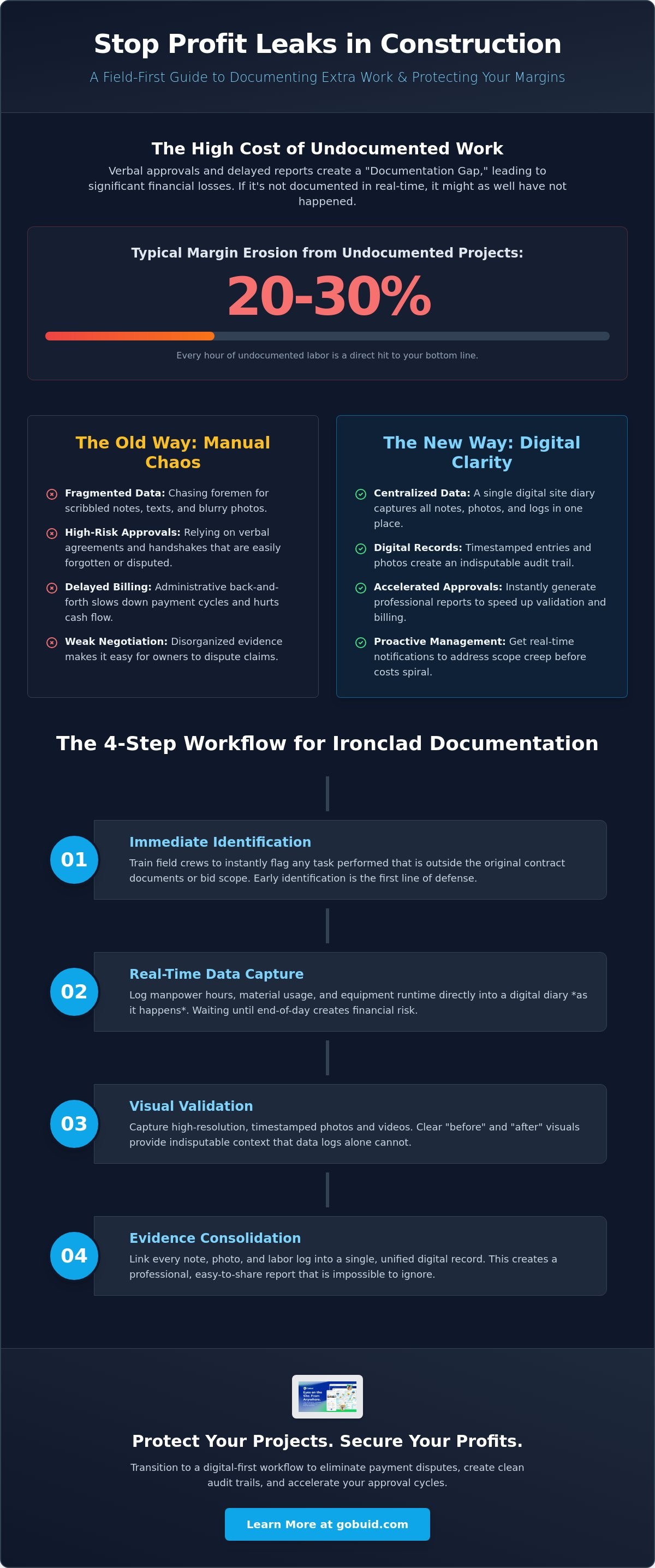
- Replace high-risk verbal approvals with digital records to prevent the 20-30% margin erosion common in undocumented projects.
- Centralize field data through a digital site diary to eliminate administrative back-and-forth and accelerate your billing cycles.
- Build a professional, time-stamped audit trail that protects your firm during end-of-project audits or legal disputes.
- ⭐ Learn more about GoBuid's feature - without the heavy enterprise price tag
Table of Contents
The Financial Risk of Delayed Extra Work Documentation
Extra work is any task performed outside the original contract documents or bid scope. In the field, these changes happen fast. If you aren't documenting extra work in construction as it occurs, you're essentially working for free. Relying on handshake deals or verbal approvals leads to 20-30% margin erosion on typical projects. This happens because verbal agreements are hard to prove and even harder to bill once the project moves forward and memories fade.
Understanding the formal process of what is a change order? is critical for every stakeholder. The biggest threat to your profit is the "Documentation Gap." This is the dead time between executing work and filing a formal report. During this window, critical evidence like photo proof and specific manpower hours vanish. Our rule is simple: if it's not captured in the digital site diary, it didn't happen.
To better understand how field documentation fits into the broader project lifecycle, watch this video on construction submittals:
The Administrative Leak of Manual Tracking
Manual tracking is a productivity killer. Project managers spend hours every week chasing foremen for scribbled notes or scrolling through hundreds of blurry photos. Fragmented data across emails, texts, and paper logs weakens your negotiation position. When owners see disorganized evidence, they're more likely to dispute the claim. Centralized progress documentation ensures your reports are professional and defensible from day one.
Real-Time Visibility as a Profit Protector
Switching from reactive to proactive management starts in the field. Real-time visibility allows you to address scope changes before costs spiral. When field crews use customised forms to flag work that feels "outside scope," the office gets an immediate notification. You can validate the work, track the equipment usage, and secure approval while the crew is still on-site. This immediate feedback loop protects your margins and stops disputes before they reach the boardroom.
A 4-Step Workflow for Documenting Extra Work in the Field
A successful claim starts with a standardized field process. You can't rely on luck or memory. Documenting extra work in construction requires a disciplined, 4-step workflow that moves as fast as your crews. This process ensures that every change is captured, verified, and ready for billing before the sun sets on the work day.
-
Step 1: Immediate Identification. Train your field crews to recognize scope creep the moment it appears. If a task isn't in the original bid, it's a flag.
-
Step 2: Real-Time Data Capture. Log manpower and equipment hours directly into a digital diary. Waiting until the end of the week creates a massive financial risk of delayed documentation where details are forgotten.
-
Step 3: Visual Validation. Secure photos that clearly show the "before" and "after" of the extra work. Visuals provide the context that data logs alone might miss.
-
Step 4: Evidence Consolidation. Link every note, photo, and labor log into a single digital record. This creates a unified data point that is easy to share and impossible to ignore.
Using Progress Photos for Indisputable Evidence
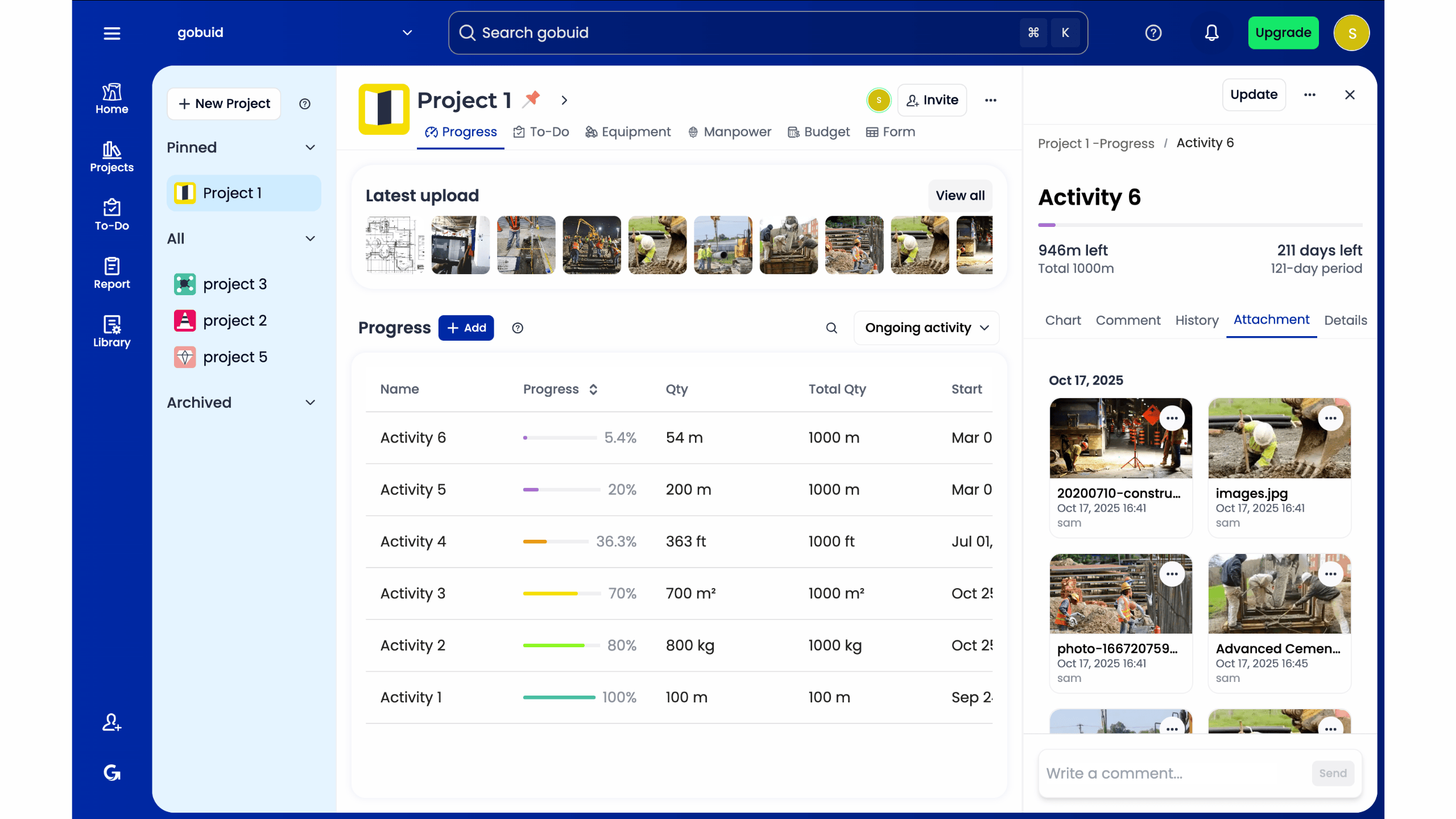
High-resolution photos are your best defense against disputes. Capture timestamped images of unforeseen site conditions to prove why the extra work was necessary. Clear visuals eliminate the "he-said, she-said" dynamic often found in change order negotiations. Learn how to manage progress photos and documentation to support your claims and provide total transparency to project owners.
Precise Manpower and Equipment Tracking
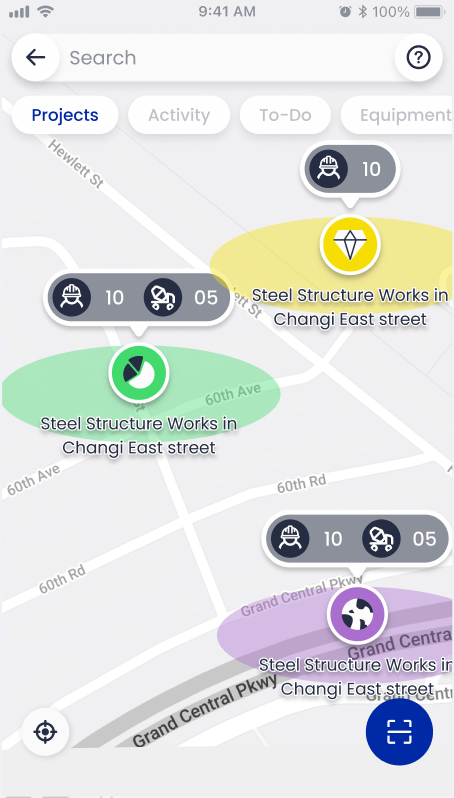
General estimates don't survive a tough negotiation. Owners want specific, daily labor logs for every extra task performed. If you can't show exactly who was working and for how long, you risk a partial payment. Streamline your equipment management to ensure every machine hour is tracked and billed accurately. Using integrated field tools makes this tracking automatic, removing the administrative burden from your foremen and protecting your margins.
Accelerating Approvals with Digital Site Diaries
Centralizing field data is the only way to eliminate the constant back-and-forth between your crews and the main office. When you shift to a digital site diary, the office gains immediate access to every log and photo. This transparency is the foundation of documenting extra work in construction effectively. It removes the guesswork and ensures every claim is backed by real-time evidence that stands up to scrutiny during end-of-project audits or potential litigation. A clear, digital audit trail is now more critical than ever. New regulations coming into effect, some as early as 2026, establish formal processes and timelines for paying undisputed amounts. This makes precise, time-stamped record-keeping a legal necessity for your firm.
Using customised forms allows you to align field data with the specific reporting requirements of your owner or general contractor. You can also utilize project analytics to identify recurring causes of extra work, such as specific design errors or underperforming subcontractors. This high-level visibility turns raw data into a strategic asset. It helps you manage project health across all locations while ensuring that no task goes unbilled.
One-Click Reporting: From Field Note to Professional PDF
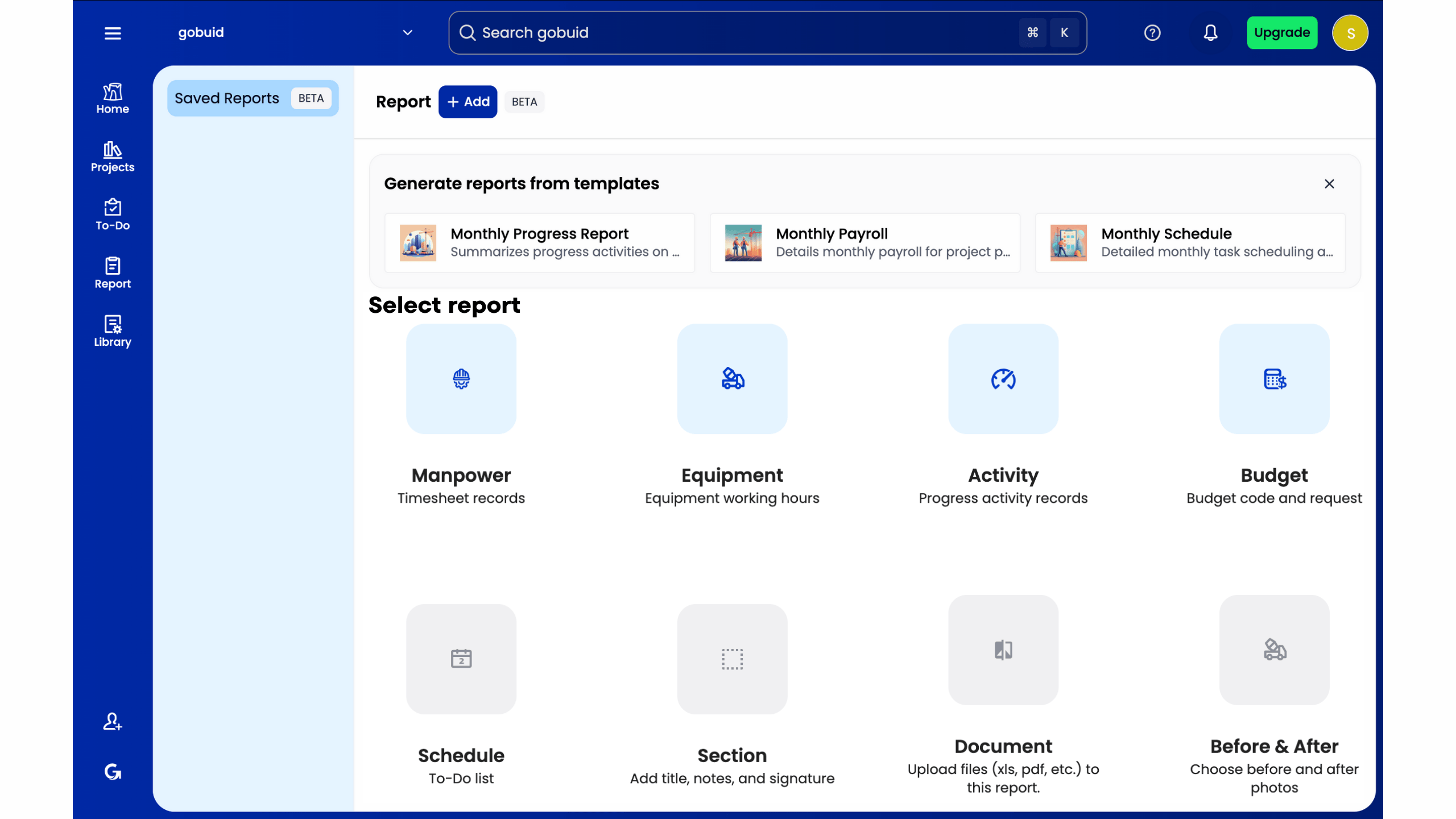
The transition from a field observation to a formal submission shouldn't take hours. Professional, standardized reports increase owner confidence and significantly speed up sign-offs. You need the ability to generate a report in one click for immediate submission. This eliminates administrative overhead and ensures your team stays focused on execution rather than paperwork. A clean, professional PDF is far more difficult to dispute than a scattered collection of emails and spreadsheets. It provides the clarity needed to secure faster payments and protect your cash flow.
Building Owner Trust Through Data Transparency
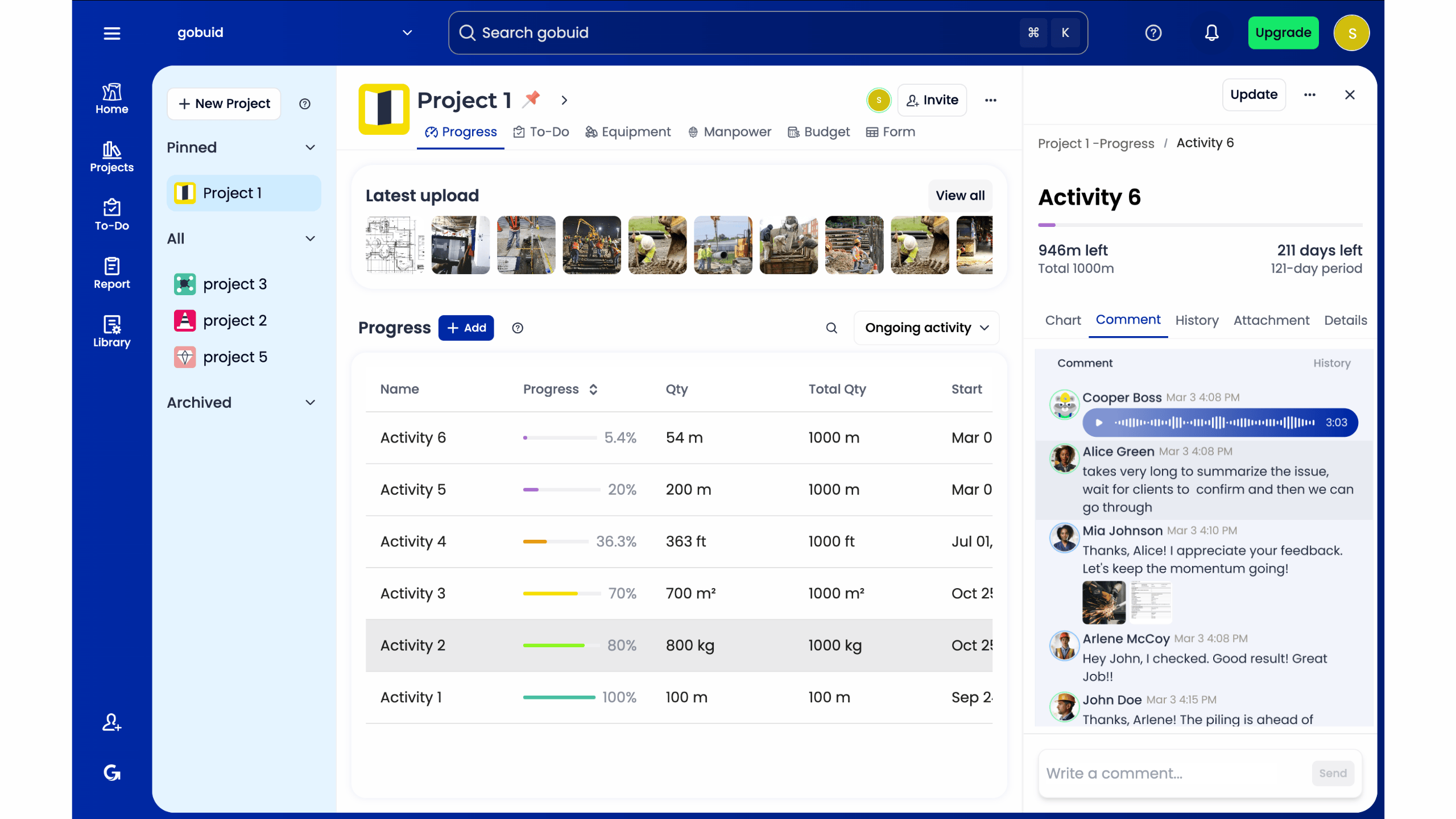
Friction often arises from a lack of clarity. By providing a unified data point through Mission Control, you reduce disputes with stakeholders before they escalate. Transparency leads to collaborative approvals rather than adversarial negotiations. When owners can see the progress photos and labor logs in a structured format, they're more likely to approve change orders quickly. This approach positions your firm as a professional partner committed to total accountability. It proves you have the organizational skills to manage complex projects with precision.
Take Control of Your Project Margins
Protecting your bottom line requires more than just hard work. It demands a systematic approach to capturing every change as it happens. By implementing a field-first workflow, you eliminate the documentation gap and ensure your office has the evidence needed to justify every change order. Mastering the process of documenting extra work in construction is the only way to stop the margin erosion that plagues undocumented projects. You've seen how real-time visibility and digital site diaries transform chaotic field notes into defensible financial assets.
It's time to replace manual tracking with a solution built for the precision of modern construction. Stop chasing foremen for notes and start generating professional reports that owners can't ignore. With real-time manpower and equipment tracking, you gain total transparency across every site. You can streamline your extra work documentation with GoBuid and start for free today. Experience the impact of one-click professional reporting and regain control over your project's financial health. Build with confidence and ensure your team gets paid for every hour of effort they put in.
Frequently Asked Questions
What is an extra work order (EWO) in construction?
An extra work order is a directive to perform tasks not included in the original contract or bid documents. It acts as an immediate field record of requested changes before they are formalized into a contract amendment. These orders capture the specific labor, materials, and equipment used for a task. This ensures transparency between you and the owner. Capturing this data early prevents the loss of critical evidence during the documentation gap.
How do you prevent disputes over extra work with project owners?
Prevent disputes by establishing total transparency through real-time data capture and visual validation. You must provide timestamped progress photos and specific labor logs the moment a change is identified. Documenting extra work in construction with a digital site diary creates an indisputable audit trail. When owners receive professional, immediate reports instead of delayed estimates, they are far more likely to approve claims without conflict or litigation.
What is the difference between extra work and a change order?
Extra work describes the physical tasks performed outside the original scope. A change order is the formal contract amendment that adjusts the project price or schedule. Think of extra work as the field reality that justifies the administrative change order. You log the extra work in your site diary to build the evidence base required to finalize the change order negotiation and secure your payment.
How can I track the cost impact of extra work in real-time?
Track cost impacts by logging manpower hours and equipment usage into a centralized dashboard as tasks occur. Use customized forms to categorize these costs separately from your baseline budget. This allows you to monitor margin erosion instantly. By documenting extra work in construction digitally, you access project analytics that show exactly where unforeseen costs originate. This enables you to manage your project's financial health proactively.