Steel Sheet Piles: A Guide to Selection, Installation, and Site Management
by Guillermo Sánchez
|
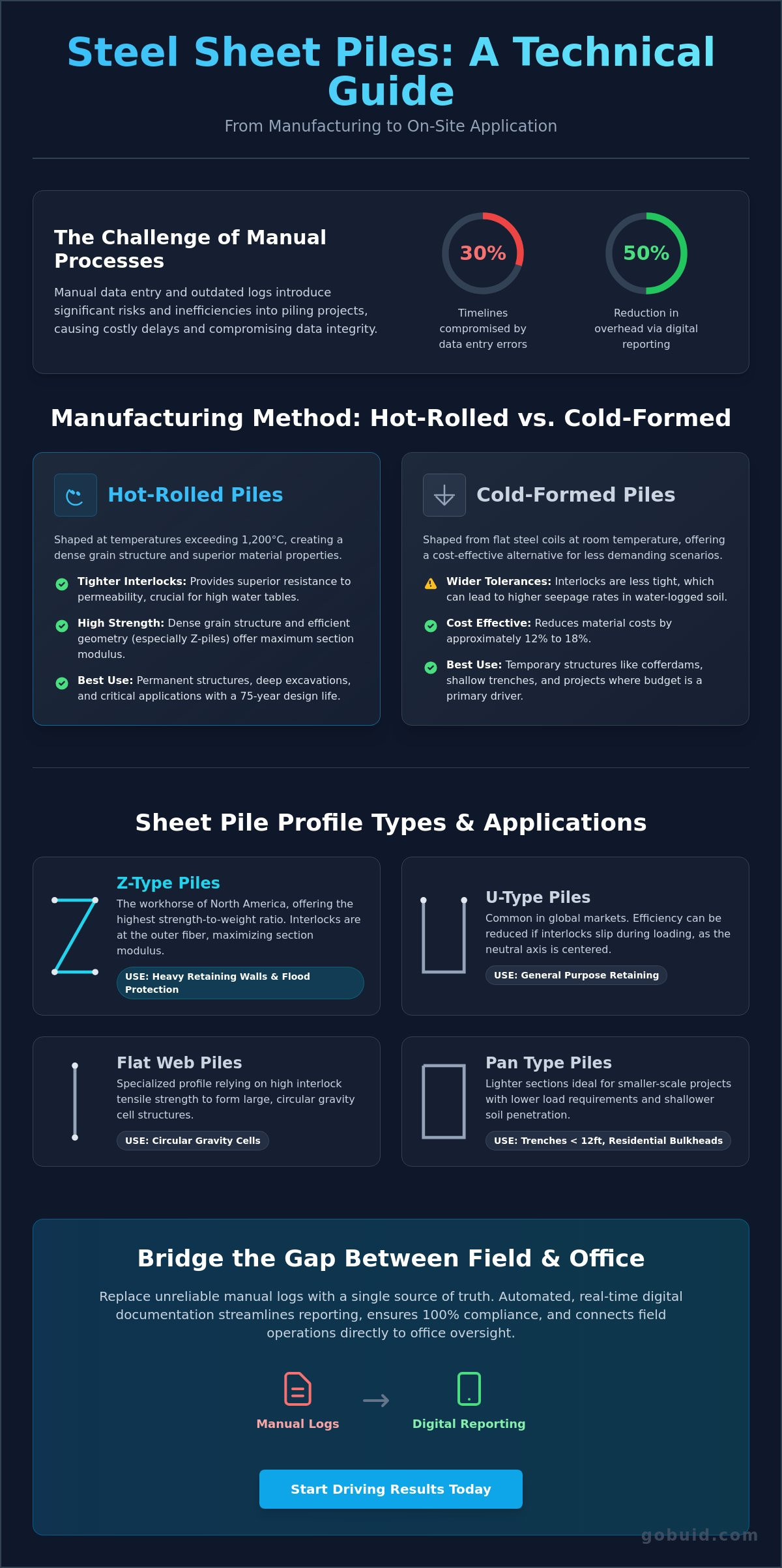
Manual data entry errors compromise nearly 30% of all piling project timelines. You understand the pressure of the job site. One faulty log or a delayed progress report creates a ripple effect that stalls the entire crew. Managing steel sheet piles requires more than just heavy machinery. It demands absolute precision in both the soil and the spreadsheet to keep a project on track.
You can regain control over your workflow starting today. This guide provides the technical expertise needed to choose between Z-type and U-type profiles for your specific site conditions. We'll show you how to replace manual pile driving logs with real-time digital reporting to reduce administrative overhead by up to 50% on every shift. You will learn to streamline installation, ensure 100% safety compliance, and bridge the gap between field operations and office oversight with a single source of truth. It's time to stop chasing paper and start driving results.
Key Takeaways
Identify the core mechanics of interlocking systems to effectively manage soil and water pressure on complex job sites.
Compare the performance specs of hot-rolled and cold-formed profiles to select the right permeability for your foundation.
Master precise installation techniques and alignment monitoring to prevent common driving errors in the field.
Learn to streamline the reporting of steel sheet piles by replacing manual logs with automated, real-time digital documentation.
Bridge the gap between field and office by establishing a single source of truth for all subsurface progress and inspections.
⭐ Learn more about GoBuid's feature - without the heavy enterprise price tag
Streamlining Sheet Piling Documentation with One-Click Reporting
Manual site diaries fail when steel sheet piles are driven at speed. Paper logs are often incomplete, illegible, or lost in the field. This creates a reporting burden that delays progress payments and increases project risk. Piling projects move fast. You need a system that keeps up with the rig. Digital documentation isn't a luxury; it's a necessity for modern site management.
Real-time progress photos provide the only definitive proof for sub-surface work. Once a pile is driven, the quality of the installation is hidden from view. Capturing visual data during the process ensures that every steel sheet pile meets engineering specifications. This documentation acts as your single source of truth during dispute resolution, providing undeniable evidence of work performed. Automated reporting also ensures you satisfy BCA compliance and project stakeholder requirements without the typical end-of-month scramble.
The Digital Site Diary Advantage
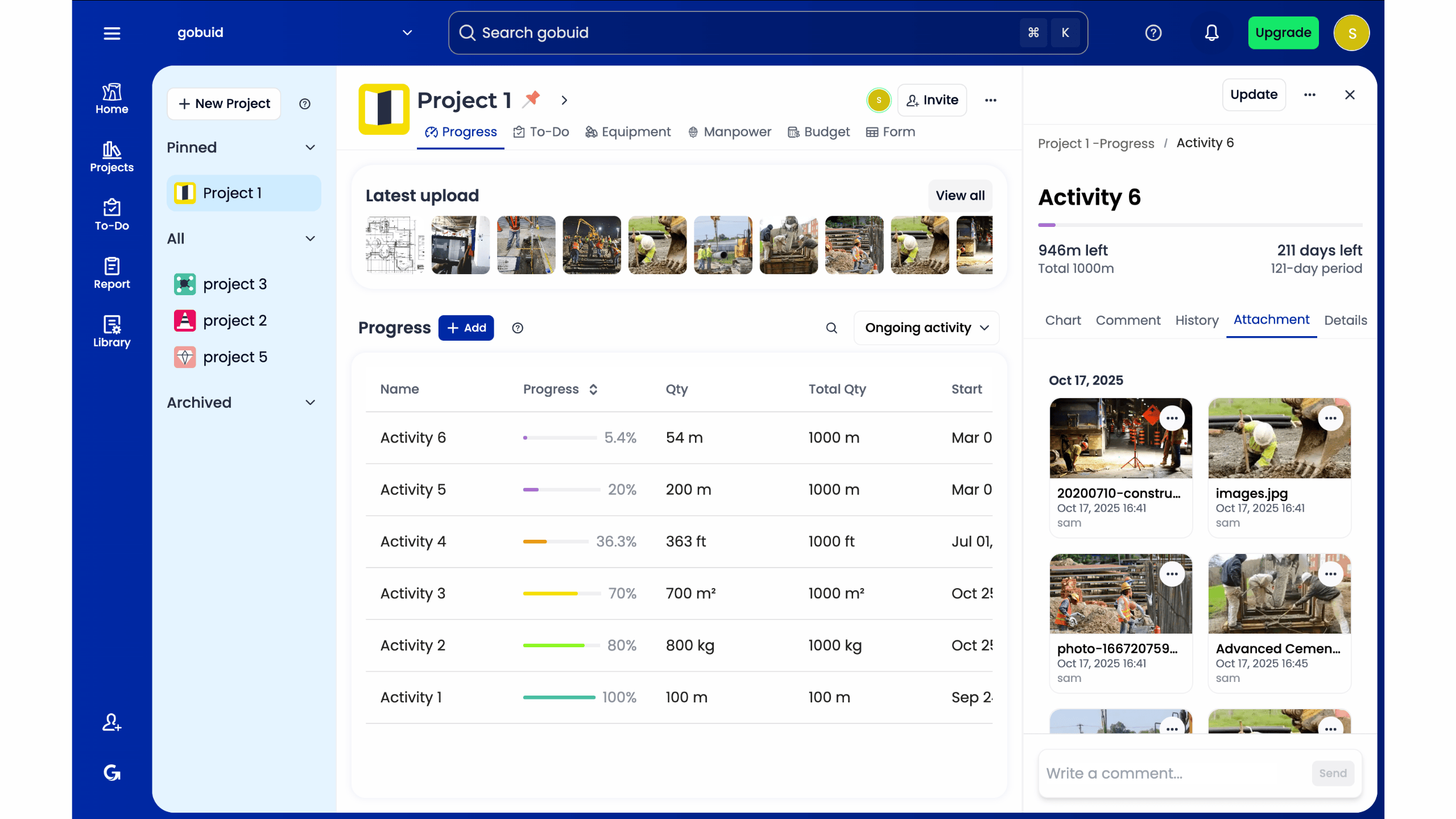
Efficiency starts in the field. Use a Digital Site Diary to capture progress photos and link them directly to specific pile IDs. This creates a verifiable history for every component of the wall. You won't have to search through thousands of unlabeled photos on a mobile phone. The data is centralized, searchable, and accessible. Industry data shows that contractors who digitize field logs reduce administrative errors by 40% on average, ensuring that field reality matches the office records.
Link high-resolution photos to individual pile IDs for total traceability.
Eliminate double-handling of data between the site and the office.
Provide instant visibility for engineers and project managers.
Generating Professional Reports in Seconds
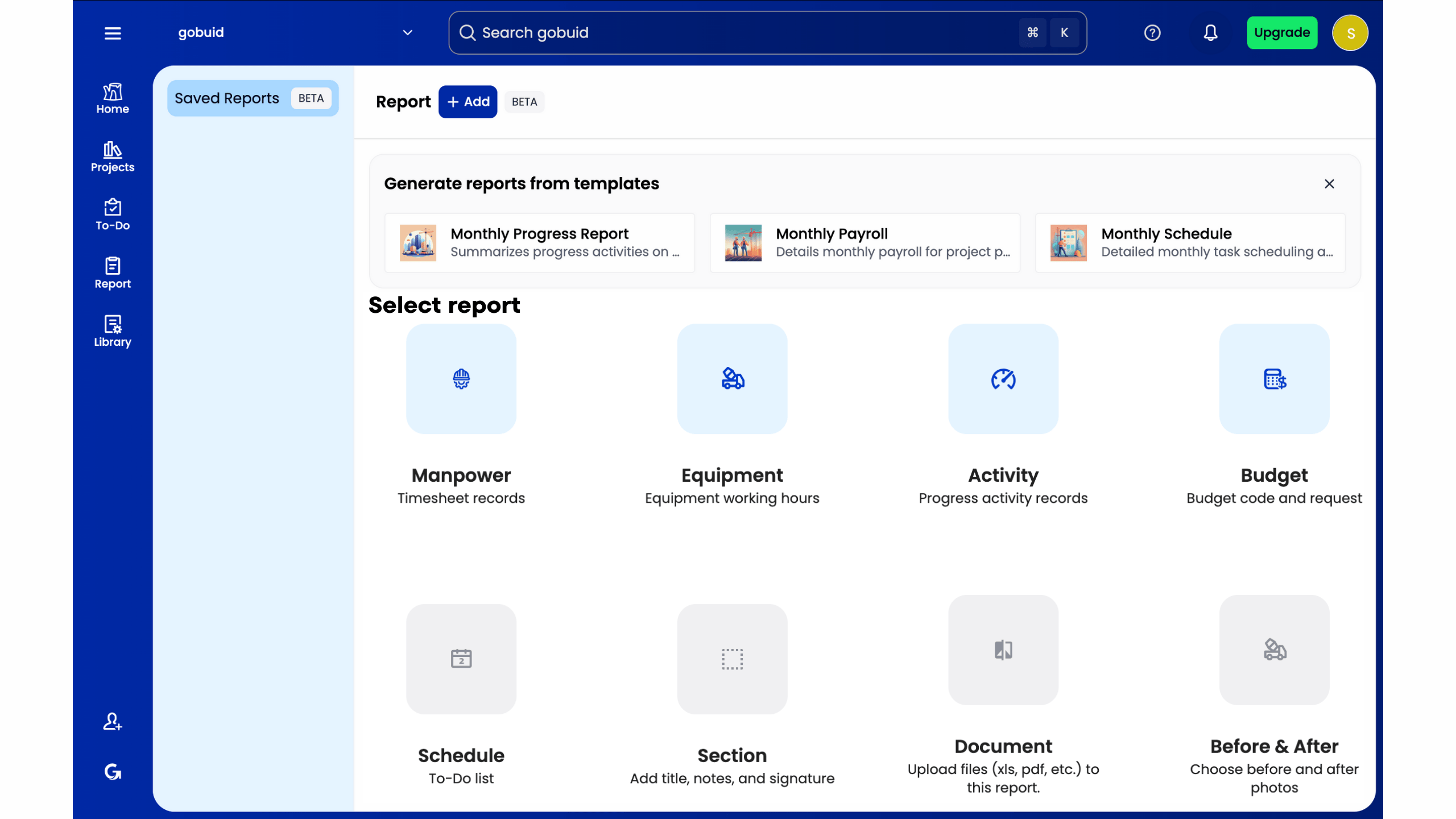
Stop wasting hours on manual data entry and formatting. Transition to one-click reporting to generate professional submittals in seconds. These reports pull directly from field data, ensuring 100% accuracy and consistency. It turns a half-day task into a five-second action. To track the big picture, use Project Analytics Dashboards to visualize wall completion rates. You can monitor exactly how many piles are installed against the project schedule in real time. This visibility allows you to identify bottlenecks before they impact the critical path, keeping the project on budget and on time.
What are Steel Sheet Piles? Functions and Core Applications
Steel sheet piles are long structural sections designed with a vertical interlocking system. This mechanism allows individual piles to connect, creating a continuous, often watertight wall. These sections resist lateral pressure from soil and water, making them indispensable for complex earth retention. Engineers prioritize steel for its high strength-to-weight ratio. It withstands the intense driving stresses required to reach deep load-bearing strata in marine and foundation environments.
The primary function of these walls involves transferring pressure from the high-side soil or water to the soil embedded in front of the wall. This cantilever or anchored support provides the stability needed for cofferdams, bulkheads, and levee strengthening. Sheet piling remains the industry standard because it's durable and easy to handle on tight job sites.
To better understand this concept, watch this helpful video:
The Role of Sheet Piling in Modern Foundations
Sheet piles function as either temporary shoring or permanent structural elements. In temporary applications, they secure deep excavations during the construction of building basements. Permanent installations often serve as the primary load-bearing walls for underground structures. You must conduct a thorough soil condition analysis before pile selection. Data from Standard Penetration Tests (SPT) dictates the required section modulus. Correct analysis ensures the wall doesn't buckle under hydrostatic pressure.
Key Applications Across Infrastructure
Infrastructure projects utilize steel sheet piles for bridge abutments and underground parking garages. They provide a compact footprint compared to traditional sloped excavations. This efficiency is vital in dense urban areas where space is a premium. Beyond structural support, they play a critical role in environmental protection. Contractors install them as barrier walls to contain contaminated groundwater or prevent seepage in landfill sites. This containment capability protects local ecosystems from industrial runoff and chemical migration.
Cofferdams: Creating dry work environments in water-logged areas.
Bulkheads: Protecting shorelines from erosion and supporting docks.
Levee Strengthening: Reinforcing embankments against flood surges.
Retaining Walls: Managing grade changes in highway and rail projects.
Selecting the Right Profile: Hot-Rolled vs. Cold-Formed Piles
Choosing the correct steel sheet piles determines the structural integrity and seepage control of your project. Manufacturing methods dictate performance. Hot-rolled piles are shaped at temperatures exceeding 1,200°C. This process creates a dense grain structure and tighter interlocks. Cold-formed piles are shaped from flat steel coils at room temperature. They offer lower costs but wider interlock tolerances. For deep excavations or high water tables, hot-rolled interlocks provide superior permeability resistance. Use the U.S. Army Corps of Engineers design manual to calculate specific seepage rates for your soil conditions.
Strength depends on geometry. The section modulus and moment of inertia define how a pile resists bending. Hot-rolled Z-piles place the interlocks at the outer fiber of the wall. This maximizes the section modulus per pound of steel. Cold-formed sections often lack this geometric efficiency. For permanent structures with a 75 year design life, hot-rolled steel is the industry standard. Temporary cofferdams often utilize cold-formed profiles to reduce material costs by approximately 12% to 18%.
Z-Type vs. U-Type and Flat Web Piles
Z-Type piles are the workhorse of North American construction. They offer the highest strength-to-weight ratio. Use them for heavy retaining walls and flood protection. U-Type piles are common in global markets; however, they can suffer from reduced efficiency if the interlocks slip during loading. Flat Web piles are specialized. They rely on high interlock tensile strength to form circular gravity cells. Pan Type piles work best for light loads. These are ideal for residential bulkheads or trenches under 12 feet deep. Track these variations in your equipment inventory to ensure the right material hits the site on time.
Material Specifications and Steel Grades
Steel Grades: ASTM A572 Grade 50 is the baseline. It provides a 50,000 psi yield strength for high-pressure environments.
Corrosion Protection: Apply coal tar epoxy or hot-dip galvanization. These coatings extend service life in marine environments by 20 years or more.
Cathodic Protection: Use sacrificial zinc or aluminum anodes for permanent saltwater installations to prevent metal loss.
Efficiency starts with the right profile. Precision in selection prevents field failures and budget overruns. Use Buid to keep your field reports accurate and your procurement aligned with engineering specs.
Best Practices for Sheet Pile Installation and Field Inspections
Successful installation of steel sheet piles hinges on selecting the right driving method for the specific soil profile. Vibratory hammers utilize high-frequency oscillations to liquefy granular soils; this allows the pile to slide into place with minimal resistance. For stiff clays or dense layers, impact driving provides the necessary force to reach design depth. In noise-sensitive urban environments, hydraulic pressing offers a vibration-free alternative that pushes piles into the ground using static force.
Precision is non-negotiable. Piles often lean or "walk" out of plumb during driving, which compromises the entire wall's structural integrity. Use robust guide frames and laser levels to monitor alignment in real-time. Consult the PDCA Steel Sheet Pile Resources to establish acceptable tolerance limits for verticality and position. Constant monitoring ensures the interlocks remain engaged, preventing costly remediation later.
Job sites are high-risk zones. Maintain a 20-foot minimum clearance from overhead power lines to prevent electrical arcing. Identify and mark pinch points on the pile head and rigging gear to protect ground crews. Verify crane stability before every lift, especially when working on uncompacted fill or near open excavations. Rigorous safety protocols aren't just suggestions; they're the foundation of a profitable project.
Conducting Rigorous Safety and Quality Inspections
Daily equipment checks prevent catastrophic failures. Inspect vibratory hammer clamps and rigging gear for wear every morning before the first lift. Document interlock integrity during the drive; a split interlock ruins the water seal and structural capacity. Implement digital checklists via Safety & Quality Inspections to capture field data instantly and ensure every steel sheet piles installation meets the engineer's specifications.
Managing Manpower and Equipment on Site
Efficiency depends on tracking specialized piling crews and heavy machinery hours with precision. Idle time drains the budget and stalls the schedule. Use Equipment Management to monitor fuel consumption and schedule preventative maintenance based on actual runtime. Visibility into machine health and crew productivity keeps the project moving toward completion without unexpected downtime.
Drive Your Project Toward Completion
Successful earth retention depends on choosing the correct profile. Hot-rolled piles meeting EN 10248 standards provide the superior interlocking strength required for deep excavations, while cold-formed options suit shallower projects. Precision during the driving phase is critical. Maintaining alignment within a 1 percent verticality tolerance, as specified in SS 549:2009, prevents structural failures and schedule delays. Technical excellence in the field is essential, but it's only half the battle. You need a single source of truth to bridge the gap between site activity and office oversight.
Managing steel sheet piles requires rigorous documentation to satisfy BCA-compliant digital standards. GoBuid eliminates the paperwork bottleneck by centralizing your field data. You can access real-time manpower and equipment tracking to maintain full visibility over your crew and machinery. There are no lock-in contracts. It's a sleek tool designed to handle the rugged reality of your job site.
Generate your site reports in one click with GoBuid
Take control of your workflow and build with confidence.
Frequently Asked Questions
What is the difference between hot-rolled and cold-formed steel sheet piles?
Hot-rolled steel sheet piles feature tighter interlocks and greater structural integrity than cold-formed alternatives. Manufacturers produce hot-rolled sections at temperatures exceeding 1,700 degrees Fahrenheit, creating a single piece of steel with superior water-tightness. Cold-formed piles are shaped at room temperature and typically measure between 3mm and 8mm thick. Use hot-rolled piles for permanent structures where seepage control is absolutely critical.
How do you calculate the required depth for a steel sheet pile wall?
Determine the required depth by calculating the balance between active soil pressure and passive resistance. Engineers apply a safety factor typically ranging from 1.5 to 2.0 to ensure stability against toe kick-out. In granular soils, the embedment depth often reaches 2 times the exposed height of the wall. This ensures the structure withstands lateral loads without shifting. Always verify these calculations against local geotechnical reports.
Can steel sheet piles be reused in multiple construction projects?
Contractors can reuse steel sheet piles between 5 and 10 times in temporary applications. Success depends on soil density and the use of protective driving caps to prevent head damage. You can't ignore interlock deformation, as a 15% reduction in section modulus can compromise structural capacity. Reusing piles reduces material costs and improves project sustainability metrics across multiple job sites.
What are the main causes of sheet pile failure during installation?
Subsurface obstructions like boulders or abandoned foundations cause approximately 70% of installation failures. Improper hammer selection leads to excessive vibration or brooming of the pile head. If the interlocks separate, known as declutching, the wall loses its structural integrity and water-tightness. Precise alignment and pre-drilling in dense strata prevent these common field errors and keep the project on schedule for a successful handover.
How does digital site diary software improve piling project productivity?
Digital site diary software eliminates the 2-hour daily lag typically spent on manual paper reports. It provides a single source of truth by syncing field data with the office in real time. Managers gain 100% visibility into rig hours and pile counts, allowing for immediate adjustments to the schedule. It's a centralized approach that bridges the gap between the crew and the project team.