Timber Piles in Modern Construction: A Guide to Selection and Management
by Sam Chen
|
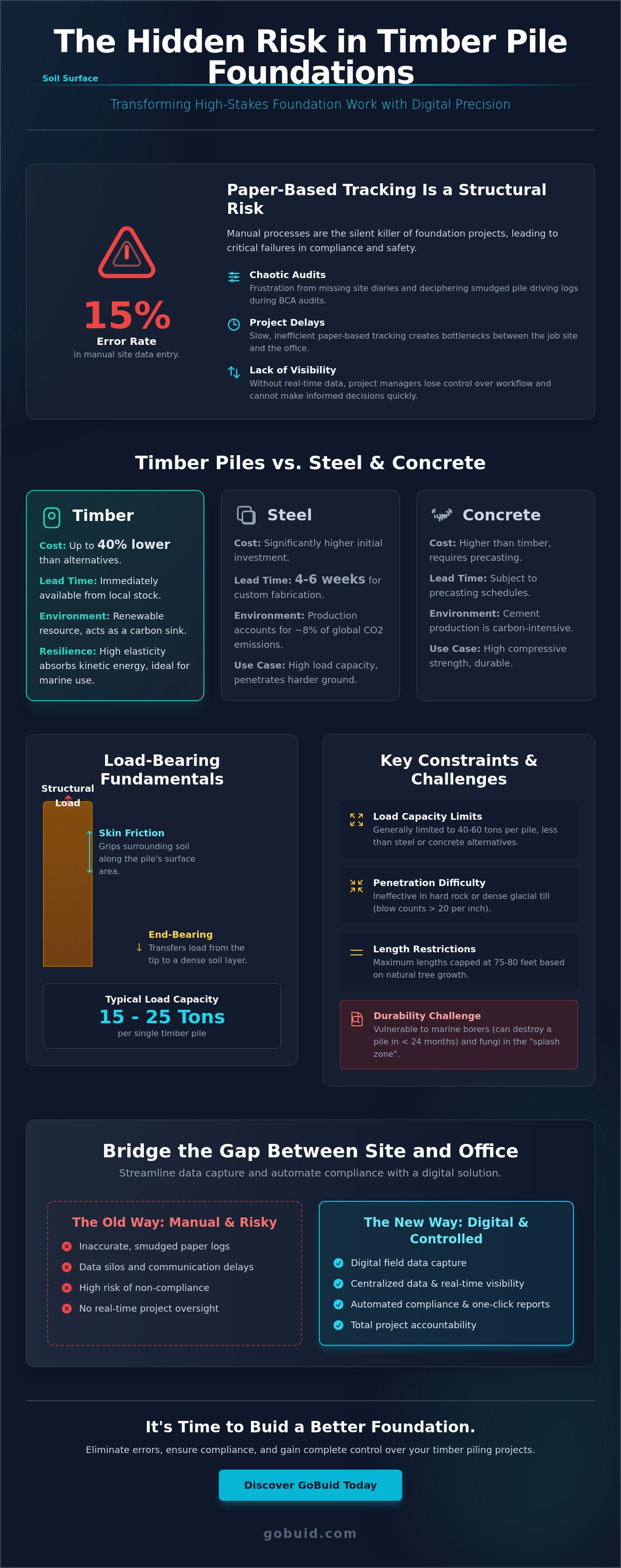
A 15% error rate in manual site data entry is the silent killer of foundation projects. While timber piles remain a high-performance, sustainable choice for modern construction, their success relies on the accuracy of your installation records. You've likely felt the frustration of chasing down a missing site diary or deciphering a smudged pile driving log during a BCA audit. It's a chaotic way to manage a high-stakes phase of the build. Paper-based tracking isn't just slow; it's a structural risk.
You recognize that real-time visibility is the only way to maintain control over your workflow. This guide empowers you to master the load-bearing fundamentals of timber piles while streamlining your documentation through digital field reports. We'll show you how to ensure long-term durability through specific treatment selections and automate your compliance process. From calculating load limits to centralizing your submittals, you're about to bridge the gap between the rugged job site and the precision of modern project management. It's time to Buid a better foundation.
Key Takeaways
Grasp the mechanics of skin friction and end-bearing support to optimize deep foundation stability.
Evaluate timber piles against steel and concrete to leverage cost-effectiveness and impact resistance in marine projects.
Navigate BCA compliance requirements for site diaries and driving logs to ensure total project accountability.
Streamline field data capture and generate one-click reports to bridge the gap between the site and the office.
⭐ Learn more about GoBuid's feature - without the heavy enterprise price tag
Understanding Timber Piles: Applications and Load-Bearing Fundamentals
Timber piles are high-strength tree trunks that have been trimmed, debarked, and pressure-treated for deep foundation support. These elements provide a reliable solution for transferring structural loads to stable soil layers. Engineers choose Piling foundations to bypass weak surface soils and reach competent bearing strata. Timber remains a staple in the field because it's renewable, easy to handle, and proven to last for decades when managed correctly.
To better understand this concept, watch this helpful video:
The load-bearing capacity of a single timber pile generally ranges from 15 to 25 tons. This performance depends on two primary mechanisms: skin friction and end-bearing. Skin friction utilizes the surface area of the pile to grip the surrounding soil. End-bearing transfers the load directly through the tip into a dense soil layer. These piles serve critical roles in marine wharves, bridge abutments, and residential foundations in regions with soft alluvial deposits or high moisture levels.
Common Wood Species and Treatment Standards
Southern Yellow Pine and Douglas Fir are the primary species used in North American piling applications. These species offer the structural density required to withstand heavy driving forces. To prevent biological degradation, wood is treated with CCA (Chromated Copper Arsenate) for land applications or Creosote for harsh marine environments. The AWPA standards define the required preservative retention levels based on whether the piling is destined for land, freshwater, or saltwater use.
Geotechnical Considerations for Selection
Timber piles often outperform steel or concrete in organic silts and acidic soils where corrosion is a major risk. They're particularly effective in friction-based soil profiles. Site managers must monitor the water table level during the geotechnical assessment. Timber piles remain durable for centuries if they're submerged below the permanent water table, as the lack of oxygen prevents the growth of decay-causing fungi.
Advantages and Limitations of Timber Piling in Foundation Engineering
Timber piles offer a significant cost advantage, often pricing 40% lower than precast concrete or steel alternatives. They eliminate the 4-6 week lead times typical for custom steel fabrications because local suppliers usually maintain ready stock. Beyond cost, wood is naturally resilient. Its high elasticity allows it to absorb heavy kinetic energy, making it the preferred material for marine fenders and wharves where vessel impact is constant. From an environmental standpoint, timber acts as a carbon sink. While steel production accounts for approximately 8% of global CO2 emissions, timber is a renewable resource that requires minimal energy to process.
Mechanical limitations do exist. Timber piles struggle to penetrate hard rock layers or dense glacial till. Over-driving in these conditions leads to "brooming" at the tip or internal longitudinal splitting. Engineers must consult the Timber Pile Design and Construction Manual to establish precise driving tolerances and allowable design stresses. Key constraints include:
Load Capacity: Generally limited to 40-60 tons per pile.
Length Limits: Maximum lengths usually cap at 75-80 feet based on tree growth.
Hard Strata: Ineffective in penetrating strata with blow counts exceeding 20 per inch.
The Durability Challenge: Decay and Organisms
Untreated timber is a food source for marine borers and fungi. In warm saltwater, organisms like Teredo can hollow out a pile in under 24 months. Fungi thrive in the "splash zone" where moisture levels exceed 20% and oxygen is plentiful. Maintenance teams must use increment borers to extract core samples or employ ultrasonic testing to find internal rot. Logging these findings into centralized field reports allows project managers to track decay rates across hundreds of piles simultaneously.
Installation Efficiency and Speed
Speed drives the selection of timber in the field. Crews cut piles to the exact required length on-site using standard chainsaws, removing the need for precision ordering. Timber is lightweight. This allows for the mobilization of smaller, more agile piling rigs that are cheaper to transport. These rigs move faster across soft terrain, shortening the overall project schedule and reducing site preparation costs.
Compliance and Documentation: Managing Timber Pile Installation
Piling isn't just about driving wood into the ground. It's about data. Every timber pile requires a meticulous driving log. You must record the hammer weight, drop height, and blow counts for every 300mm of penetration. Set calculations determine if the pile has reached the required bearing capacity. These aren't suggestions; they're legal necessities. In Singapore, the BCA requires these records to be captured in daily site diaries. Failure to document these metrics isn't just a technicality. It's a massive liability. If a foundation settles unevenly, missing logs mean you have no defense against litigation or structural failure claims.
The Clerk of Works (CoW) or Resident Technical Officer (RTO) acts as the final gatekeeper. They must witness the final set of the Timber piles to verify compliance with the structural engineer's specifications. If the documentation is incomplete, they won't sign off on the work. This leads to costly delays and potential pile rejection. Poor record-keeping creates a vacuum of accountability that modern project management cannot afford.
Digital Site Diaries for Piling Progress
Paper logs are a liability on a wet, chaotic construction site. They get lost, damaged, or become illegible. Digital Site Diaries solve this by centralizing data entry directly from the field. Field teams log progress instantly from their mobile devices. Quality assurance demands more than just numbers. It requires visual proof. Capturing progress photos of every pile driven ensures a transparent, timestamped record that protects both the contractor and the developer.
Safety and Quality Inspections on the Rig
Safety is paramount when operating heavy piling rigs. Daily inspections of hydraulic hoses, winches, and cables prevent catastrophic mechanical failures. Standardizing these checks is essential for multi-site operations. Customised forms allow project managers to enforce identical safety and quality standards across every rig. This consistency eliminates guesswork. It ensures every rig meets compliance before the first blow is struck on any Timber Piles project.
Stop chasing paper logs and start building with precision. Generate automated piling reports today.
Streamlining Timber Pile Reporting with GoBuid
Managing foundation projects requires absolute precision. You can't afford to lose track of blow counts or installation depths. GoBuid eliminates the lag between the field and the office. You can generate report in one click to view daily progress instantly. This tool creates a single source of truth for every one of your Timber Piles. It captures critical data points like penetration rates and pile integrity as they happen. You stop reacting to yesterday's problems and start managing tomorrow's schedule. It's about total visibility for the entire project team.
Real-Time Manpower and Equipment Tracking
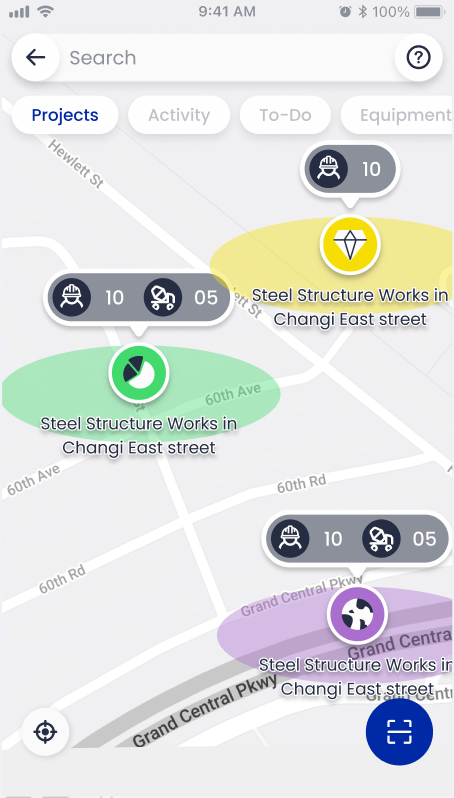
Specialized piling crews represent a high overhead cost. You need to maximize their output every hour. GoBuid allows you to track rig operators and ground crews through a centralized dashboard. Effective Equipment Management is equally vital. The platform monitors rig uptime and tracks maintenance cycles automatically. If a piling rig sits idle for 120 minutes, you'll see it on your screen. This level of detail ensures your equipment stays operational and your timeline stays intact. You'll know exactly which assets are performing and which are costing you money.
Eliminating Administrative Bottlenecks
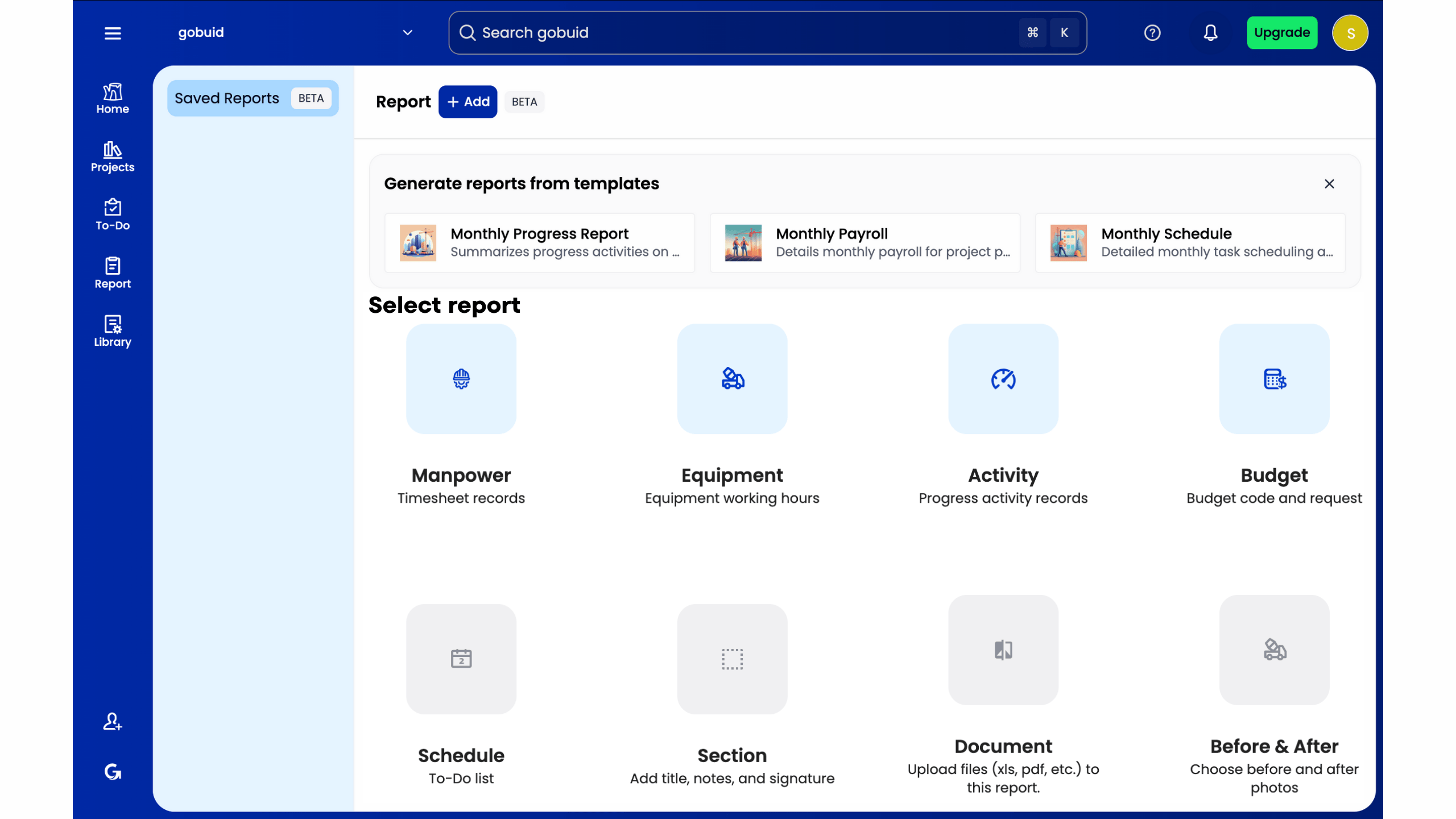
Traditional reporting creates dangerous delays. Waiting until the end of the week to log data on Timber Piles leads to errors and missed deadlines. GoBuid replaces paper logs with real-time digital entry. Field staff input data on-site. The office sees the results immediately. This shift saves an average of 10 hours of administrative work per week for project managers. You gain accuracy and reclaim your time for higher-level tasks. Contact GoBuid to digitize your foundation reporting and take control of your job site data today. Stop chasing paperwork and start driving project results.
Future-Proof Your Foundation Management
Success in modern foundation engineering requires more than just selecting the right Timber Piles. It demands rigorous documentation and absolute visibility. You must maintain a Digital Site Diary that meets 100% of BCA compliance standards to avoid costly delays. Manual reporting is a bottleneck that your project can't afford. Transitioning to a centralized system ensures that every pile driven is backed by verifiable data. Real-time tracking of manpower and equipment eliminates the guesswork from your daily operations. You gain a single source of truth that connects the site directly to your office. This level of control transforms a chaotic job site into a streamlined production line. Stop wasting hours on administrative tasks and focus on the structural integrity of your build. Streamline your piling reports with GoBuid’s one-click reporting. It's the most efficient way to generate professional reports and keep your project on schedule. You've got the tools to build better; now use them to work smarter.
Frequently Asked Questions
What is the maximum load a timber pile can support?
A standard timber pile typically supports a maximum load of 15 to 25 tons. This capacity depends on the pile diameter and the friction provided by the surrounding soil. Engineers calculate these limits using a 2.5 safety factor to ensure structural integrity. Use real-time data from site tests to verify these loads during the driving process. Drive them with precision.
How long do Timber Pileslast in water?
Properly treated wood foundations last between 30 and 40 years in harsh marine environments. If you install them entirely below the permanent water table, they can remain structurally sound for over 100 years. This longevity stems from the lack of oxygen, which prevents the growth of decay-causing fungi. Track treatment certifications in your digital project archive to guarantee material quality. It's a proven solution for long-term stability.
Are timber piles BCA compliant for Singapore projects?
Timber piles are BCA compliant for Singapore projects when they meet Eurocode 5 structural design standards. Contractors must document the installation process via a digital site diary to satisfy regulatory requirements. This transparency ensures that every pile driven meets the approved specifications. Digital records bridge the gap between field execution and office compliance, making audits 100% faster. It's about accountability.
How do you prevent rot in timber piles?
You prevent rot in foundation wood by pressure-treating the material with preservatives like Chromated Copper Arsenate (CCA). This industrial process forces chemicals deep into the fibers to repel insects and fungi effectively. Additionally, ensure the pile head remains submerged or sealed to block oxygen exposure. It's vital to maintain a single source of truth for your maintenance logs to track the condition of exposed materials over time.
Can timber piles be spliced to reach greater depths?
You can splice these supports to reach depths beyond 20 meters using steel sleeves or specialized bolting techniques. These joints must transfer the full driving force and structural load without failing under pressure. Accurate documentation of every splice is critical for your field reports. Use a centralized platform to log the depth and location of every joined unit to maintain 100% site visibility.