Cloud-Based Construction Document Storage: Centralizing Site Data for 2026
Stop wasting 96% of your site data. Learn how cloud-based construction document storage centralizes files, automates reports, and boosts productivity for 2026.
by Amelia Grant
|
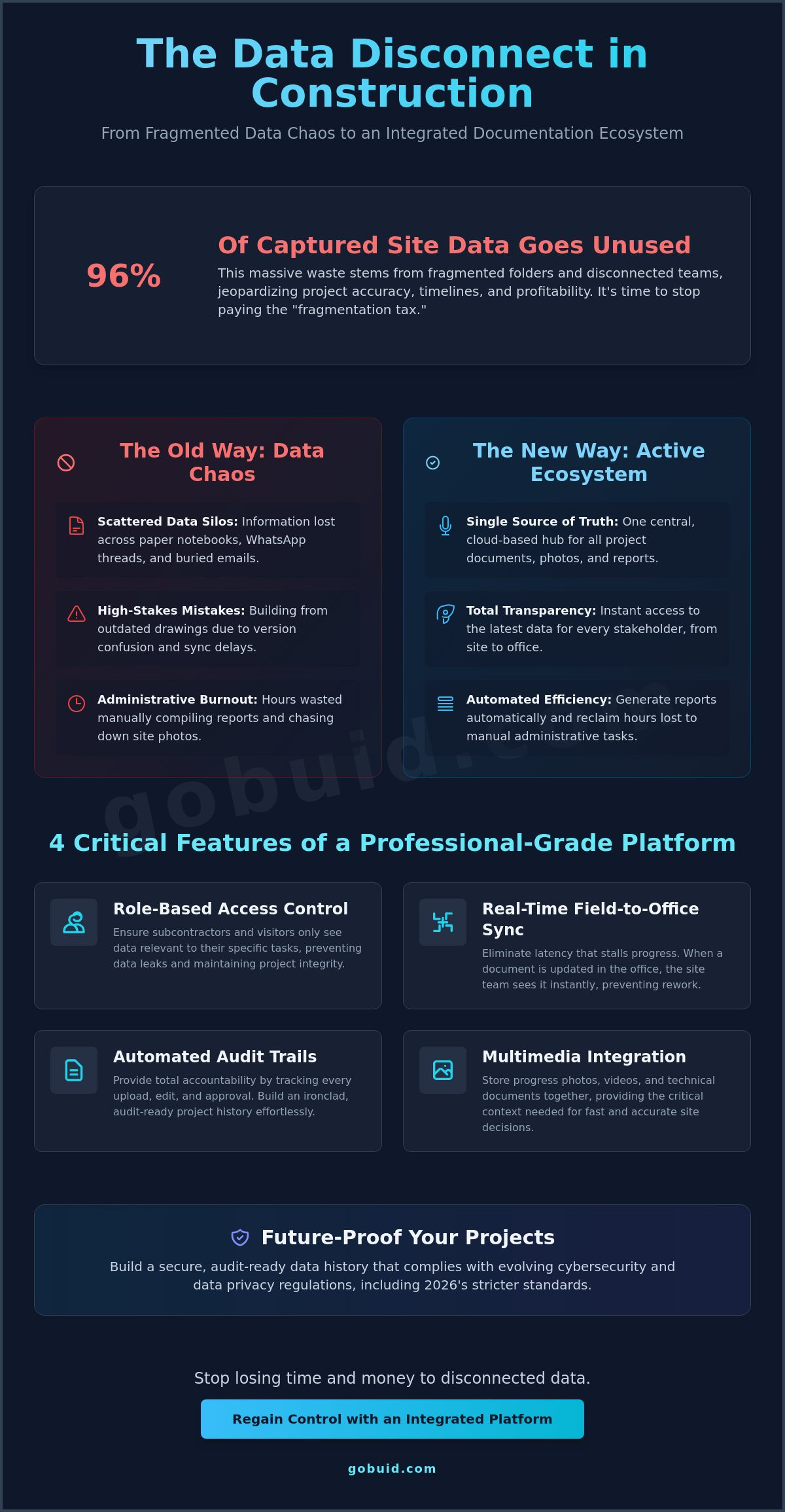
Nearly 96% of data captured on construction sites goes completely unused. This massive waste of information stems from fragmented folders and disconnected teams. You've likely spent hours chasing the latest drawing version or manually compiling site photos for a report that was due yesterday. These information silos between the site and the office don't just cause administrative burnout; they jeopardize your project's accuracy and profitability. Adopting a professional solution for cloud-based construction document storage is the only way to regain control. It's the foundation of a modern, efficient job site.
This guide shows you how to transition from passive file saving to an integrated documentation ecosystem that works for you. You'll learn how to centralize site data to ensure every stakeholder has instant access to site diaries and progress photos. We'll show you how to automate report generation and build a secure, audit-ready history that meets 2026's strict data standards. We'll explore the shift from manual chaos to digital precision, helping you secure your project data while driving measurable site productivity and total transparency across your entire operation.
Key Takeaways
- Eliminate the fragmentation tax by shifting from passive digital folders to an active documentation ecosystem.
- Maintain total transparency and security through role-based access controls and real-time field-to-office synchronization.
- Leverage cloud-based construction document storage to automate report generation and reclaim hours lost to administrative burnout.
- Build a secure, audit-ready data history that complies with 2026's evolving cybersecurity and data privacy regulations.
- Drive site productivity by replacing bloated legacy software with a lean platform built for modern project execution.
- ⭐ Learn more about GoBuid's feature - without the heavy enterprise price tag
Table of Contents
-
Beyond Folders: Why Construction Needs Active Cloud-Based Document Storage
-
Evaluating Cloud Platforms: 4 Critical Security and Access Features
-
Streamlining Operations with GoBuid’s Integrated Documentation Ecosystem
Beyond Folders: Why Construction Needs Active Cloud-Based Document Storage
Storage is no longer a passive bucket for files. True cloud-based construction document storage functions as a live ecosystem that connects the site office to the field in real time. Many firms still pay a "fragmentation tax" by scattering project data across paper notebooks, WhatsApp threads, and buried emails. This decentralized approach creates chaos and hidden costs. By leveraging cloud computing architecture, you move from static storage to an active project-driving asset that captures every detail as it happens.
To better understand how this shift transforms your daily operations, watch this breakdown of cloud integration in modern projects:
A single source of truth is essential for meeting local building codes and mitigating legal disputes. When every site event, photo, and inspection is timestamped in the cloud, you build an ironclad project history. Mobile-first capture acts as the primary feeder for these systems. Site teams document progress on their mobile devices, and that data instantly populates your central repository. You don't just store data; you secure your firm's professional reputation and project integrity.
The Death of the Paper Site Diary
Manual site diaries are prone to loss and illegible entries. They force an end-of-day administrative rush that drains productivity. Switching to Digital Site Diaries ensures data flows directly into your cloud ecosystem the moment it's recorded. You capture manpower, weather, and site events on the fly. This eliminates manual transcription and ensures the office has immediate oversight of site progress without waiting for weekly scans.
Eliminating Version Confusion
Building from an outdated drawing is a high-stakes mistake. Cloud-based systems remove this risk by ensuring the latest revisions are automatically pushed to every field device. When the design team updates a spec in the office, the site team sees it instantly. This real-time synchronization prevents rework and keeps the entire project team aligned on a single, unified data point. It's about precision and speed.
Evaluating Cloud Platforms: 4 Critical Security and Access Features
Selecting the right cloud-based construction document storage requires looking beyond simple file hosting. You need a platform that handles the high-velocity data of a live project. Security and accessibility must be balanced to ensure project momentum. A robust system doesn't just store files; it manages the flow of information across your entire project team.
Four features define a professional-grade platform. First, role-based access control ensures that subcontractors and visitors only see data relevant to their specific tasks. Second, real-time field-to-office synchronization eliminates the latency that often stalls progress. If your site team waits for a drawing to sync, you're losing money. Third, automated audit trails provide total accountability by tracking every upload, edit, and approval. Finally, multimedia integration is essential. Storing Progress Photos alongside technical reports provides the critical context needed for site decisions.
Security Architecture for Construction Data
Security isn't optional for modern firms. Your platform must utilize encrypted data transmission and secure hosting to protect sensitive project information from external threats. Role-specific dashboards further refine this security. They prevent data leaks by restricting access to financial or legal documents while giving each team member the tools they need to execute. This setup ensures transparency without compromising project integrity.
Customized Data Capture via Digital Forms
Standardization drives project efficiency. Use Customised forms to ensure every site captures data in the same format. This consistency allows you to perform cross-project analytics and benchmark performance across your entire portfolio. Standardized storage turns raw site data into actionable intelligence, helping you identify bottlenecks before they impact your bottom line. You can explore these integrated features to see how they protect and organize your site data.
Streamlining Operations with GoBuid’s Integrated Documentation Ecosystem
GoBuid provides a lean, high-efficiency alternative to bloated enterprise software. It's built for speed and precision. By centralizing site data, GoBuid transforms passive cloud-based construction document storage into an active project management asset. You don't just save files; you generate actionable insights through a unified Project Analytics Dashboard. This ground-to-cloud workflow keeps foremen focused on the build while providing PMs with real-time oversight from the office. It's a no-nonsense approach to operational control.
Traditional systems often feel like a digital filing cabinet where data goes to be forgotten. GoBuid changes the rhythm of project documentation. It connects disparate operational locations, acting as the connective tissue for your entire team. When every photo and log is tied to a specific project point, transparency becomes the standard. You gain a clear view of your project's trajectory without the cognitive load of navigating complex, fragmented interfaces.
From Site Entry to One-Click Reporting
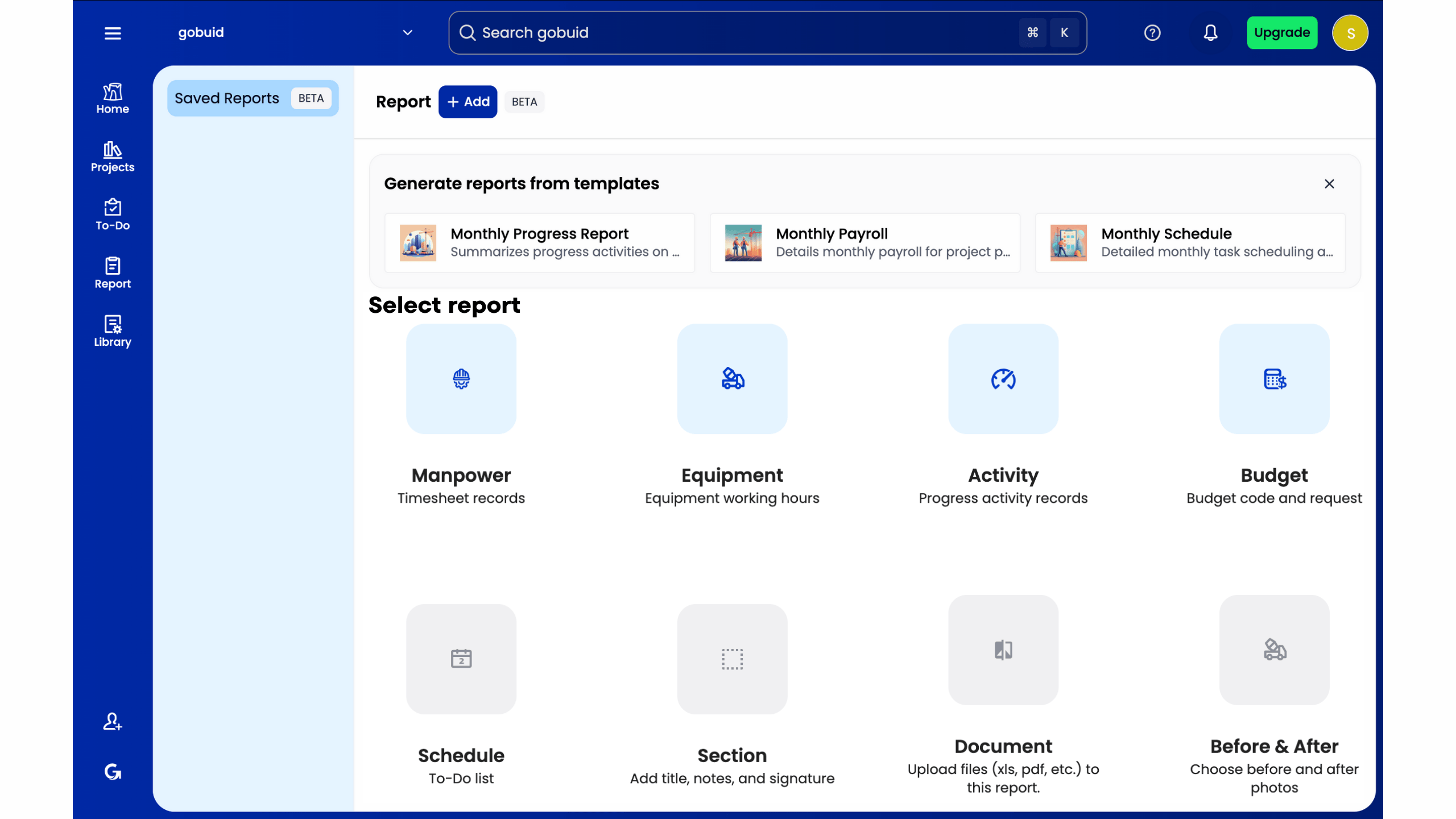
Documentation shouldn't be a chore that happens at the end of a long shift. The GoBuid process is simple and immediate. First, your team captures data directly in the field using digital forms. Second, the system syncs this data to the cloud repository instantly. Finally, you can generate report in one click. This streamlined workflow eliminates hours of manual data entry and formatting. It slashes the administrative burden on your team, allowing them to focus on high-quality execution rather than chasing paperwork.
Managing Manpower and Equipment in the Cloud
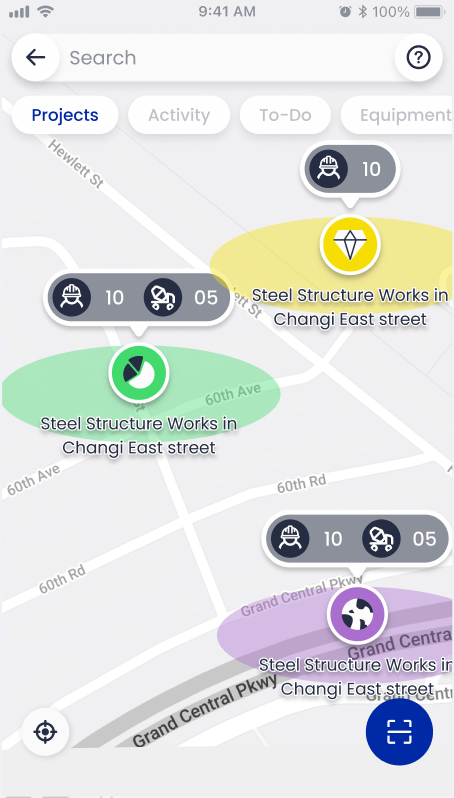
Centralization extends beyond photos and forms. Integrating Manpower Tracking and equipment logs into your document repository ensures total operational visibility. You can monitor labor hours and machine usage from a single, unified data point. This prevents scheduling conflicts and ensures maintenance schedules are never overlooked. When your equipment and manpower data live in the same cloud-based construction document storage ecosystem as your site diaries, you gain a complete, audit-ready picture of project health. It's about working smarter, not harder.
Future-Proof Your Site Operations
GoBuid is built for the high-velocity demands of the modern job site. It turns raw data into actionable insights through real-time synchronization and one-click professional reporting. You gain total transparency across your entire operation while reducing administrative burnout for your team. It's time to replace fragmented workflows with a lean, reliable ecosystem designed specifically for field operations. Take control of your project history and build with confidence.
Start streamlining your site documentation with GoBuid today.
Frequently Asked Questions
Is cloud-based document storage more secure than physical servers?
Cloud-based solutions offer superior security compared to physical servers through enterprise-grade encryption and redundant data centers. Physical on-site servers are vulnerable to hardware failure, theft, and environmental damage. Professional cloud-based construction document storage providers maintain advanced cybersecurity protocols that exceed the capabilities of most local IT setups. This architecture ensures your project data remains protected against loss and unauthorized access at all times.
Can I access my construction documents if there is no internet on the site?
You can access and record documents offline using platforms built for field operations. These tools utilize local caching to store data on your mobile device, allowing you to update site diaries or capture photos in areas with poor connectivity. The system automatically synchronizes all changes to the cloud once a connection is restored. This prevents documentation gaps and ensures that site teams remain productive regardless of the local network status.
How does cloud storage help with construction project audits?
Cloud storage streamlines audits by creating automated, immutable audit trails for every file and entry. Every upload, edit, and approval is timestamped and linked to a specific team member, providing a transparent history of project decisions. This level of accountability is vital for meeting building code inspections and resolving contractual disputes. It eliminates the need to manually reconstruct timelines from fragmented paper records or buried email chains during a formal review.
What is the difference between generic cloud storage and construction-specific software?
Generic storage acts as a digital filing cabinet while construction-specific software functions as an active project ecosystem. Generic tools simply hold files without operational context. Conversely, specialized cloud-based construction document storage integrates documents with site diaries, manpower logs, and equipment tracking. This allows you to generate reports and analyze site performance directly from your data, turning static files into a project-driving asset that increases overall site productivity.