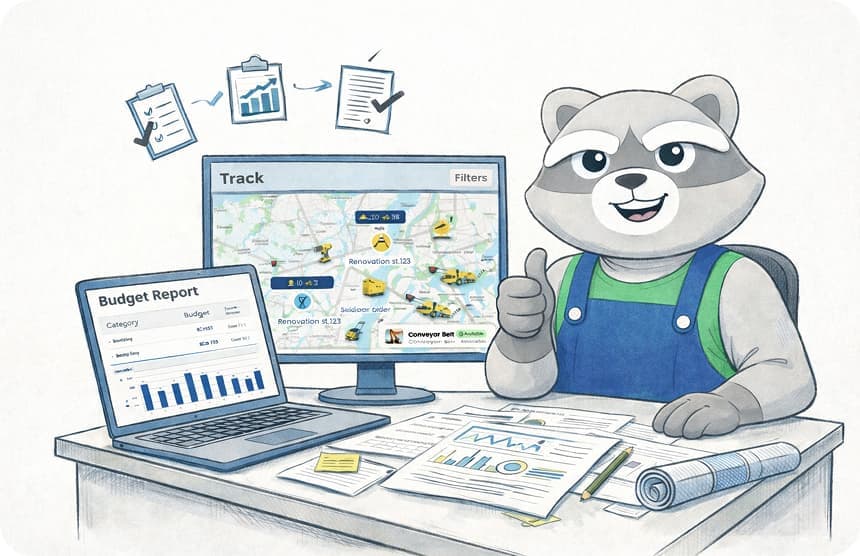
Construction Equipment Tracking System: The 2026 Guide to Field Efficiency
Discover how a modern construction equipment tracking system can cut losses, automate logs, and boost ROI. Our 2026 guide helps you gain total fleet visibility.
by Sheldon Huang
|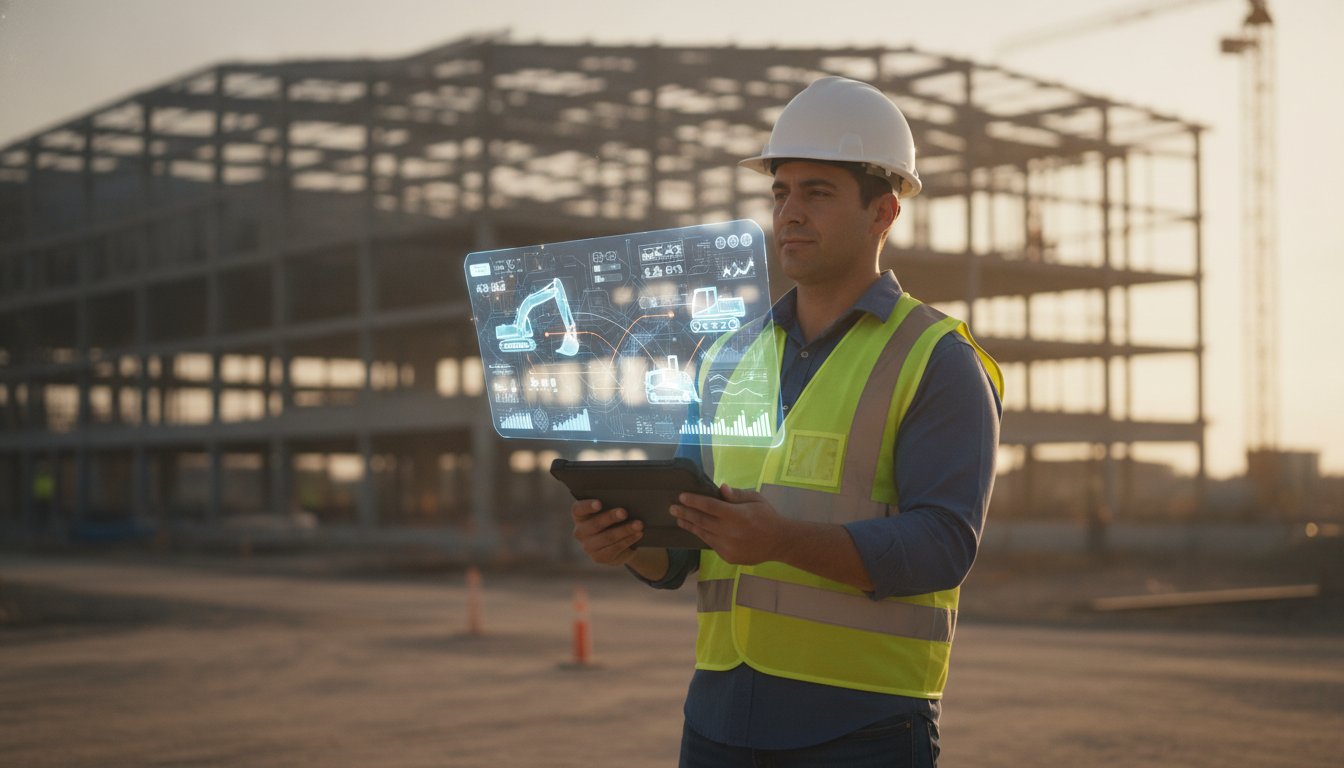
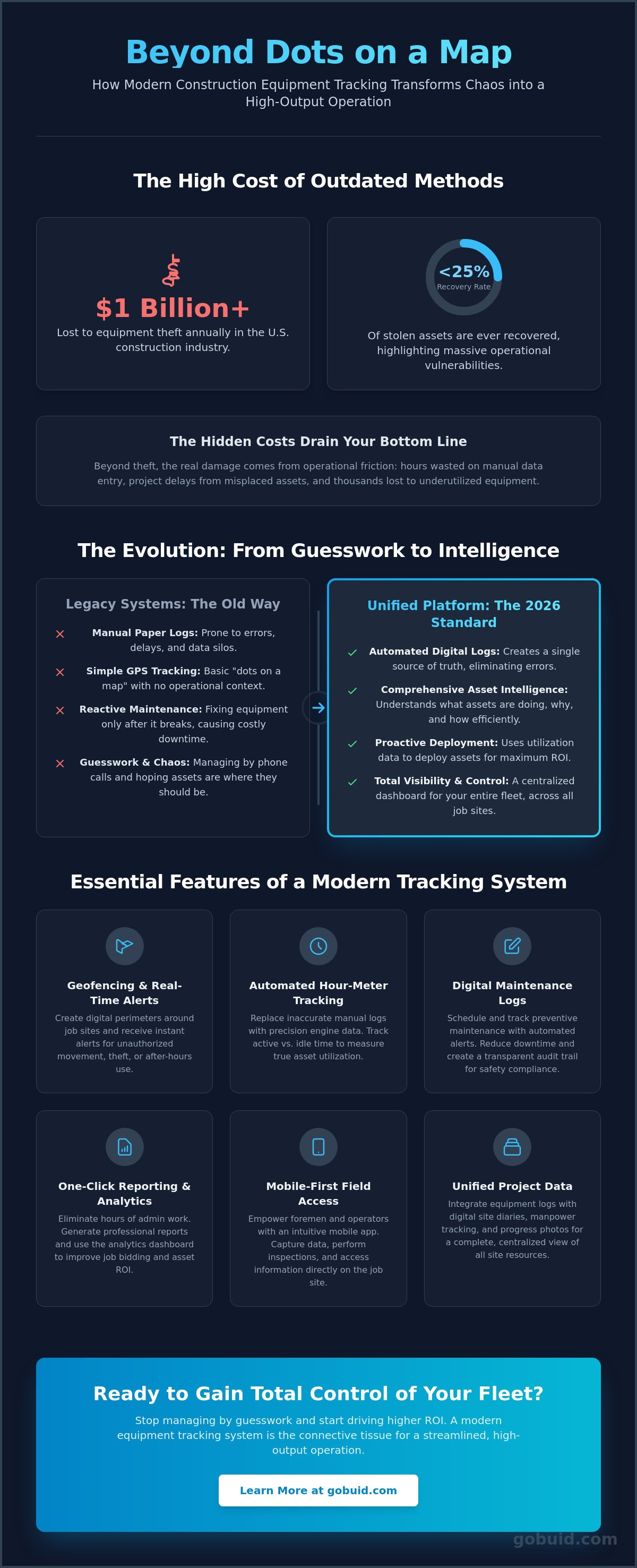
The U.S. construction industry loses over $1 billion every year to equipment theft, yet less than 25% of those assets ever make it back to the job site. Beyond the immediate hit of a stolen machine, the deeper cost lies in the hours your team spends on manual data entry and the thousands of dollars lost to underutilized assets. Implementing a modern construction equipment tracking system isn't just a security measure. It's the connective tissue that turns a chaotic fleet into a streamlined, high-output operation.
You know the frustration of calling three different foremen just to locate a single skid steer or spending your weekend reconciling messy paper logs. It's time to stop managing by guesswork. This 2026 guide outlines how to eliminate administrative overhead and gain total visibility over your assets with integrated digital tools. You'll learn how to automate equipment logs, generate professional reports in one click, and use real-time utilization data to drive higher ROI. We're moving past simple GPS dots on a map toward a unified data point that powers your entire field strategy.
Key Takeaways
- Move beyond simple GPS location to a unified platform that provides comprehensive asset intelligence and utility.
- Prioritize mobile-first features like geofencing and digital maintenance logs to empower field foremen and reduce operational friction.
- Deploy a modern construction equipment tracking system to centralize data and gain total visibility across multiple job sites.
- Automate daily documentation with one-click reporting to eliminate hours of manual administrative overhead.
- Leverage a project analytics dashboard to turn equipment utilization data into more accurate job bidding and improved asset ROI.
- ⭐ Learn more about GoBuid's feature - without the heavy enterprise price tag
##Table of Contents
##What is a Construction Equipment Tracking System in 2026?
To understand What is a Construction Equipment Tracking System in 2026?, you must look beyond the hardware. It's a unified platform that merges hardware location data with operational utility and reporting. Legacy systems focused on "dots on a map," but modern solutions provide deep asset intelligence. They bridge the gap between engine diagnostics and the actual progress reported in your equipment management workflow.
Relying on manual paper logs is a primary driver of project delays. These outdated methods create data silos, leading to budget overruns that managers don't see until it's too late. Integrating hardware telematics with digital site diaries is now the industry standard for maintaining a competitive edge.
To better understand this concept, watch this helpful video:
The Evolution from GPS to Integrated Asset Management
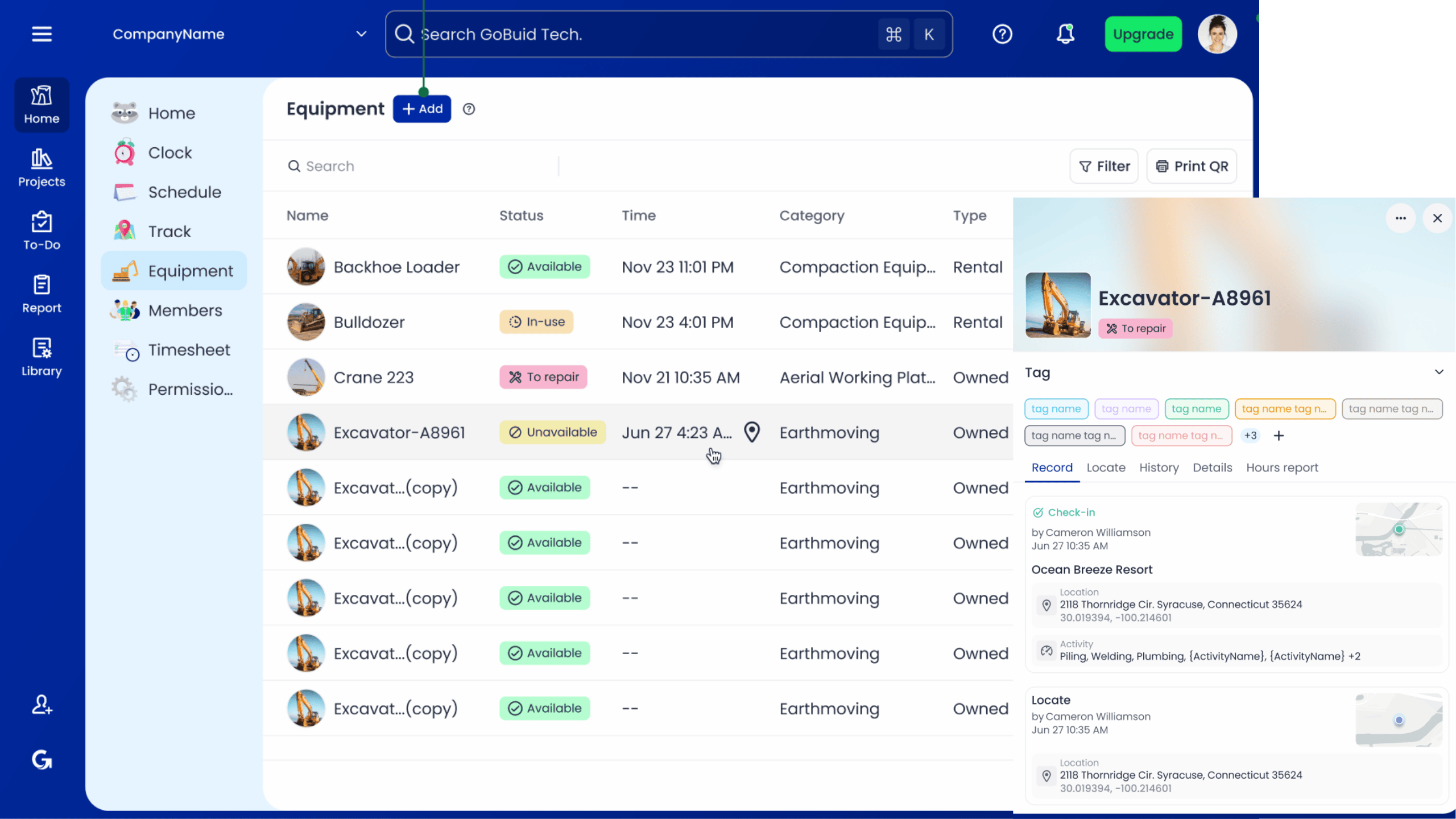
Why Real-Time Visibility Matters for National Fleet Managers
##Key Features to Look for in Equipment Tracking Software
Stop chasing paper. Start tracking iron. A modern construction equipment tracking system must do more than ping a location. It needs to solve the administrative bottleneck that slows down your field teams. Prioritize features that drive immediate action and provide clear accountability across every job site.
Geofencing, hour-meter tracking, and digital maintenance logs are non-negotiable. Geofencing creates digital perimeters that alert you to unauthorized movement. Hour-meter tracking replaces manual clock-watching with precision engine data. These aren't just features; they're safeguards for your bottom line. Field foremen need tools designed for the job site, not the office. A mobile-first interface ensures data entry happens where the work is. Use Customised forms to capture specific telemetry like fuel consumption or hydraulic pressure. Integrating this fleet data with Manpower Tracking gives you a total overview of site resources in one centralized place.
Automated Reporting and Digital Site Diaries
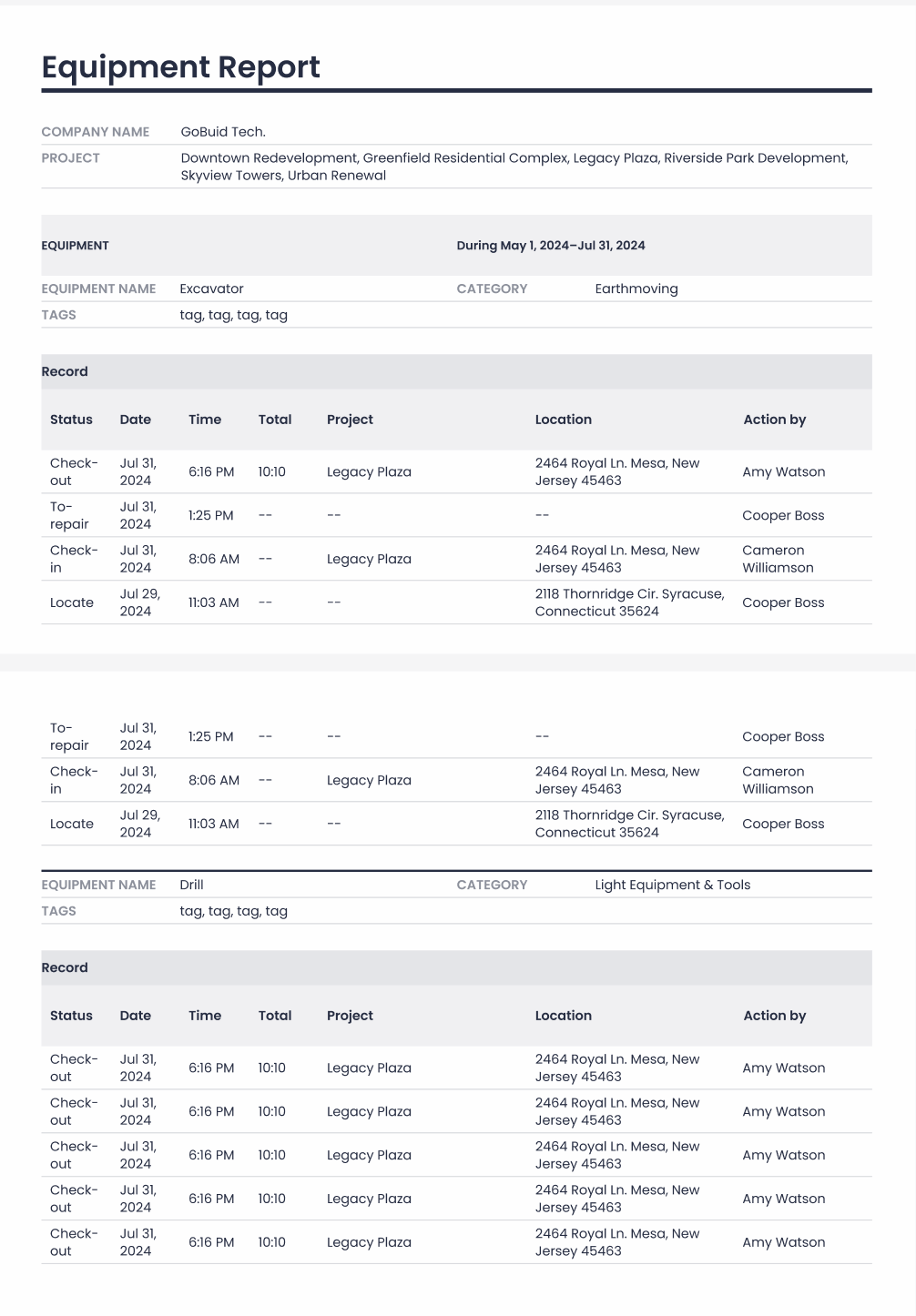 Manual entry leads to errors and delays. Your tracking system should automatically populate your digital site diary. This creates a unified record where equipment logs live alongside Progress Photos. This visual proof validates engine hours and project status simultaneously. Industry leaders emphasize Maximizing ROI with One-Click Construction Reporting as a key driver for modern operational success.
Maintenance Scheduling and Preventive Alerts
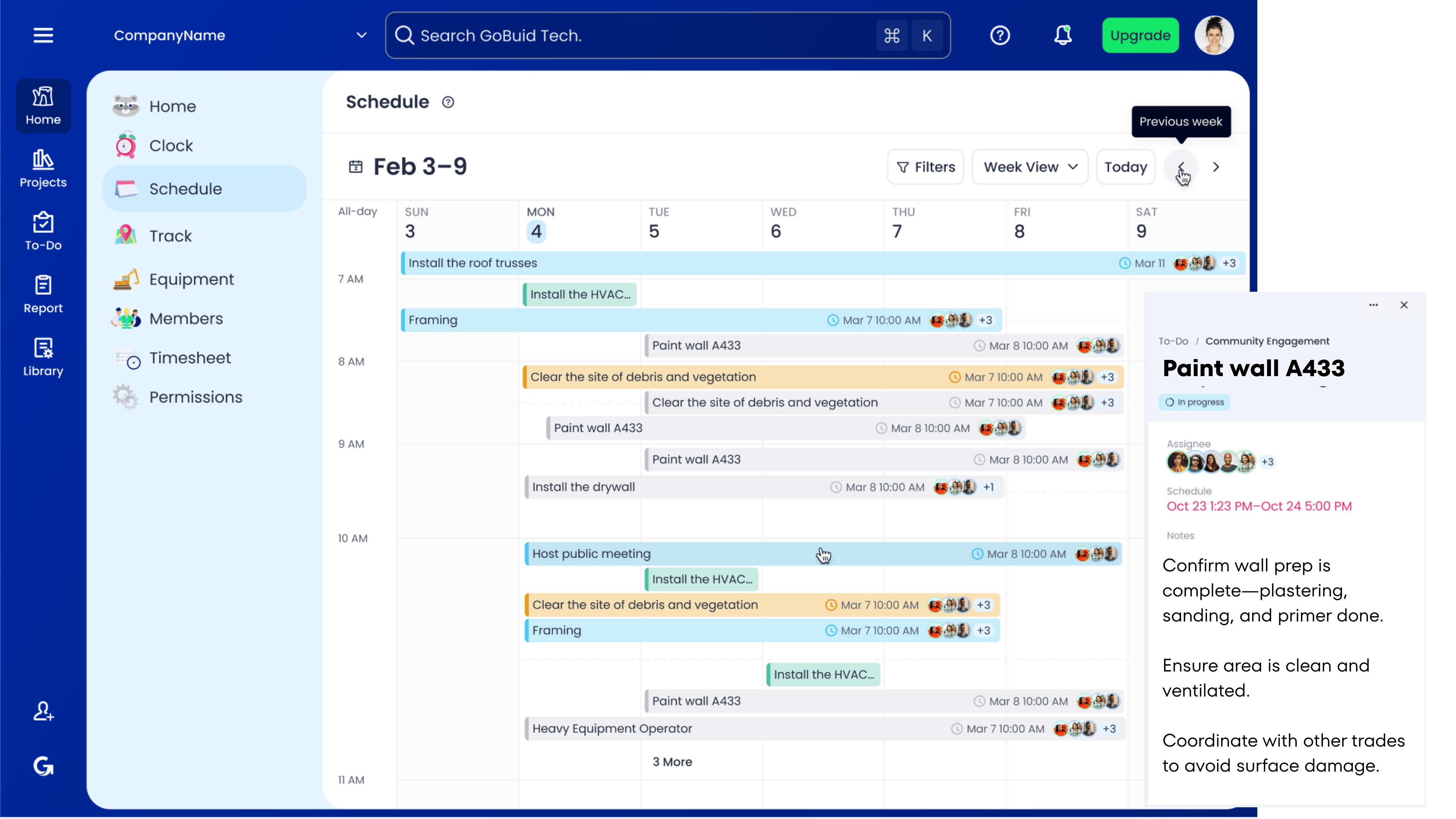 Reactive maintenance is a profit killer. Tracking systems reduce downtime by alerting teams before a failure happens. These alerts should tie directly into your Safety & Quality Inspections. When maintenance is documented and proactive, site safety increases and project timelines remain intact. This transparent audit trail ensures your fleet stays compliant and your operators stay safe.
Ready to centralize your operations? Explore how our Equipment Management tools can tighten your project control.
##Maximizing ROI with One-Click Construction Reporting
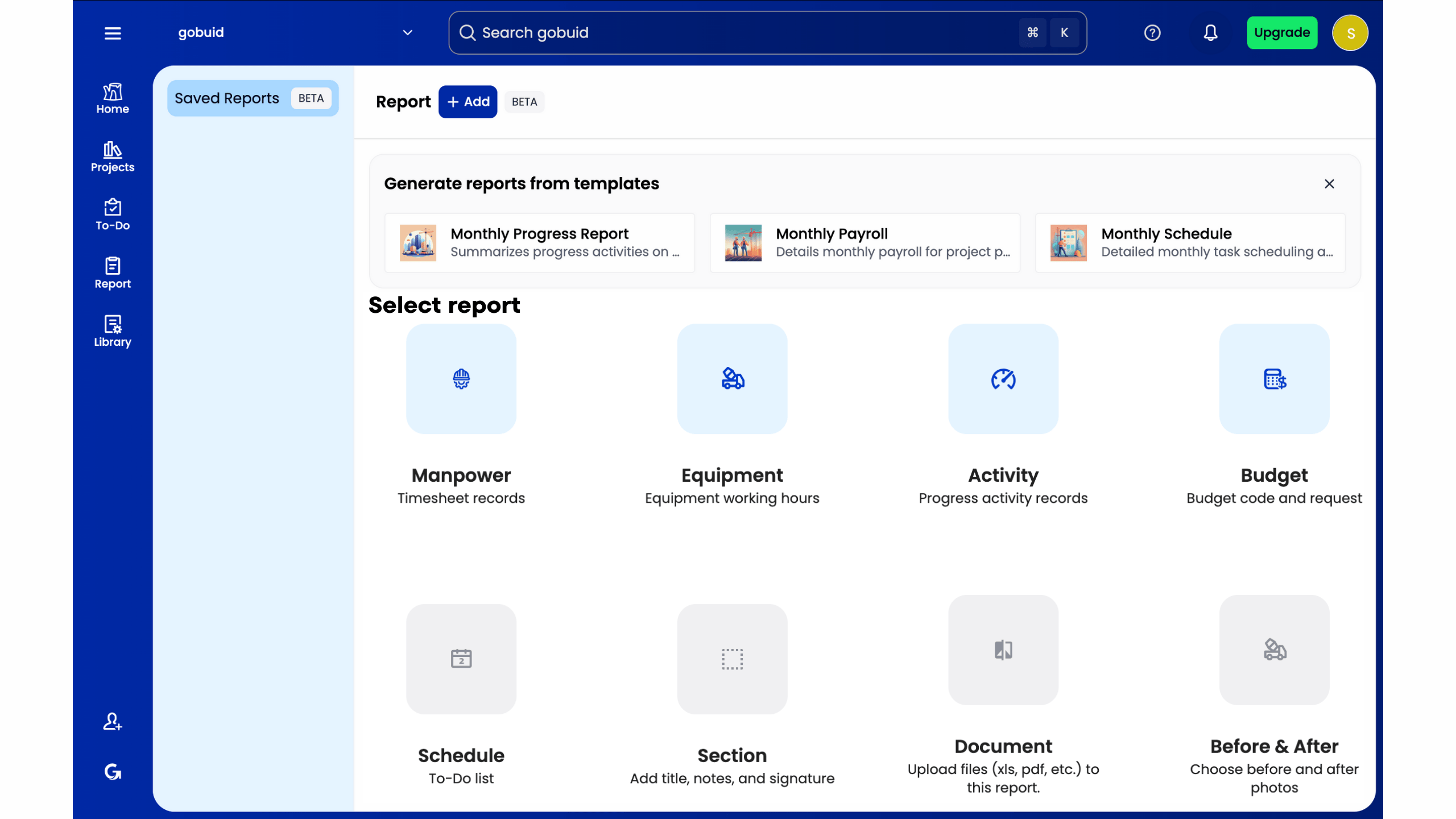
High-speed reporting is the ultimate lever for project managers. A construction equipment tracking system that forces you to dig through tabs or manually reconcile spreadsheets is a failure of design. Efficiency comes from immediacy. Implementing one-click reporting transforms raw telemetry into actionable intelligence instantly. This isn't just about convenience. It's about reclaiming the work day.
By centralizing data in a Project Analytics Dashboard, you gain a clear view of fleet performance across all sites. This visibility allows you to scale operations based on real-time demand rather than intuition. Whether you're scaling up for a surge or thinning out a fleet for a smaller project, having a flexible approach to your software and fleet management ensures you aren't paying for what you don't use. Secure your margins by shifting from reactive fixes to proactive, data-driven management.
Eliminating Administrative Overhead in the Field
Manual Excel logs are a legacy burden. They're slow, prone to error, and disconnected from the physical job site. Automated digital reporting removes this friction entirely. Modern managers save up to 40% of their day by automating site documentation. This time is better spent on high-value tasks like site safety and team coordination. When the system handles the paperwork, the team can focus on the build.
Strategic Bidding Using Historical Equipment Data
Winning a bid requires precision. If you don't know your exact machine usage costs, you're either overbidding and losing work or underbidding and losing profit. Accessing historical data through your construction equipment tracking system provides the granular detail needed for competitive estimates. Stakeholders and clients value this level of transparency. Research into Key Features to Look for in Equipment Tracking Software shows that consistent monitoring directly correlates with better project outcomes. Use your data to prove your efficiency and win the next contract with confidence.
##Modernize Your Field Strategy
Stop losing hours to administrative bottlenecks. Centralize your documentation and gain immediate insights through a real-time project analytics dashboard. It's time to replace guesswork with data-driven bidding and proactive maintenance schedules. Streamline your fleet management with GoBuid's one-click reporting and experience the power of professional report generation. This is the precision of modern digital tools applied to physical realities. Build faster, bid smarter, and regain control over your project margins today.
##Frequently Asked Questions
What is the best way to track heavy construction equipment?
The best way to track heavy machinery is through an integrated construction equipment tracking system that pairs GPS hardware with digital site diaries. This combination provides location data alongside real-world utility. You gain a complete view of whether an asset is actively contributing to project milestones or sitting idle.
How much does a construction equipment tracking system cost?
Total cost depends on the scale of your fleet and the specific tracking features you require. Most providers utilize a subscription model that includes software access and platform maintenance. You should factor in both the initial setup requirements and the ongoing monthly fees for data transmission and project analytics.
Can I track equipment without installing permanent GPS hardware?
You can track assets without permanent hardware by utilizing digital check-ins and QR code systems. This method relies on field foremen using mobile apps to update equipment status and location manually. It's a practical way to manage a construction equipment tracking system for smaller tools, attachments, or short-term rentals where hardware installation isn't feasible.
How does equipment tracking improve site safety and compliance?
What is the difference between asset tracking and fleet management?
Asset tracking identifies where a machine is located and its current status. Fleet management covers the entire operational lifecycle, including maintenance costs and operator performance. Modern platforms utilize the AEMP 2.0 standard to integrate data from mixed fleets into a single dashboard, providing a unified data point for all assets.
How do I generate a construction equipment usage report quickly?
Use a platform that offers one-click reporting to generate usage summaries in seconds. These systems automatically aggregate data from your digital site diary and equipment logs. This eliminates the need for manual data entry, allowing you to produce professional project analytics for stakeholders with minimal effort.