Guide to Micro-piles (Pin Piles): Benefits & Construction
by Sheldon Huang
|
A single decimal point error in your grout volume log can turn a profitable deep foundation project into a $50,000 structural liability before the rig even leaves the site. You know that installing Micro-piles (Pin Piles) in restricted access environments demands surgical precision and constant vigilance. Manual pile logging is a liability that invites human error, especially when your team is tracking real-time pressure and volumes in the mud. It's time to trade the clipboard for a more reliable system.
You've likely felt the frustration of chasing down illegible field notes or waiting 48 hours for a daily report that should have been instant. This guide bridges that gap. You'll master the core engineering mechanics of pin piles while learning to automate the heavy documentation required for deep foundation success. We're breaking down the technical fundamentals and providing a roadmap to streamline your pile logs. This ensures your field-to-office communication stays as solid as the foundations you build. Let's get to work.
Key Takeaways
Understand the engineering behind Micro-piles (Pin Piles) and why they are essential for high-load projects in restricted-access environments.
Master the critical phases of Micro-piles (Pin Piles) installation, from precision drilling with compact rigs to the strategic insertion of reinforcement and grout.
Identify the hidden risks of manual site diaries and how they compromise project visibility and administrative efficiency on Micro-piles (Pin Piles) jobsites.
Streamline your submittals with digital logs specifically designed for Micro-piles (Pin Piles) to provide real-time data for engineering approval and site compliance.
Establish a single source of truth for your Micro-piles (Pin Piles) foundation projects to ensure every data point is captured and reported without delay.
⭐ Learn more about GoBuid's feature - without the heavy enterprise price tag
Ensuring Compliance with One-Click Reporting
Engineering approval for Micro-piles (Pin Piles) hinges on the accuracy of your pile logs. Inaccurate data leads to rejected submittals and costly rework. Field teams often struggle with mud-stained notebooks and manual data entry; this chaos creates a 25% lag in reporting cycles. Digital documentation eliminates this friction. It transforms raw site data into professional records that meet strict safety compliance standards instantly.
Contractors need to identify production bottlenecks before they erode profit margins. By leveraging project analytics, project managers track drill speeds and grout volumes in real-time. If a specific rig falls 15% behind the daily target, you see it immediately. This visibility allows for mid-day corrections rather than end-of-week apologies. Moving from chaotic notes to automated systems ensures every pile meets the design load requirements without administrative delays.
The GoBuid Advantage for Foundation Contractors
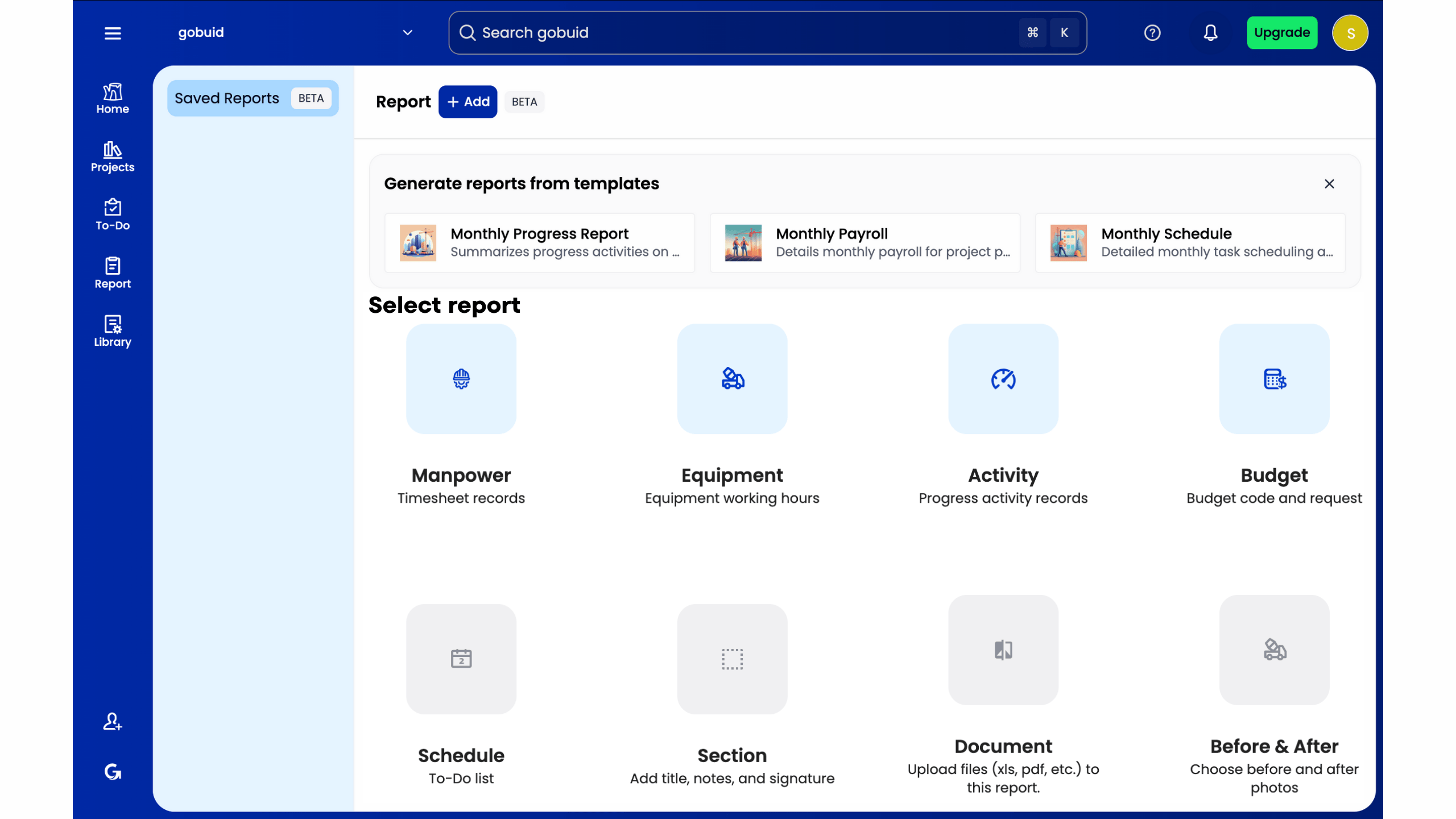
Precision is the standard for deep foundation work. You can generate reports in one click to summarize daily piling progress. This feature saves an average of two hours per shift for site foremen. It replaces fragmented notes with a centralized source of truth. Every record is organized, searchable, and ready for engineer review.
Quality claims can stall a project for months. Integrating progress photos into your daily logs provides an indisputable visual record of every Micro-piles (Pin Piles) installation. These timestamped images defend your work against future disputes. When an inspector asks for proof of grout consistency or reinforcement placement, you have the data ready. Stop chasing paper; start delivering professional, automated results that protect your bottom line.
What are Micro-piles (Pin Piles) and When are They Necessary?
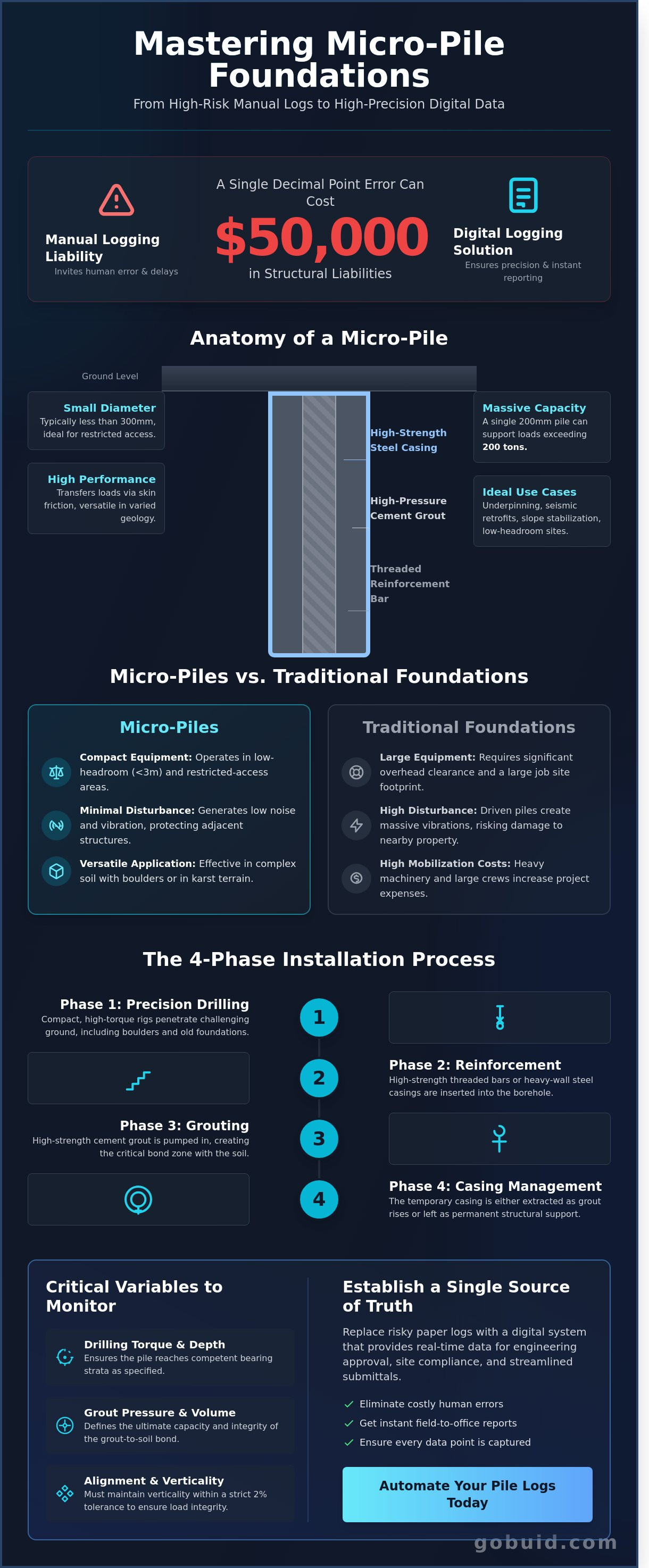
Micro-piles (Pin Piles) are high-performance, small-diameter foundation elements. These bored and grouted replacement piles typically measure less than 300mm in diameter. Engineers specify them when site conditions prohibit heavy machinery or when soil conditions are unpredictable. They consist of high-strength steel casing, threaded bars, and high-pressure cement grout. This combination allows a single 200mm pile to support loads exceeding 200 tons in optimal soil conditions.
Understanding What are Micro-piles (Pin Piles)? is critical for urban project managers. These systems excel in underpinning existing structures and seismic retrofitting. They provide a stable foundation without compromising the integrity of adjacent buildings. If you're working in a basement or under an active bridge, these are your primary solution for structural support.
See how these foundation elements are installed in the field through this animation:
Micro-piles (Pin Piles) transfer structural loads through skin friction rather than end bearing. This mechanical property makes them versatile across varying geological profiles, including karst terrain or areas with high boulders. They're essential for several specific scenarios:
Strengthening foundations for vertical building expansions.
Stabilizing slopes near critical infrastructure.
Supporting new loads in low-headroom environments where a standard rig can't operate.
Providing deep foundation support in sensitive environments.
Micro-piles vs. Traditional Deep Foundations
Traditional driven piles create massive vibrations that can crack neighboring walls or damage sensitive equipment. Drilled shafts require large footprints and heavy mobilization costs. Micro-piles eliminate these risks. They generate minimal noise and vibration during installation, making them the standard choice for urban infill projects. On a job site with only 3 meters of overhead clearance, a micro-pile rig keeps the project moving. It turns impossible site constraints into manageable tasks by bridging the gap between restricted access and high load requirements.
The Micro-pile Installation Process: From Drilling to Grouting
Installing Micro-piles (Pin Piles) requires surgical precision and heavy-duty equipment. The process starts with Phase 1: Drilling. Crews use compact, high-torque hydraulic rigs designed for low-clearance environments. These machines often operate with less than 10 feet of overhead space. They penetrate boulders, cobbles, and old foundations that would stop a standard auger cold. This capability makes the Micro-piles (Pin Piles) method the go-to choice for seismic retrofits and foundation underpinning in dense urban zones.
Phase 2 involves inserting the reinforcement. Depending on the design load, we use high-strength all-thread bars or heavy-wall steel casings. Phase 3 is the grouting stage. This is the heartbeat of the operation. Operators pump high-strength cement grout into the borehole to create the bond zone between the soil and the reinforcement. Finally, Phase 4 addresses casing management. We either extract the temporary casing as the grout rises or leave it as permanent structural support. This decision rests on soil stability and the specific need for lateral resistance on the job site.
Technical Variables to Monitor
Drilling torque and depth are your primary indicators. You must ensure the pile hits the competent bearing strata specified in the boring logs, often requiring a 0.5-inch penetration rate per minute in hard rock. Grout pressure and volume are the critical metrics that define the ultimate capacity of the grout-to-soil bond. Alignment matters too. You can't afford a lean. Maintain verticality within a 2 percent tolerance, even when working on steep 30-degree slopes. Referencing Engineering & Documentation from Caltrans ensures your team stays compliant with high-stakes geotechnical standards. Managing these variables is easier when you centralize your field reports for instant visibility across the project team.
Managing & Documenting Micro-pile Projects Effectively
Micro-piles (Pin Piles) present a unique logistical hurdle. A single foundation might require 150 individual piles, each demanding precise tracking of drill depth, grout pressure, and installation time. Relying on paper site diaries is a recipe for failure. Illegible handwriting and lost logs cause an average 20% delay in field-to-office reporting. When data stays trapped in a foreman's pocket, project managers can't see the real-time burn rate. This disconnect leads to costly grout overruns and missed deadlines.
The "digital foreman" approach replaces guesswork with raw data. Capturing progress photos and geolocated timestamps ensures accountability at every drill point. By using customised forms, teams standardize their pile logs across the entire project. This eliminates variation between different crews and ensures every data point is captured. The Micro-pile Installation Process requires strict adherence to design specs. Referencing the FHWA manual on The Micro-pile Installation Process helps crews maintain compliance while documenting every cubic foot of grout pumped in real-time.
Bridging the Gap Between Field and Office
Centralized data ensures project managers have a single source of truth for production rates. You can't manage what you don't measure. Link your pile logs to equipment management to track drill rig uptime and scheduled maintenance. This prevents 12% of typical mechanical failures that occur due to overlooked service intervals. High-speed data sync means the office sees what the rig operator sees, immediately. This visibility allows for instant adjustments to the schedule before minor delays turn into major liquidated damages.
Master Your Foundation Documentation
Precision engineering requires a documentation process that matches the technical demands of the job site. Micro-piles (Pin Piles) provide the essential support needed for low-headroom and high-load scenarios, but their success depends on accurate, real-time data from the field. A 2023 FMI Corporation report highlights that construction professionals spend 35% of their time on non-productive tasks like hunting for project data. You can eliminate this waste with GoBuid. Our digital site diaries are designed for rugged construction environments, providing a single source of truth for every grout stroke and drill depth. You'll get real-time visibility into manpower and equipment productivity to keep your margins protected. We offer no lock-in contracts because we believe software should prove its value on every shift. Stop settling for messy field notes and start leveraging a tool that connects the rig to the office instantly. It's time to streamline your workflow and secure your project's legacy.
Stop wasting hours on manual pile logs. Generate reports in one click with GoBuid.
Build with confidence knowing your data is as solid as your foundations.
Frequently Asked Questions
What is the typical diameter of a micro-pile?
Micro-piles typically range in diameter from 60mm to 300mm. These small-diameter foundation elements utilize high-strength steel casings and threaded bars to transfer structural loads to deeper, more stable strata. Their slim profile allows teams to operate in confined spaces where standard 600mm piles can't reach. It's a practical choice for retrofitting existing structures without disrupting daily operations.
How much load can a single pin pile support?
A single pin pile can support loads ranging from 50 to 200 tons depending on the specific geological profile. High-capacity steel reinforcement and specialized pressure-grouting techniques provide this strength despite the small diameter. Use these when you need high-performance foundations in challenging soil conditions. They offer a streamlined path to structural stability without the massive footprint of traditional deep-foundation machinery.
Can micro-piles be used for both compression and tension?
Micro-piles (Pin Piles) support both compression and tension loads with high efficiency. The high-capacity bond between the cement grout and the surrounding soil or rock allows them to resist uplift and lateral forces effectively. This versatility makes them essential for seismic upgrades and tall buildings. You gain a reliable foundation that handles complex stress patterns through a single, proven installation method.
What are the main advantages of using micro-piles in urban construction?
Low vibration and a compact equipment footprint are the primary advantages in urban construction environments. Traditional impact hammers often exceed 100 decibels, but micro-pile rigs operate at much lower noise levels. This protects adjacent historical buildings from vibration damage and ensures your site stays within local noise limits. It's the most efficient way to manage foundation work in high-density city blocks.
How do you test the quality and integrity of a micro-pile?
You verify the quality and integrity of a micro-pile through static load tests and verification tests on at least 5% of the installation. Engineers monitor grout pressure and volume in real-time to confirm the bond zone's effectiveness. Recording these data points in your field reports creates a clear audit trail for project stakeholders. This rigorous testing ensures every pile meets the 2.0 factor of safety required for structural certification.