10 Essential Toolbox Safety Topics for Construction Site Compliance
by Guillermo Sánchez
|
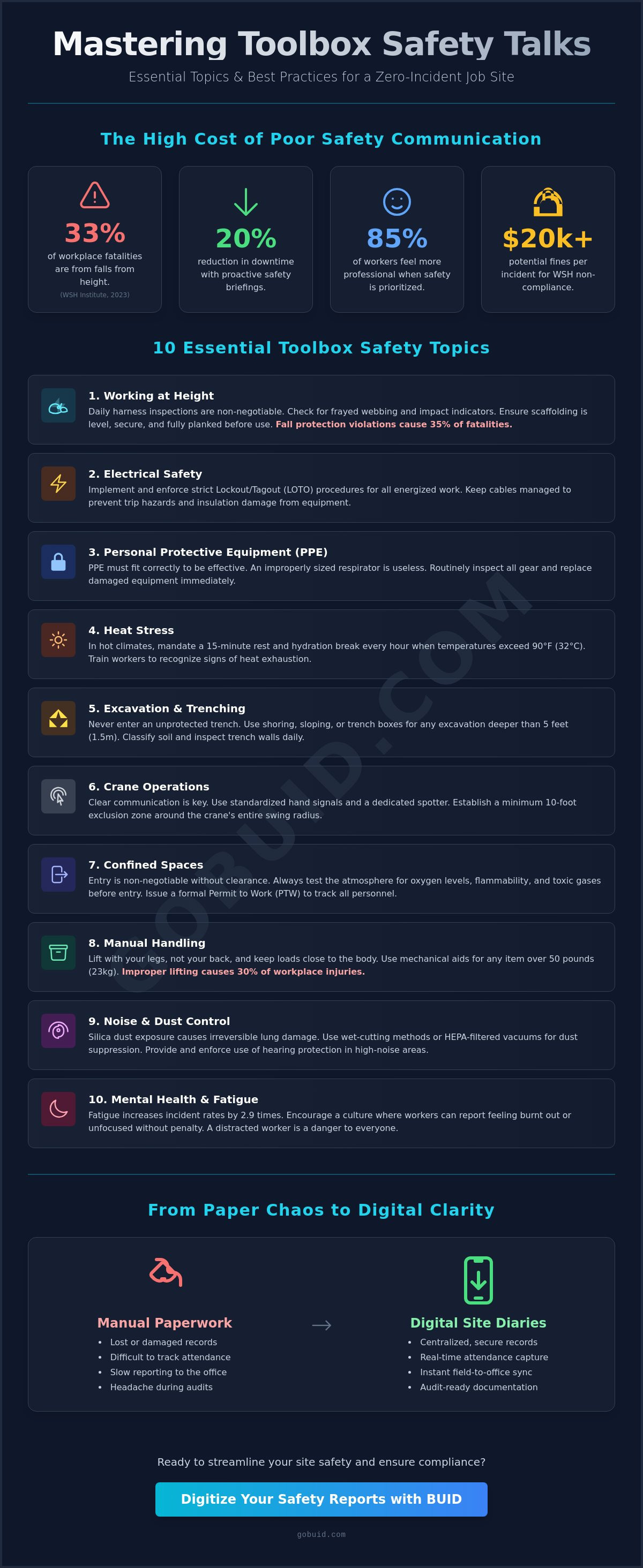
Your morning safety briefing is likely the most ignored 15 minutes on your job site. When crews hear the same repetitive scripts every Monday, they stop listening before the first coffee break. Stale toolbox safety topics don't just bore your team; they create a dangerous gap in site compliance. In 2023, the WSH Institute reported that falls from heights remained a primary cause of concern, accounting for 33% of all workplace fatalities. This data proves that safety communication needs a total overhaul to protect your workers and your bottom line.
You know that paper attendance sheets are a headache to track and even harder to produce during a surprise audit. It's time to bridge the gap between the field and the office with a streamlined approach. This guide helps you master the art of site safety briefings with 10 curated topics and a professional framework for documenting compliance. You'll learn how to move from messy paperwork to digital field reports that keep your site at zero incidents and your records audit-ready with minimal effort. We'll break down the essential topics you need to cover to stay compliant with the WSH Act while keeping your crew engaged.
Key Takeaways
Establish a proactive safety culture by implementing high-impact briefings that ensure site compliance and crew awareness.
Master 10 essential toolbox safety topics, including harness inspections and electrical lockout procedures, to mitigate high-risk hazards.
Optimize your delivery by selecting strategic on-site locations and preparing site-specific examples that drive team engagement.
Eliminate the friction of lost records by transitioning from paper attendance sheets to streamlined digital site diaries.
Bridge the gap between the field and the office with centralized documentation that provides a single source of truth for every project.
⭐ Learn more about GoBuid's feature- without the heavy enterprise price tag
Digitising Safety Documentation: From Talk to Report
Paper records are a liability. Lost attendance sheets and illegible site records don't just cause headaches; they fail audits. Industry research indicates that construction professionals spend nearly 35% of their time on non-productive tasks like hunting for project information. Digital site diaries bridge the gap between the field and the office by moving these records to the cloud. This transition ensures that your toolbox safety topics are documented, searchable, and secure.
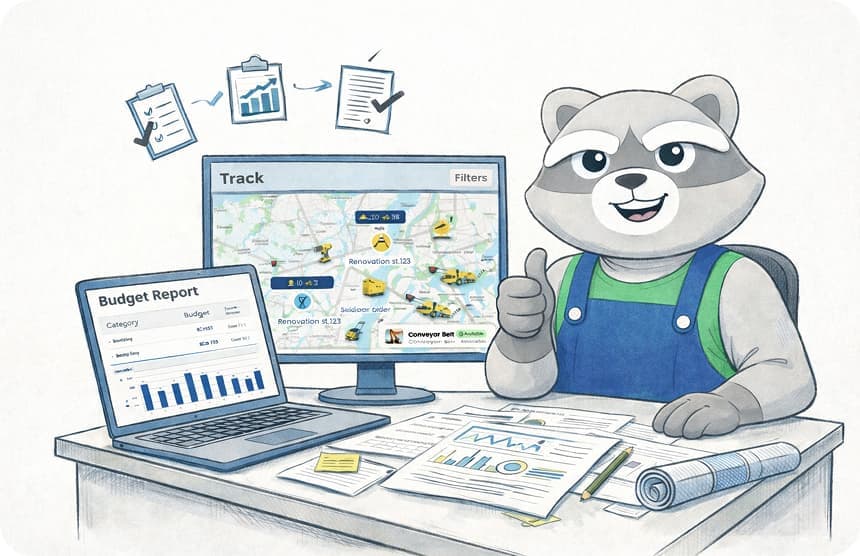
Integrating safety talks into your daily manpower tracking workflow changes the compliance game. If a worker is on the clock, they must be linked to a safety briefing. This creates a single source of truth for all site documentation. It eliminates the confusion during incident investigations. You gain a centralized record that proves your commitment to site safety every single day. The office knows exactly what happened in the field without waiting for a Friday paperwork drop.
One-Click Safety Reporting
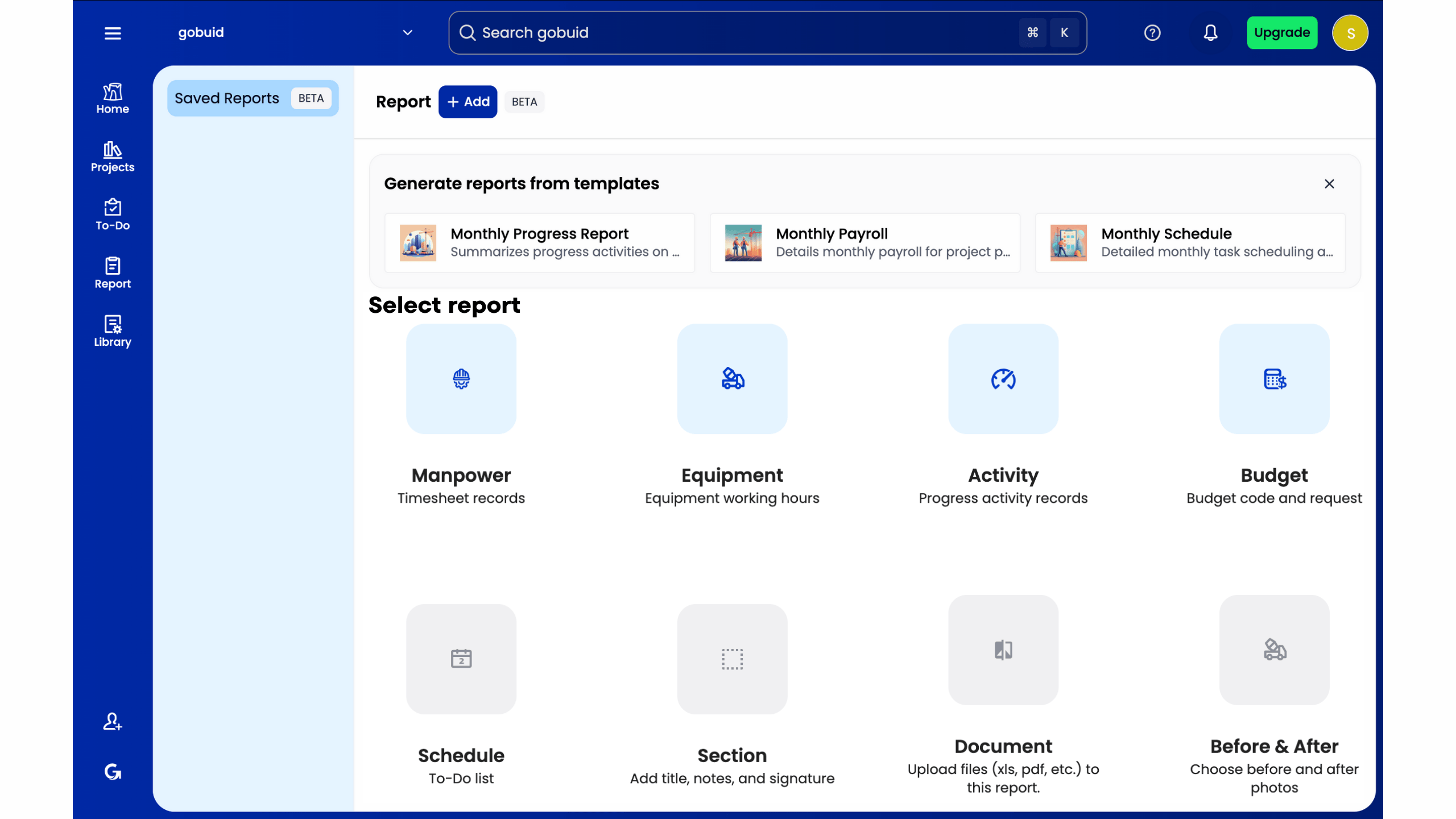
Safety managers shouldn't spend hours chasing signatures. You can generate reports in one click to satisfy safety audits instantly. This speed is critical when project stakeholders demand status updates. Real-time data in the Project Analytics Dashboard allows you to monitor compliance across multiple sites from one screen. Automating the filing of safety briefings within the Digital Site Diary keeps your records organized without manual data entry.
Capturing Proof of Compliance
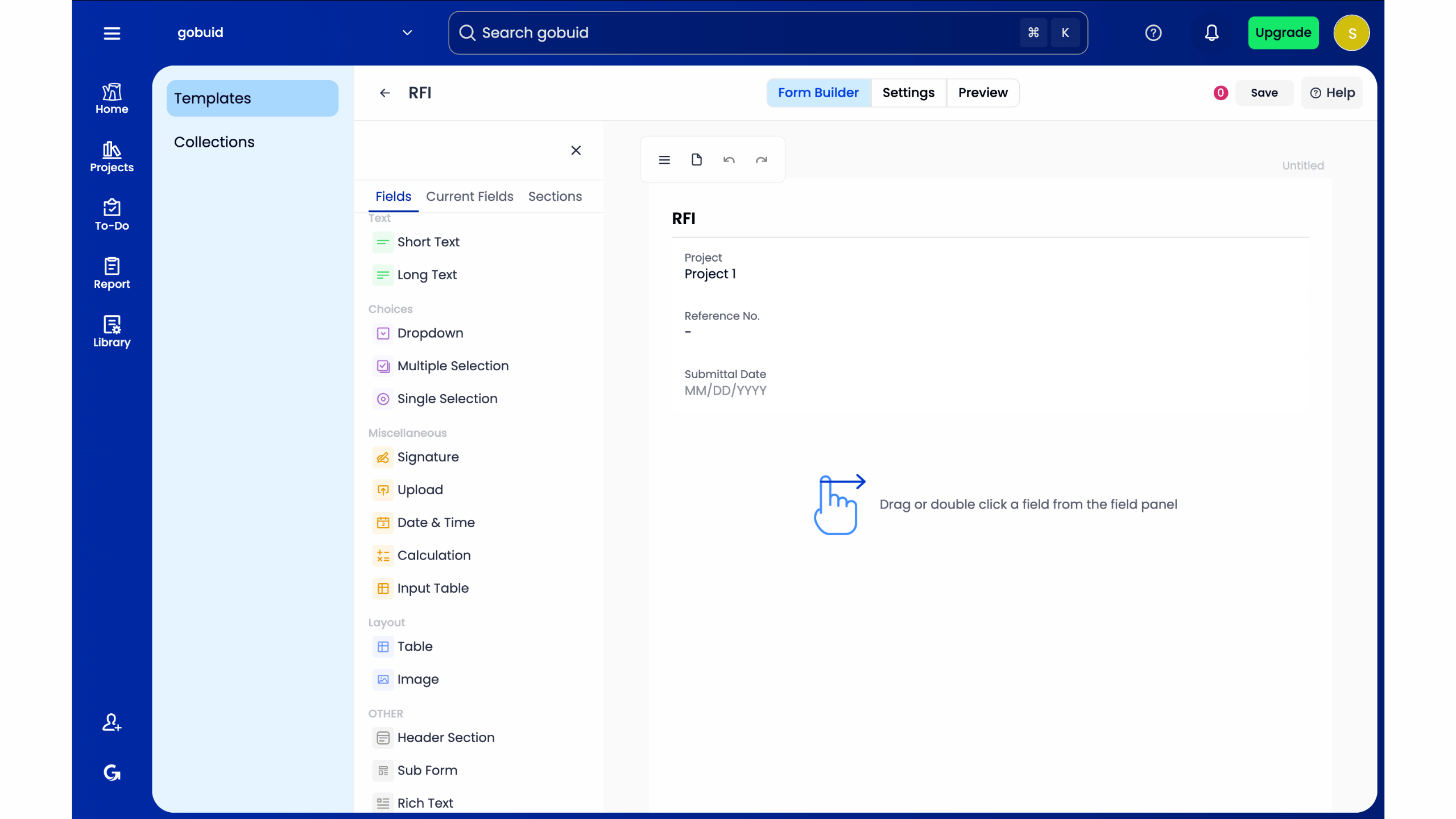
Compliance requires more than just a signature. Use customised forms to record attendance and specific takeaways from your toolbox safety topics. Digital forms prevent workers from skipping critical fields, ensuring every report is complete. Enhance your documentation by attaching progress photos to safety logs. These images provide visual evidence that safety protocols were active on the ground. Ready to eliminate safety paperwork? Contact GoBuid today.
The Role of Toolbox Talks in Modern Construction Safety
Toolbox talks are short, 10 to 15 minute safety briefings held directly at the job site before a shift begins. They serve as a critical checkpoint for the entire team. These sessions move beyond theory and focus on the immediate hazards of the day. Effective management of toolbox safety topics ensures that every worker understands their role in maintaining Construction site safety. It's about shifting the culture from passive compliance to active risk mitigation.
To better understand how to execute these briefings effectively, watch this helpful video:
Modern safety management requires more than just verbal instructions. You must document these briefings to maintain a legal paper trail for safety audits and site diaries. This documentation transforms a simple talk into a verifiable record of due diligence. Digital tools like Buid's reporting features allow site supervisors to capture attendance and key takeaways in real-time. This eliminates the lag between field activity and office records, turning a "box-ticking" exercise into a meaningful data point for project health.
Meeting National Safety Standards
Briefings must align with the Workplace Safety and Health (WSH) Act to avoid legal exposure. For large-scale projects, regular talks are a prerequisite for Building and Construction Authority (BCA) compliance. These meetings link directly to your Inspection Test Plan (ITP). This ensures that safety protocols match the specific technical requirements of the current project phase, keeping the site compliant with 2024 regulatory updates.
The ROI of Site Safety Briefings
Proactive safety isn't a cost; it's a strategic investment. Companies that prioritize daily toolbox safety topics often see a 20% reduction in downtime caused by near misses. This consistency builds professional accountability across the workforce.
Lower Insurance: Consistent safety records can lead to a 10% reduction in annual premiums.
Worker Morale: Survey data shows 85% of workers feel more professional when their safety is prioritized.
Fine Avoidance: Non-compliance with WSH standards can result in fines exceeding $20,000 per incident for serious violations.
10 Essential Toolbox Safety Topics for Site Teams
Effective toolbox safety topics bridge the gap between compliance and culture. Start with Working at Height. Fall protection violations account for 35% of construction fatalities according to OSHA. Inspect harnesses daily. Check for frayed webbing or impact indicators. Ensure scaffolding is level and secured to the structure before any crew member climbs. If equipment isn't 100% stable, it's not ready for use.
Electrical safety requires discipline. Implement strict lockout/tagout (LOTO) procedures for all live work. Manage cables to prevent trip hazards and insulation damage. PPE must fit. Improperly sized respirators fail to protect against particulates. Maintain gear to ensure it functions when needed. Heat stress is a dangerous threat in tropical climates. Implement a 15 minute rest period every hour when temperatures exceed 90 degrees Fahrenheit.
High-Risk Activity Focus
Excavation requires soil classification. Use shoring or trench boxes for any cut deeper than 5 feet. Crane operations rely on clear communication. Use standardized hand signals and establish a 10 foot exclusion zone around the swing radius. Confined space entry is non-negotiable. Test the atmosphere for oxygen levels and toxic gases before entry. Issue a formal Permit to Work (PTW) to track every person inside the space.
Health and Environmental Topics
Manual handling causes 30% of workplace injuries. Lift with your legs and keep the load close. Use mechanical aids for anything over 50 pounds. Control noise and dust. Silica dust exposure leads to irreversible lung damage. Use wet-cutting methods or HEPA vacuums. Mental health matters. Fatigue increases incident rates by 2.9 times. Watch for signs of burnout. If a crew member isn't focused, they're a risk to the entire team.
Centralize these safety checks within your digital forms and field reports to ensure nothing slips through the cracks during a busy shift.
Best Practices for Delivering Impactful Safety Briefings
Effective safety communication is the backbone of site compliance. It transforms generic toolbox safety topics into life-saving protocols. To lead a briefing that actually sticks, start with rigorous preparation. Review the daily schedule and identify three site-specific hazards before the crew arrives. Don't rely on a generic script. Instead, reference a specific punch list item or a recent near-miss recorded in your field reports to ground the talk in reality.
Environment dictates engagement. Choose a quiet staging area where the team can hear every instruction without competing with heavy machinery. Bring physical props to the circle. Handing around a worn-out harness with frayed stitching makes the danger tangible. Interaction is your best metric for comprehension. Replace "any questions?" with open-ended prompts like "What's the first thing you'll check on this scaffolding today?" to force active thinking.
The 15-Minute Rule
Brevity drives retention on a busy job site. Limit your briefing to 15 minutes to prevent cognitive overload. Structure the talk using a three-step framework: define the Problem, present the Solution, and mandate the Site-Specific Application. The Digital Foreman approach utilizes lean communication to ensure field teams receive clear, automated safety updates that move the project forward without wasting time.
Overcoming Language and Engagement Barriers
Managing a multi-national workforce requires a visual-first strategy. Use progress photos and diagrams to demonstrate "good" versus "bad" practices, as 65% of workers retain visual information more effectively than verbal instructions. Foster a culture where reporting near-misses is seen as a contribution to the team's success, not a reason for reprisal. Establishing this transparency ensures that 100% of hazards are identified before they cause an incident. Use toolbox safety topics as a starting point, but always pivot to the specific reality of your current project phase.
Stop chasing paperwork and start leading your crew with confidence. Explore Buid's centralized project management features today.
Modernize Your Site Safety Standards
Effective site management relies on more than just ticking a box. It requires a strategic approach to your toolbox safety topics to ensure every worker returns home safely. By prioritizing high-risk areas like fall protection and electrical hazards, you transform routine briefings into life-saving protocols. Transitioning from paper-based logs to a centralized digital system eliminates the administrative lag that stalls project momentum. Modern construction demands speed; manual documentation is a bottleneck you can't afford.
Maintaining visibility across the field and office shouldn't be a struggle. You need a single source of truth that bridges the gap between site activity and regulatory requirements. GoBuid provides the technological edge needed to automate these workflows. With BCA-compliant reporting and real-time project analytics, you gain immediate control over your safety documentation. There are no lock-in contracts; just a lean, purposeful tool designed for the modern contractor who values transparency and results.
Streamline your site safety reporting with GoBuid and build a more accountable project today. Your team's safety is the foundation of every successful build.
Frequently Asked Questions
How often should toolbox talks be conducted on-site?
Conduct toolbox talks daily to ensure maximum site awareness. OSHA Standard 1926.21(b)(2) requires employers to instruct employees in hazard recognition, though it doesn't mandate a daily schedule. Industry leaders at the CPWR found that 82% of top-tier contractors hold these meetings every morning. This routine keeps toolbox safety topics top of mind. It ensures every worker starts their shift with a clear focus on immediate site risks.
Is it a legal requirement to document every toolbox talk?
Documentation is essential for meeting OSHA requirements and protecting your company against litigation. If an inspector arrives, they'll demand proof of training logs for 100% of your crew. Use a centralized digital platform to log dates, attendee lists, and the specific toolbox safety topics discussed. This practice creates a verifiable audit trail. It bridges the gap between field activity and office compliance records.
What are the most common mistakes made during safety briefings?
The most frequent error is extending briefings past 10 minutes, which leads to a 50% decrease in worker focus. Supervisors often make the mistake of reading generic scripts that don't reflect current site conditions. Briefings shouldn't be a lecture. Focus on 3 specific hazards relevant to the day's tasks. This keeps the information practical and prevents your team from tuning out during critical safety updates.
How can I make toolbox talks more engaging for workers?
Turn your briefings into interactive demonstrations rather than passive lectures. Data from the National Safety Council suggests that hands-on training improves information recall by up to 75%. Ask a lead carpenter to demonstrate a 3-point contact on a ladder or identify a faulty harness. Use specific examples from your current site. This approach turns a routine meeting into a high-impact strategy session that empowers your crew.
Can digital signatures be used for safety attendance tracking?
Digital signatures are a legal and efficient way to track safety attendance under the ESIGN Act of 2000. Switching from paper to digital logs reduces administrative overhead by 25% and eliminates the risk of lost paperwork. These records sync instantly to a centralized dashboard. It provides a real-time view of compliance across all projects. You gain a single source of truth that's accessible for any audit.