
Drilled Shafts (Caissons): A Guide to Construction and Site Management
by Guillermo Sánchez
|
Industry data shows that 35% of heavy civil projects face significant delays due to fragmented field documentation and manual data entry. You know that managing Drilled Shafts (Caissons) requires more than just heavy steel and grit. It demands precision in the dirt and even more precision at the desk. It's frustrating when your specialized drilling crews spend 90 minutes every night reconciling paper logs while your expensive equipment utilization remains a mystery. You need a single source of truth that moves as fast as your auger.
We agree that the lag between the field and the office is the biggest threat to your project margin. This guide will help you master the technical essentials of deep foundation construction while showing you how to reduce reporting time by 60% using digital site management. You'll learn to track equipment utilization in real time and ensure 100% safety compliance without the administrative overhead. We're covering core drilling methods, quality control standards, and the digital workflows that finally bridge the gap between the site and the office.
Key Takeaways
Master the technical essentials of high-capacity foundation elements and their role in supporting heavy loads in unstable soil.
Compare the Dry, Slurry, and Cased installation methods to maintain strict quality control and base cleanliness.
Eliminate documentation bottlenecks in Drilled Shafts (Caissons) construction that lead to costly downtime and data gaps.
Bridge the gap between the field and the office by centralizing your project data into a single source of truth.
Learn how digital site management can transform chaotic workflows into a streamlined, automated operation.
⭐ Learn more about GoBuid's feature- without the heavy enterprise price tag
What are Drilled Shafts (Caissons) in Deep Foundation Engineering?
Drilled Shafts (Caissons) are the heavy hitters of deep foundation engineering. These high-capacity, cast-in-place elements transfer massive structural loads through weak soil layers directly to competent bearing strata or rock. While engineers often use the terms What are Drilled Shafts (Caissons), bored piles, and drilled piers interchangeably, they all describe the same core process: excavating a cylindrical hole and filling it with reinforced concrete. This method is essential when surface soil lacks the shear strength to support 500-ton bridge piers or 40-story high-rises. It's a high-stakes process that demands absolute precision from the first drill bit hit to the final concrete pour.
To better understand this concept, watch this helpful video:
Primary Uses and Structural Advantages
Engineering teams choose shafts where driven piles fail. They penetrate hard rock layers and boulders that would deflect or damage a steel H-pile. On urban job sites, they offer a critical advantage: minimal noise and vibration. A 2023 industry study showed that drilled shaft installation reduces site noise levels by up to 30% compared to impact hammers. This makes them the primary choice for industrial facilities and infrastructure projects in densely populated areas. They provide immense axial and lateral resistance, ensuring stability for structures facing high wind or seismic loads.
The Role of the Digital Site Diary
Precision in the field determines the integrity of the foundation. Traditional paper logs are slow and prone to errors that delay geotechnical compliance. Modern project managers now use a Digital Site Diary to capture soil conditions and concrete pour volumes instantly. Real-time documentation bridges the gap between the rig operator and the office. It creates a single source of truth, ensuring that every Drilled Shaft (Caissons) installation meets exact design specifications without the 24-hour lag of manual reporting. This visibility keeps projects on schedule and mitigates long-term liability.
The Drilled Shaft Construction Process: Methods and Quality Control
Precision is the only standard that matters when installing Drilled Shafts (Caissons). You can't afford guesswork when boring 60 feet into the earth. The process begins by selecting the right installation method based on your geotechnical report. Whether you're using dry, slurry, or cased methods, the goal remains the same: a stable hole and a high-capacity foundation. Execution errors here lead to structural failure or massive budget overruns.
Dry vs. Wet (Slurry) Drilling Methods
The dry method is your fastest option. Use it in stable, impermeable soils like stiff clays where the borehole stays open without support. If you hit a high water table or granular soil, switch to the wet method immediately. Use polymer or bentonite slurry to create hydrostatic pressure. This prevents borehole collapse and keeps the walls intact. For loose sands or sensitive urban sites, utilize temporary or permanent steel casings. These provide mechanical stabilization and ensure strict diameter control throughout the pour.
Cleanliness at the base is non-negotiable. Debris left at the bottom kills end-bearing capacity. Use a Shaft Inspection Device (SID) or a clean-out bucket to verify the base meets technical specifications before lowering the reinforcement cage. Once the cage is set, use the tremie method for concrete placement. This displaces slurry from the bottom up and prevents concrete segregation. It's a proven technique that ensures the integrity of the Drilled Shafts (Caissons).
Ensuring Quality with Customised Forms
Don't rely on messy paper logs to track your foundation's integrity. Standardize your inspection checklists to monitor cage alignment, concrete slump, and pour volumes in real-time. Using Customised forms ensures every caisson meets the engineer's requirements before the concrete sets. After the pour, verify the shaft's internal structure using Crosshole Sonic Logging (CSL) to detect any voids or soil inclusions. This data-driven approach provides a single source of truth for your project. You can maintain total oversight of your foundation work by viewing all site data through a centralized mission control dashboard.
Critical Documentation Challenges in Caisson Installation
Drilling rigs for Drilled Shafts (Caissons) often cost upwards of $6,000 per day in equipment and fuel costs alone. Idle time isn't just an inconvenience; it's a financial leak. If a rig operator hits an unexpected obstruction and fails to log it immediately, the project manager loses the window to file a change order or adjust the schedule. Real-time logging ensures that every minute of downtime is accounted for and justified.
Capturing accurate as-built data for deep foundations presents a unique challenge. Once concrete is poured, the shaft becomes a hidden asset. You can't go back to verify the depth or diameter. Paper logs frequently end up smeared with mud or lost in the cab of a truck. Digital documentation provides a single source of truth that remains accessible from the field to the office. It eliminates the communication gap that often leads to costly rework or structural disputes.
Tracking Manpower and Equipment in Real-Time
Specialized crews for Drilled Shafts (Caissons) are expensive and hard to find. Monitoring their hours alongside high-value asset utilization is critical for staying within budget. Use Equipment Management tools to track rig uptime and identify patterns of inefficiency. Field teams should use progress photos to document soil strata changes as they occur. Seeing the shift from clay to weathered rock in real-time allows engineers to verify design assumptions without leaving their desks.
Safety Inspections for High-Risk Drilling
Heavy machinery operations require strict oversight to prevent site accidents. Managing the Permit to Work (PTW) process digitally ensures that no rig starts turning before safety checks are complete. Daily safety briefings and toolbox talks must be documented to maintain compliance and protect the firm from liability. Statistics show that 80% of drilling incidents are preventable through consistent safety protocols. Don't let a paperwork delay compromise the safety of your crew.
Stop losing money to undocumented downtime. Automate your field reports and regain control of your site data today.
Streamlining Drilled Shaft Management with GoBuid
Managing Drilled Shafts (Caissons) requires precise coordination between the rig operator, the inspector, and the project office. GoBuid acts as the digital foreman. It bridges the gap between mud-caked boots and office spreadsheets. A centralized dashboard offers a single source of truth for every shaft on-site. You get real-time visibility into depth, concrete volume, and soil conditions. This eliminates the guesswork that leads to cost overruns. Data-driven insights from past projects allow teams to refine geotechnical bidding strategies by 15% to 20% based on actual performance metrics. Automated field documentation kills the administrative drag that stalls production.
Generate Reports in One Click
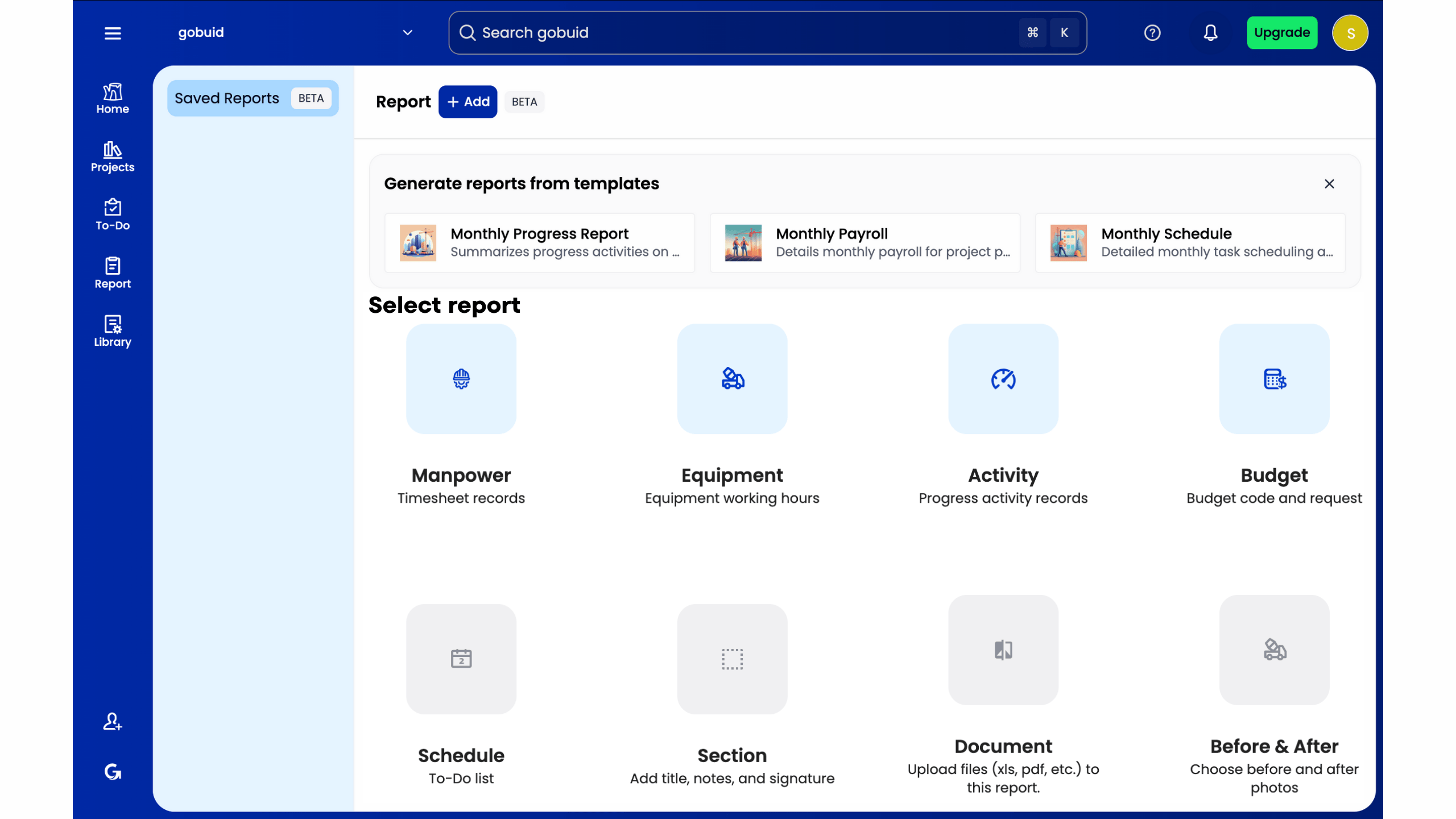
Converting daily drilling logs into professional client reports shouldn't take all night. With GoBuid, you can generate report in one click, which saves project managers over 2 hours of manual entry daily. This speed ensures that BCA or local regulatory compliance documents are submitted on time. Automation removes the friction of physical paperwork. It lets your team focus on drilling instead of filing. You gain:
Instant conversion of field data into polished PDFs.
Standardized formats for all drilling logs.
Reduced risk of human error in volume calculations.
Project Analytics for Foundation Works
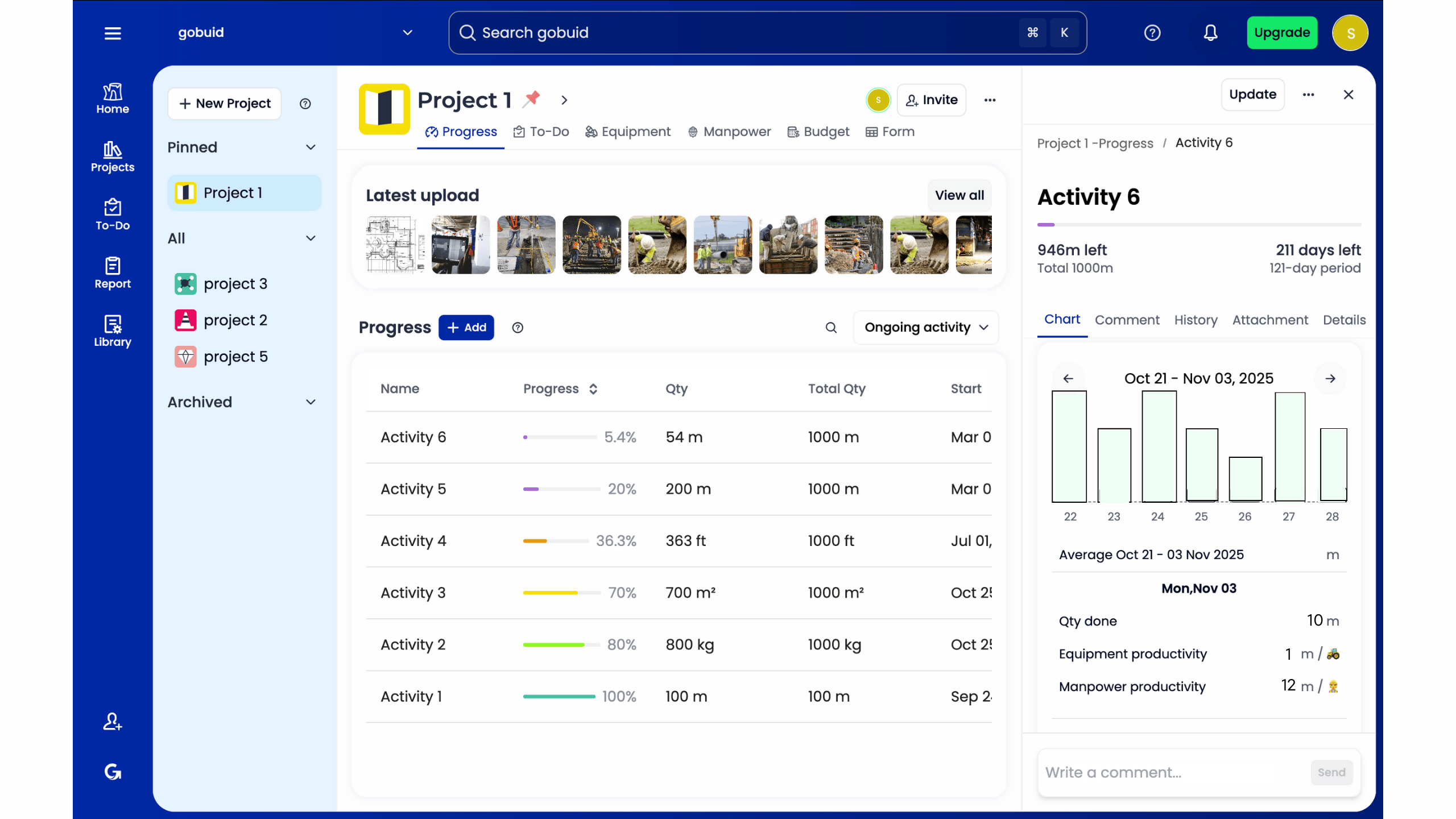
Success in deep foundations depends on rig productivity. GoBuid tracks performance across multiple rigs, identifying bottlenecks before they impact the schedule. Centralizing Progress Photos & Documentation provides an indisputable record of site conditions. If a quality claim or dispute arises, you have the visual evidence to resolve it immediately. This level of transparency protects your margins. It keeps the project moving forward without the usual delays associated with site disputes. By analyzing these trends, contractors can optimize equipment deployment for the next 12 months of foundation work.
Master Your Subsurface Project Execution
Successful installation of Drilled Shafts (Caissons) requires more than just heavy machinery; it demands absolute precision in documentation and quality control. Traditional paper logs and fragmented field reports often create a 24 hour lag that compromises project timelines and safety standards. You need a single source of truth that captures every slurry test, cage placement, and concrete pour the moment it occurs on site. GoBuid bridges the gap between the field and the office with a digital site diary designed for 100% real-time synchronization. You'll generate professional, audit-ready reports with one click, cutting administrative time by hours each week. There are no lock-in contracts, ensuring the software earns its place on your team through performance and reliability. It's time to replace chaotic workflows with a streamlined, digital foreman approach that keeps your foundation work on track. Take the lead on your next project by making data-driven decisions that protect your bottom line and your reputation.
Streamline your site documentation with GoBuid today
Frequently Asked Questions
What is the difference between a drilled shaft and a caisson?
Modern engineering uses these terms interchangeably, though they've distinct historical origins. A caisson originally referred to a watertight box sunk into the ground, while a drilled shaft is a cast-in-place foundation element. The Federal Highway Administration (FHWA) standardized the term Drilled Shafts (Caissons) in their 2018 technical manuals to minimize confusion on project sites. Most contractors today use the term drilled shaft to describe the specific process of augering a hole and filling it with reinforced concrete.
How much does it cost to install a drilled shaft?
Installation costs fluctuate based on drilling depth, shaft diameter, and the presence of rock or groundwater. According to 2023 RSMeans construction data, mobilization of heavy drill rigs represents 15 percent of total foundation expenses on smaller sites. Labor and material costs often increase by 20 percent when you switch from dry to wet construction methods. Don't rely on guesses; use real-time field reports to track these variables and keep your budget on track during the drilling phase.
Is a permit to work required for drilled shaft construction?
You must secure a permit to work before any drilling or excavation begins. OSHA 1926 Subpart P requires a competent person to inspect the site and authorize high-risk activities like deep foundation work. This permit ensures your team's reviewed the utility locates and soil stability reports. Centralized digital permits help bridge the gap between the field and the office, ensuring 100 percent compliance with safety protocols throughout the project lifecycle.
How do you inspect the bottom of a drilled shaft?
Inspect the shaft bottom using a clean-out bucket followed by a Mini-SID (Submersible Inspection Device) camera system. FHWA guidelines require that at least 50 percent of the base has less than 0.5 inches of sediment for end-bearing Drilled Shafts (Caissons). This process confirms the shaft rests on competent bearing material. Document these inspections with clear photos and automated submittals to provide a single source of truth for the structural engineer's final approval.
Can drilled shafts be installed in water-bearing soils?
Drilled shafts are highly effective in water-bearing soils when you use the wet construction method. Engineers utilize bentonite or polymer slurry to exert hydrostatic pressure against the borehole walls, preventing collapse. This technique allows for successful installation in 100 percent saturated conditions without dewatering the entire site. Temporary steel casings also provide structural support through loose sand or gravel layers, ensuring the shaft remains plumb and the concrete stays uncontaminated.