The Modern Guide to Subcontractors: Roles, Risks, and Digital Management
by Guillermo Sánchez
|
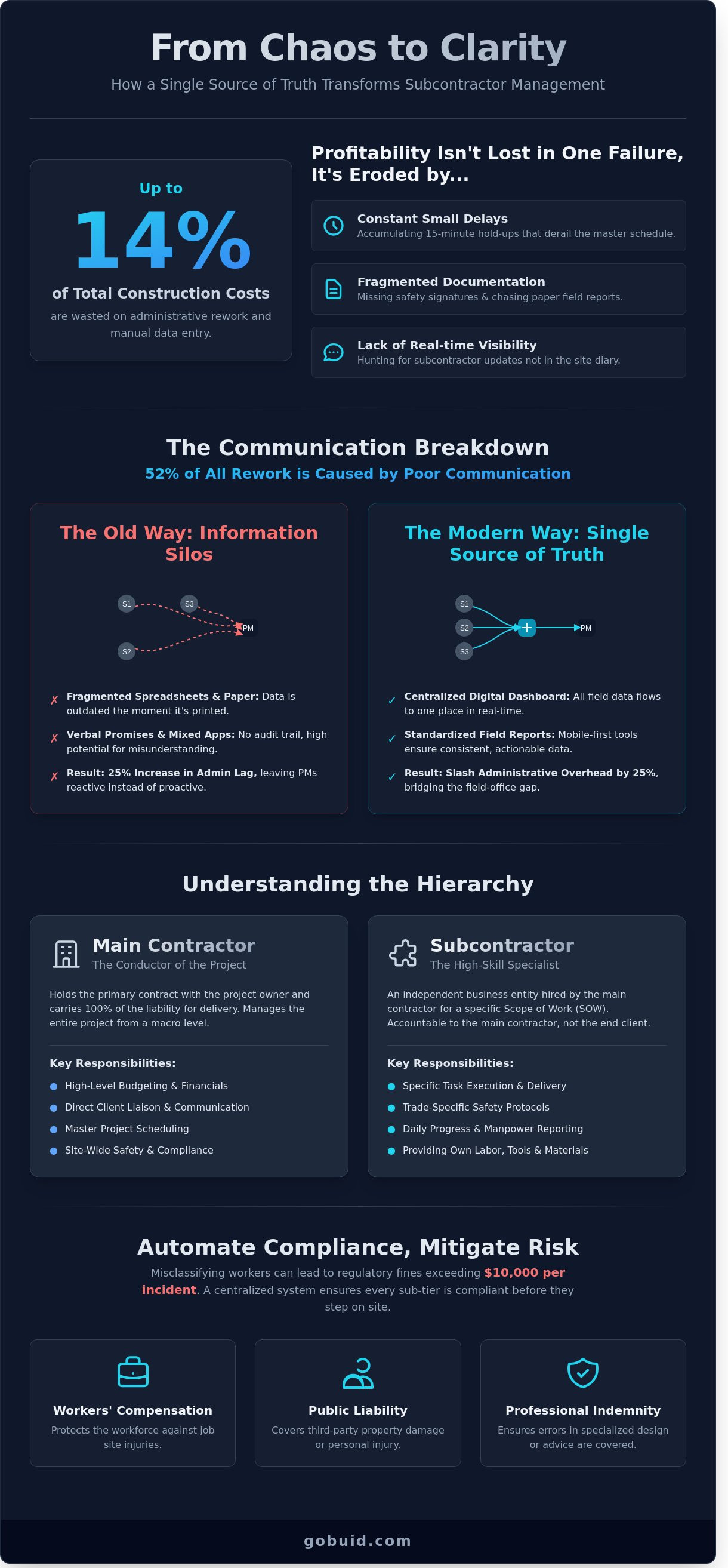
Administrative rework and manual data entry account for 14% of total construction costs globally. Your project's profitability isn't usually threatened by one massive failure. It's eroded by 15 minute delays, missing safety signatures, and the constant hunt for a specific subcontractor update that isn't in the site diary. You know that relying on fragmented spreadsheets and verbal promises makes true oversight impossible. It's a chaotic way to build.
We're here to change that. This guide helps you master the complexities of modern subcontracting by replacing guesswork with a single source of truth. You'll learn how to standardize field reports, automate sub tier compliance, and slash administrative overhead by 25%. We cover everything from legal role definitions to the real time digital management strategies used by the industry's most efficient firms. It's time to Buid a bridge between the rugged reality of the site and the precision of modern software.
Key Takeaways
Define clear project hierarchies to streamline communication between main contractors and specialist teams.
Identify the operational differences between trade-specific and labor-only models to optimize site resources.
Mitigate compliance risks and administrative overhead by automating the tracking of every subcontractor on your project.
Replace manual site diaries with a centralized digital dashboard for real-time visibility into field progress.
Bridge the gap between the field and the office using mobile-first tools that ensure a single source of truth.
⭐ Learn more about GoBuid's feature- without the heavy enterprise price tag
What is a Subcontractor? Defining the Role in Modern Construction
A subcontractor is an independent specialist. They aren't employees. They are business entities hired by a general contractor to perform specific, high-skill tasks under a "contract for services." This distinction is critical for project overhead and legal protection. A subcontractor provides their own specialized labor, tools, and materials. They own their outcomes. Their relationship with the general contractor is defined by a rigid Scope of Work (SOW) and fixed delivery timelines. In this model, efficiency is the only currency that matters.
The Legal and Financial Distinction
The distinction between an employee and a subcontractor dictates project liability. Subcontractors manage their own tax obligations and insurance premiums. This removes the administrative burden from the prime contractor. Legal frameworks, like the 20-factor test used by the IRS, ensure these boundaries remain clear. Misclassification is a high-stakes risk; in 2024, regulatory fines for mislabeling workers can exceed $10,000 per incident.
The "chain of contracts" creates a clear hierarchy. The client contracts the prime. The prime contracts the subcontractor. Sometimes, that sub-tier specialist hires their own vendors. This chain requires absolute transparency to function. Compliance is the baseline. Every sub must provide verified documentation before stepping onto the site, including:
Workers Compensation: Protecting the workforce against site injuries.
Public Liability: Covering third-party property damage or personal injury.
Professional Indemnity: Ensuring errors in design or specialized advice are covered.
The "Digital Foreman" Perspective
The modern subcontractor is a data-driven partner. The era of chasing paper field reports and relying on verbal handshakes is over. Accountability now lives in the cloud. A sub must provide real-time updates to maintain the project schedule. This shift moves the industry away from guesswork and toward digital certainty. It's about visibility. If the data isn't captured, the work didn't happen.
The GoBuid platform acts as the connective tissue in this relationship. It eliminates the friction between the office and the job site. By centralizing communication, GoBuid ensures that every action is logged and visible. It creates a single source of truth. This isn't just about tracking labor; it's about empowering specialists to succeed through real-time progress tracking. Digital management turns a subcontractor from a project variable into a reliable, high-performance asset.
Contractor vs. Subcontractor: Understanding the Hierarchy
The construction hierarchy is a rigid chain of command designed for accountability. At the top sits the Main Contractor, often called the Prime. They hold the legal contract with the project owner and carry 100% of the liability for delivery. Every subcontractor on the site acts as a specialized extension of this Prime Contractor. While the sub provides the technical expertise for specific trades, they remain legally and operationally accountable to the Main Contractor, not the end client. This structure ensures the client has one point of contact while the Main Contractor manages the complex web of trade specialists required to finish the job.
Management Responsibilities Compared
Contractors and subcontractors operate on different scales of project management. The Main Contractor handles the macro level. Their day includes managing the total project budget, the master schedule, and site-wide safety protocols that protect every soul on the property. They are the conductors of the orchestra.
Contractor: High-level budgeting, client liaison, master scheduling, and site-wide compliance.
- Subcontractor: Task execution, trade-specific safety (like lockout-tagout), and daily manpower reporting.
A 2023 industry analysis revealed that 52% of all rework is triggered by poor communication between these two tiers. To prevent these costly errors, both parties must work from a single source of truth. Without centralized data, the gap between the master schedule and actual field execution widens, leading to disputes and margin erosion.
The Flow of Information and Reporting
Field data must move upward without friction to be useful. Every day, a subcontractor generates a site diary detailing progress, delays, and equipment usage. These individual logs roll up into the main project report. When subs use disparate reporting methods like paper forms or fragmented messaging apps, information silos form. This fragmentation causes a 25% increase in administrative lag, leaving project managers reactive rather than proactive.
Using Digital Site Diaries unifies this field data instantly. It eliminates the manual data entry that plagues the end of the workweek. By digitizing the flow of information, the Main Contractor gains real-time visibility into every corner of the site. This transparency ensures that if a trade falls behind, the schedule is adjusted before the delay impacts the critical path. To maintain this level of control across all your trades, centralize your project data through a single, professional interface.
Types of Subcontractor and Their Specialized Functions
Every subcontractor brings a specific risk profile and technical requirement to the job site. General contractors must categorize these partners to align management strategies with project goals. Specialist trades like Mechanical, Electrical, and Plumbing (MEP) or structural steel installers handle high-value, high-risk scopes. These firms provide both expertise and materials. Labor-only subcontractors offer a different model; they provide manpower while the main contractor supplies all materials and equipment. This approach reduces procurement risk for the specialist but increases the logistical burden on the site manager.
Selection methods also dictate management workflows. A domestic subcontractor is hired directly by the main contractor. They answer to the site team. Nominated subcontractors are selected by the client or architect. This creates a complex triangle of accountability. Integrated subcontractors represent the modern ideal. They act as a seamless extension of your team. They share data, report progress, and flag issues in real-time. This level of transparency eliminates the information silos that typically plague large-scale developments.
Trade-Specific Management Needs
Each trade demands unique oversight to maintain quality and safety standards.
Electrical: Tracking certifications and compliance with local energy standards, such as the 2023 NEC updates, is mandatory for final sign-off. It's vital to verify these before work begins.
Structural: Managers must capture progress photos and conduct quality inspections for load-bearing elements before every concrete pour. This documentation protects against future liability.
Plumbing: Coordination with civil works is critical. Failing to align pipe layouts with foundation work causes 15% of avoidable rework on commercial projects.
Equipment and Manpower Coordination
Visibility is the only way to protect project margins. You need to know exactly who is on-site and what tools they use at any given time. Precise Equipment Management is vital for accurate billing. If a rental sits idle for three days because of a scheduling conflict, your budget takes the hit. GoBuid tracks external manpower to ensure project analytics stay accurate. This data bridges the gap between the field and the office. It turns chaotic site reports into actionable financial insights. You can verify hours worked against progress made to ensure the schedule remains on track. It doesn't matter how complex the site is; data-driven visibility keeps you in control.
The Hidden Costs of Manual subcontractor Management
Manual management isn't just a headache. It's a direct drain on your profit margins. When you rely on paper trails and verbal updates, you're operating in the dark. Every minute spent chasing a subcontractor for a missing report is a minute stolen from high-value tasks. Administrative overhead accounts for nearly 15% of total project costs in firms still using legacy systems. This isn't just about being busy; it's about the cost of inefficiency. You're paying for the time your team spends looking for information instead of building.
Compliance Risks: Missing an expired insurance certificate or a skipped safety inspection can shut down a site in minutes. Without automated alerts, you're one oversight away from a massive liability.
Communication Gaps: Field updates trapped in WhatsApp chats or verbal conversations don't reach the office. This misalignment causes 52% of all rework globally, according to industry research.
Data Fragmentation: Information scattered across emails, text messages, and physical logbooks makes it impossible to build a single source of truth. You can't manage what you can't see.
The Pain of Fragmented Site Diaries
Physical site diaries are where project documentation goes to die. They're often illegible, incomplete, or left in the back of a truck. If you can't produce a progress photo from three weeks ago, you can't defend against a backcharge. Manual reporting frequently delays BCA or national compliance submissions by 7 to 10 days, stalling your cash flow and project handovers. Without a digital timestamp, your records won't hold up in a dispute. You need data that's captured at the source, not reconstructed from memory on a Friday afternoon when the details are already hazy.
Solving the Accountability Problem
Accountability starts with a clear, digital workflow. You can't expect a subcontractor to follow a process that's difficult to access or overly complex. By using customised forms, you standardize exactly what information enters your system. This reduces administrative friction and ensures 100% compliance from external teams. When the digital form is the only way to submit a daily report, the data quality improves instantly. You gain real-time visibility into site progress without sending a single text message or making a follow-up call. It's about creating a system where doing the right thing is the easiest path for everyone involved.
Stop losing time to manual paperwork and start running your projects with precision. Automate your reporting today to regain control of your job site.
GoBuid: Streamlining Subcontractor Visibility and Reporting
Communication gaps kill construction budgets. GoBuid centralizes all subcontractor activity into one real-time dashboard to eliminate blind spots. You stop reacting to problems and start anticipating them. Field teams use mobile-first tools to document work as it happens. This isn't just about convenience; it's about accuracy. When a crew finishes a slab pour or installs an HVAC unit, the office knows by 4:00 PM that same day. You gain a single source of truth that keeps everyone accountable from the first shovel in the ground until the final punch list is cleared.
A permanent digital audit trail protects your bottom line. GoBuid captures every site update and safety inspection in a secure, searchable environment. This level of transparency reduces liability risks and ensures that site progress is indisputable. Digital documentation can reduce dispute resolution time by 50% because the facts are always available. You no longer have to dig through paper logs or old text threads to prove what happened on-site last month.
One-Click Reporting for Subcontractor Progress
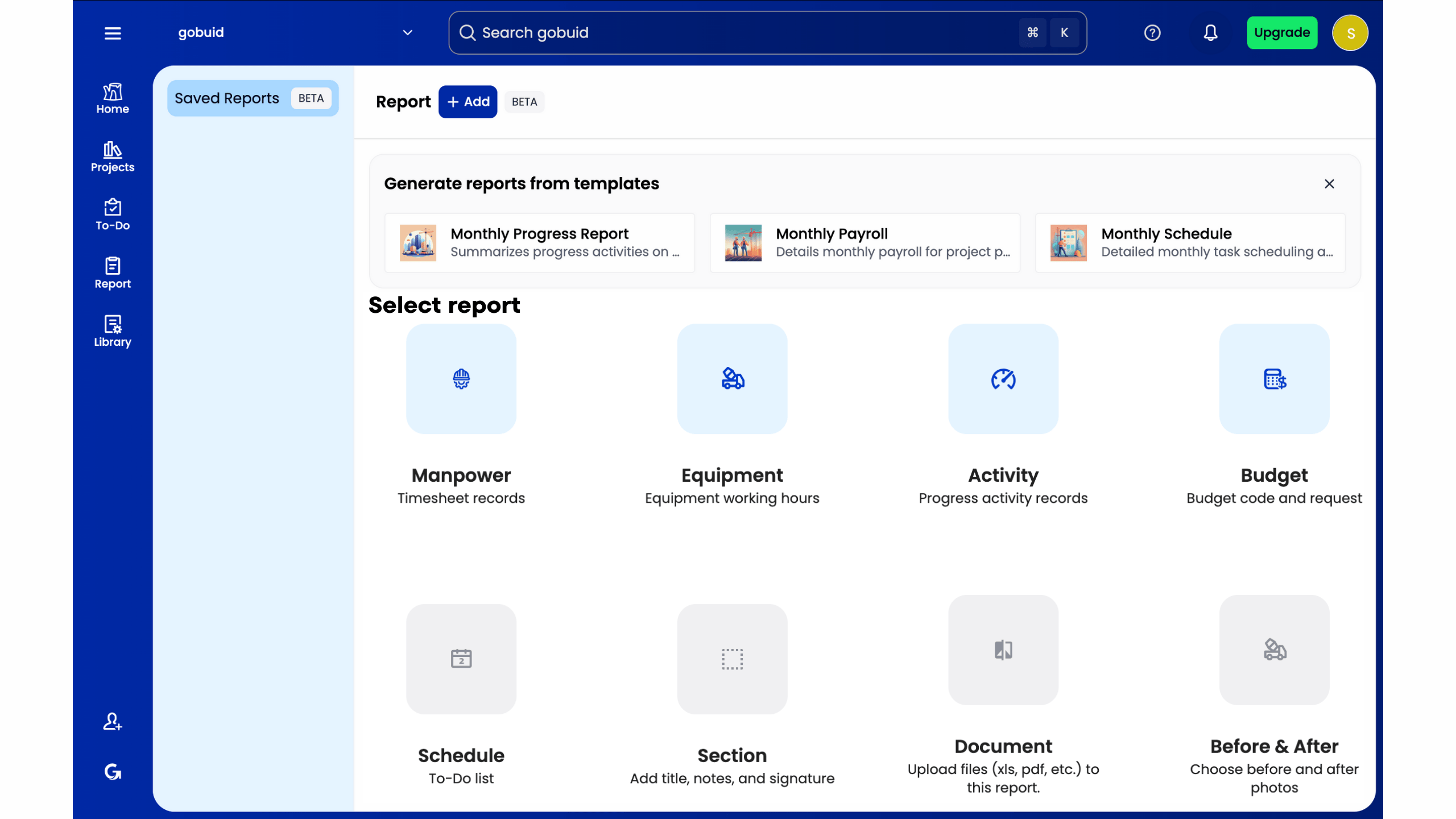
Stop wasting Friday afternoons compiling manual data. GoBuid aggregates information from every subcontractor into a single, professional report with one click. You get a comprehensive look at project health without the administrative headache. The platform integrates real-time manpower tracking to keep labor costs under control and prevent budget overruns. It also automates the tedious task of photo management. The system tags and organizes progress photos by date and location automatically. This feature saves project managers an average of 6 hours per week on clerical work.
Bridging the Field-to-Office Gap
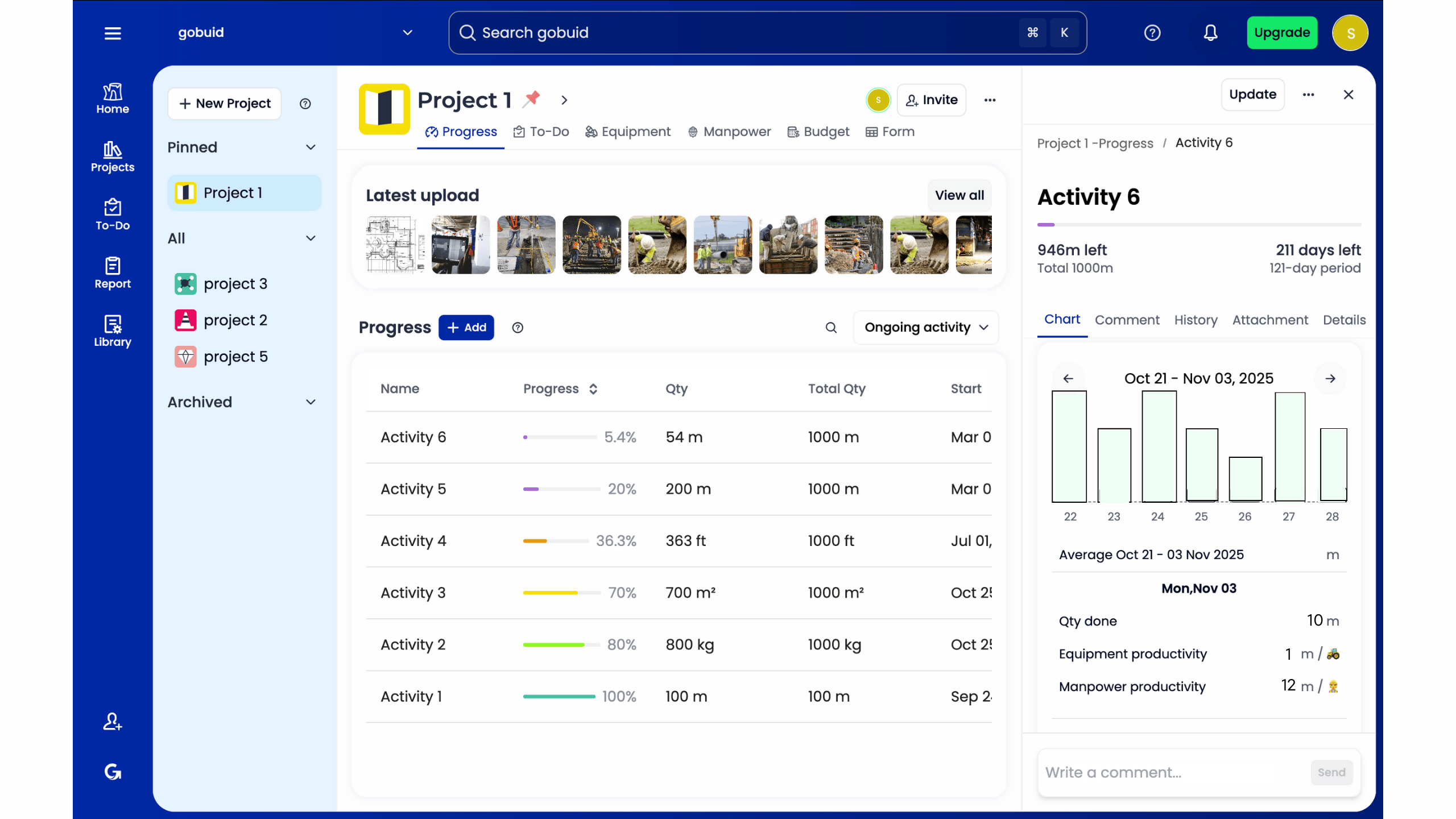
Project managers need "Mission Control" to oversee their entire network. GoBuid provides the connective tissue between the site trailer and the corporate office. Use the platform’s built-in analytics to evaluate performance across different trades. You can identify exactly which teams hit their milestones 92% of the time and which ones consistently cause bottlenecks. This data-driven approach removes the guesswork from future bidding and scheduling. The gap between the field and the office disappears when everyone operates on the same digital frequency. Book a demo with GoBuid today to take command of your site operations.
Modernize Your Project Oversight
Manual tracking is a silent profit killer. Industry data indicates that administrative rework can drain up to 14% of a project's total labor hours. Success in modern construction requires more than just a clear hierarchy; it demands absolute visibility into every specialized function. Every subcontractor on your site is a critical link in the chain, and losing sight of their daily progress creates a high-risk environment for delays and disputes.
GoBuid provides the digital site diary you need to bridge the gap between field reality and office reporting. You'll access real-time manpower and equipment tracking to monitor site activity as it happens. Our platform delivers one-click professional reporting that slashes administrative time by 10 hours per week. We focus on utility and results, which is why we offer no lock-in contracts to keep your team agile. It's time to reclaim your schedule and lead your project with calm authority.
Streamline your subcontractors with GoBuid’s digital site diary
You've got the expertise to build great things; now you have the tool to manage them perfectly.
Frequently Asked Questions
What is the difference between a subcontractor and an employee?
An independent subcontractor operates as a separate business entity, while an employee works under your direct control and supervision. The IRS uses a 20-point checklist to determine this status, focusing on behavioral and financial control. Misclassifying workers can result in fines exceeding $25,000 per violation. You don't pay their benefits or payroll taxes; they handle their own overhead and provide their own tools for the job.
Can a subcontractor hire their own subcontractor?
Yes, they can hire their own labor, often referred to as second-tier subcontractors. This practice is standard in 85% of large-scale commercial builds where specialized expertise is required. You must ensure your primary contract includes flow-down clauses. These clauses mandate that any lower-tier worker follows the same safety and quality standards set in the original project agreement to maintain site integrity.
Who is responsible for safety when a subcontractor is on-site?
Safety is a shared legal obligation under the OSHA Multi-Employer Citation Policy. While the general contractor manages the overall site environment, the subcontractor is responsible for their specific work area and crew protection. Failure to coordinate leads to citations. Statistics show that 40% of site accidents involve a breakdown in communication between different trade teams on the ground during high-risk activities.
Do subcontractors need their own insurance?
Yes, every sub must carry General Liability and Workers' Compensation insurance. Most commercial projects require a minimum of $1,000,000 in coverage per occurrence to protect against property damage or bodily injury. You shouldn't allow a crew on site without a valid Certificate of Insurance. This document proves they have the financial backing to cover mistakes or accidents during the build without bankrupting the project.
How much administrative time can digital site diaries save?
Digital site diaries save site managers approximately 5.5 hours per week. By capturing data directly on a mobile device, you eliminate the need for end-of-day data entry and manual photo sorting. A 2023 study found that firms using digital reporting saw a 40% increase in documentation accuracy. It turns a chaotic paper trail into a searchable, organized database of project progress that's accessible instantly.
What happens if a subcontractor fails to provide daily reports?
Missing reports lead to immediate payment holds and increased legal risk. Without a daily record, you can't verify that work was completed to specification or track labor hours for billing. The 2024 Arcadis Dispute Report notes that 1 in 3 construction disputes is caused by poor project documentation. Enforce a no-report, no-pay policy to keep your project data clean and protect your profit margins.
Is a written contract always required for subcontracting?
A written contract is mandatory for any professional project to mitigate risk. Verbal agreements don't provide the legal framework needed to handle scope creep, payment schedules, or indemnification. Industry data suggests that 65% of payment delays are linked to undefined contract terms. A solid written agreement acts as your primary defense in court and ensures everyone understands their specific deliverables from day one.
Can I use GoBuid to track subcontractor equipment usage?
You can track every piece of equipment on your site using GoBuid's centralized dashboard. The platform allows you to log run times, maintenance schedules, and operator assignments with a few taps. Companies using this feature report a 12% reduction in idle time costs. It provides the visibility you need to ensure assets are used efficiently and aren't sitting stagnant on the job site costing you money.